When you name someone to handle your will in Arkansas, focus on three key things: what they must do, if you can trust them, and who will step in if they can’t. You need a person who solves problems, stays organized, and knows Arkansas rules. A reliable executor will find your property, pay debts and taxes, and follow your wishes. Listing one or two backups keeps your will moving even if your first choice can’t serve. Picking an executor is an important step in estate planning.
Key Factors At A Glance
Here’s a quick look at the three main considerations. Use this table to start your planning.

| Factor | Why It Matters | Next Steps |
|---|---|---|
| Core Duties | Makes sure assets are safe and taxes paid on time | Talk over these tasks with your candidate |
| Trust and Skills | Builds clear communication and confidence | Match their skills to each duty |
| Alternates Naming | Keeps probate moving if the first choice can’t serve | Name one or two backups in your will |
- Helps you focus on what matters most
- Shows you how to avoid court delays and extra fees
- Sets you up for a smooth estate settlement
Understanding Executor Duties And Eligibility
An executor is like the main helper who makes sure your will is carried out. After you pass away, they find your assets, keep them safe, pay taxes and debts, and give out what you left to your heirs.
They do tasks such as:
- Locating Assets: Finding bank accounts, homes, retirement funds, and other valuables.
- Securing Property: Protecting houses, cars, jewelry, or any high-value items.
- Tax Filings: Filling out and paying final federal and state returns on time.
- Debt Payments: Paying bills in the order the law requires.
- Distribution: Giving out inheritances exactly as your will says.

Real Example Of Asset Tasks
Maria’s executor found old savings bonds in a safe-deposit box. But they missed a tax deadline and paid penalties that a simple checklist could have avoided.
To avoid bumps:
- Make an asset inventory with locations, account numbers, and passwords.
- Set up a tax calendar with alerts for all tax deadlines.
- Keep beneficiaries informed so no one is surprised.
Executor Legal Eligibility
In Arkansas, your executor must be at least 18 years old and a U.S. resident. Choosing someone who lives out of state can add extra fees and may need a probate bond.
For example, Jane chose her college friend who lived in another state. That choice doubled her probate cost because of bond fees.
Key things to check:
- Is your candidate 18 or older and a U.S. resident?
- Can they post a bond if they live out of state?
- Limit your executor list to three people to keep things simple.
Keeping The Estate Process Smooth
Checking these points early cuts down delays and legal costs. Naming a local backup executor can save bond fees and speed up probate.
Learn more about the executor’s role in property sales and power of attorney from a Fayetteville, Arkansas estate planning lawyer:
https://www.dewitt.law/blog/estate-planning-articles/understanding-the-role-of-an-executor-and-power-of-attorney-in-property-sales-insights-from-a-fayetteville-arkansas-estate-planning-lawyer/
- Talk with your first-choice executor about backups in advance.
- Write out who your alternates are and when they step in.
Early checks cut probate costs and speed up estate settlement.
Evaluating Personal And Practical Qualities
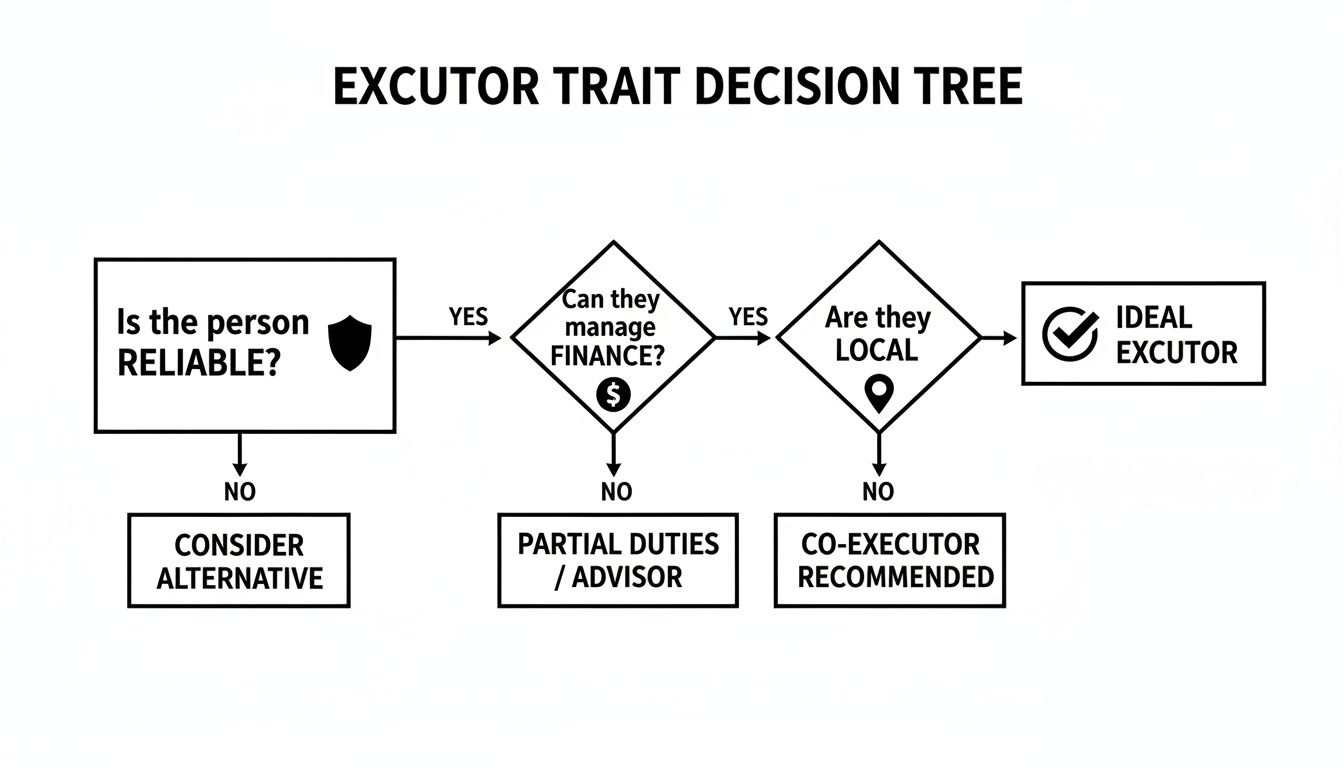
Picking an executor is more than ticking boxes. You want someone who stays calm under pressure, handles money well, and keeps family tensions low. It also helps if they live nearby to avoid extra trips to the courthouse.
Think about:
- Financial Comfort: Do they pay bills on time and know how to manage accounts?
- Communication Style: Can they share updates clearly and calmly?
- Stress Response: How do they handle surprises or tight deadlines?
- Age and Health: Will they have the energy to finish probate tasks?
- Local Knowledge: Do they know your county’s courthouse routines?
A simple checklist helps you spot any gaps before you decide.
Checklist For Candidate Traits
Rate each trait from 1 to 5. Compare scores side by side to pick the best person.
Pro tip: Ask about probate fees early to avoid surprises.
Discussing Availability And Style
Studies show women name a child as executor 25% of the time versus 16% for men. executor demographics study points out that adult children and siblings are common picks—but this can lead to conflict if beneficiaries also serve as executors.
Ask your chosen person:
- Will they answer court or bank requests quickly?
- What times are best for calls or emails?
- How will they handle emergencies after hours?
Write these details down to turn promises into clear plans.
Tip: Confirm your executor’s willingness and ask about any conflicts of interest.
Comparing Family And Professional Executors
Deciding between a family member or a professional executor is about more than fees. Family know you best but emotions can get in the way. Professionals stay neutral but charge a fee.
Family vs Professional Executor Comparison
| Executor Type | Pros | Cons |
|---|---|---|
| Family Member | No fee Knows family history Flexible schedule | Emotional stress Risk of bias Possible fights |
| Professional Fiduciary | Neutral decisions Followed process Less drama | Fees (1–5% of the estate) Less personal touch |
Family Executor Pros And Cons
Having a relative serve means no executor fee and they know your family. But disputes can become personal and stressful.
- Pros: No fee, deep family knowledge, flexible schedule
- Cons: Conflict risk, possible favoritism, strained ties
Professional Executor Advantages And Drawbacks
A professional executor handles court forms, taxes, and asset values without family drama. The downside is their fee, usually 1–5% of your estate.
- Advantages: Objective, experienced process, fewer family fights
- Drawbacks: Costlier, less personal, strict rules
Considering Hybrid Executor Options
You can mix a family member with a professional. This can lower costs and add expertise.
- A sibling handles day-to-day tasks, and a trust company steps in for puzzles.
- Name your relative as lead and a corporate fiduciary as backup.
- Pay less in fees but still get expert help.
Combining trust with impartial experts often speeds up settlement and cuts conflict.
Final Steps For Your Executor Choice
Meet your top pick to:
- Confirm fees or commission caps
- Check their availability for court and paperwork
- Talk through their communication plan and emergency steps
For example, a local lawyer charged $3,500 for a $100,000 estate, but a family member worked free. Think about time too—your cousin with three jobs might miss deadlines.
Review Arkansas probate rules for your county. A quick chat with a DeWitt & Daniels attorney can flag bond or fee limits. Life changes—update your choice when needed.
Naming Alternate Executors And Sample Will Language
Even the best executor can become unavailable. Naming one or two alternates keeps your will moving and cuts court delays.
Imagine Michael chose his brother, who later moved overseas. Without a backup, probate dragged on.
Sample Clauses To Name Alternates
Use these examples to guide your own wording:
Primary And Secondary Executor
“I appoint Jane Doe as Executor. If Jane Doe cannot serve due to death, incapacity, or refusal, I appoint John Smith as Alternate Executor.”Multiple Alternates
“Should both my primary and first alternate be unable to serve for any reason, I appoint Mary Jones as Second Alternate Executor. If Mary Jones is unable, the court shall appoint an executor.”- Tie-Breaking Rules For Co-Executors
Co-executors keep things safe but can stall if they disagree. Set clear tie-breakers:
- The executor with the larger share casts the deciding vote.
- If still tied, the surviving executor named earlier decides.
- Unresolved issues go to binding arbitration by a neutral party paid from the estate.
A mediator clause can also help avoid full court battles.
When To Update Your Will
Life events often mean you need new executors. But only 24% of adults have a current will. Even people over 55, just 43% rate. Explore more estate planning stats on LegalZoom
Ignoring updates can leave you with an executor who no longer fits your life. Sarah named her nephew first but after moving, he lived three states away and faced big bond fees.
| Life Event | Action Needed | Recommended Timing |
|---|---|---|
| Marriage or Divorce | Confirm or change executor selection | Within 60 days |
| Birth or Adoption | Add child or adjust beneficiaries | Immediately |
| Move Out of State | Check executor residency and bond rules | Before moving |
| Executor Unavailable | Activate next alternate | At notification |
| Executor Declines Role | Nominate new backup | Before final signing |
Review Checklist For Executor Language
Before you sign:
- Name your primary and alternates clearly
- Define triggers that make an alternate step in
- Spell out tie-break rules for co-executors
- State residency, age, and willingness requirements
- Include a mediator or arbitration clause
Check each item to cut down delays and fights. Then, talk with a Northwest Arkansas attorney to confirm your wording meets Arkansas Code 28-41-102 and local probate rules. A 15-minute review can save weeks in court and thousands in fees.
Consulting An Arkansas Attorney
Choosing an executor involves Arkansas rules that can add steps or fees. A local lawyer can guide you and avoid surprises.
Case Study: Sally in Benton County faced a 30-day wait on farmland probate. A quick consult added farmland clauses and a local backup. Probate finished two months sooner, saving $1,200 in bond fees.
Red Flags To Watch
- Some counties have special tax rules that add fees.
- Out-of-state executors need a probate bond, which can cost double.
- Arkansas Code 26-26-1207 requires special farmland appraisals.
- Blended families may disagree over who gets what.
What To Expect At Your Meeting
Your lawyer will ask about your assets and family. You’ll discuss farmland, rural land value, and any out-of-state property. Then you get:
- County-specific bond and fee info
- A step-by-step action plan
“Meeting with an Arkansas estate planning lawyer can save you weeks of court delays,” says a local DeWitt & Daniels attorney.
Smart Questions To Ask
- What bond rules apply to my executor choices?
- How do I include farmland or out-of-state property in my will?
- Are there fee caps under Arkansas law?
- Any courthouse quirks I should know?
- How often should I update executor clauses as life changes?
Booking a 15-minute review in Rogers or Bentonville puts you ahead of roadblocks. Schedule in Fayetteville to cover your estate. This talk shows exactly how a local attorney can help you choose the right executor.
Visit DeWitt & Daniels to secure your consultation.
Executor Of Will FAQ
Here are common questions about picking and using an executor in Arkansas.
What Happens If Your Executor Is Unavailable?
Life changes. If your first choice moves or faces health issues, a named alternate executor steps in. No court delays, no guesswork.
Can You Choose Multiple Executors?
Yes. You can pick two or more people. For example, a family member and a professional. Just set clear tie-breaker rules so they don’t get stuck when they disagree.
Key Points At A Glance
- Alternate Executors keep probate moving
- Co-Executors need clear voting rules
- Executor Fees are usually 1–5% of the estate
- Review Your Choice after marriage, divorce, moving, or a new child
How Much Does an Executor Get Paid in Arkansas?
Arkansas wants a “reasonable” fee. Most wills set it at 1–5% of the estate’s net value. You can name a fixed fee in your will to avoid surprises.
When Should You Update Your Executor Choice?
Life events (marriage, divorce, a new baby, or relocation) should trigger an update. Check your will every few years to keep it current.
“Naming alternates and updating regularly turns guesswork into a plan that works.”
Contact DeWitt & Daniels to make sure your executor choice fits Arkansas law today.