In Arkansas, a beneficiary deed is a simple and smart way to plan for your property. Think of it like a note you write for your house. This note says who gets the house when you pass away. The cool part is that the house goes to them automatically, without needing to go to court. This court process is called probate, and it can take a long time and cost a lot of money. Another name for a beneficiary deed is a Transfer on Death (TOD) deed.
Understanding a Beneficiary Deed
The best part about a beneficiary deed is you stay in charge. While you’re alive, the property is 100% yours. You can sell it, borrow money against it (get a mortgage), rent it out, or even change your mind and tear up the deed. The person you named to get the house, called the beneficiary, has no say in what you do with it until after you’re gone.
This makes it a popular choice instead of going through the long and expensive probate court. For a quick look at why people like it, check out the table below.
Beneficiary Deed at a Glance
This table shows the main points of a Beneficiary Deed so you can see them easily.
| Feature | Description |
|---|---|
| No Court (Probate) | The house goes straight to the person you choose, skipping court. |
| You Keep Control | You own the property completely and can sell, borrow against, or change the deed. |
| Easy to Change | You can cancel or change the deed anytime you want without asking the beneficiary. |
| Simple and Cheap | It’s a fairly easy and low-cost paper to create and file with the county. |
Because of these good things, the Transfer on Death deed is a top choice for many homeowners in Arkansas. As of 2026, about 33 states allow this kind of deed, which shows it’s becoming more common. If you want to learn about other ways to protect your stuff, you can read about probate avoidance strategies at ProtectingWealth.com.
The Main Benefits of Using a Beneficiary Deed
So, why are so many people in Arkansas using a beneficiary deed? It’s because of a few really good reasons.
The biggest reason is it helps you avoid probate. When you pass away, the house automatically goes to the person you named. This means your family doesn’t have to go through the court process, which can be long, costly, and super stressful.
Also, you keep full control of your house while you are alive. Nothing changes for you. You can still sell it, get a mortgage on it, or just change your mind and cancel the deed. You don’t need permission from the person you named. This freedom is a big plus for homeowners who want to plan for the future but not be stuck.
A beneficiary deed gives you a simple way to decide who gets your house later, while you keep all your choices open today. It’s a straight path for your house to go where you want it to, right when it should.
You can learn more about this in our guide on how to avoid probate nightmares.
How Beneficiary Deeds Compare to Wills and Trusts
When you think about how to give your property to your loved ones, you’ll probably hear about three things: beneficiary deeds, wills, and living trusts. They all work differently, so it’s good to know how they compare.
A will is a classic way to plan, but it has a big problem for houses—it has to go through probate court. That means time and money are spent before your home can legally go to your family. A beneficiary deed skips probate completely. The house goes right to the person you named the moment you’re gone.
Of course, a beneficiary deed is only for one piece of property. Wills and trusts can handle everything you own. It’s a good idea to check out the key differences between wills and trusts to see the whole picture.
This picture shows the main good points of using a beneficiary deed.
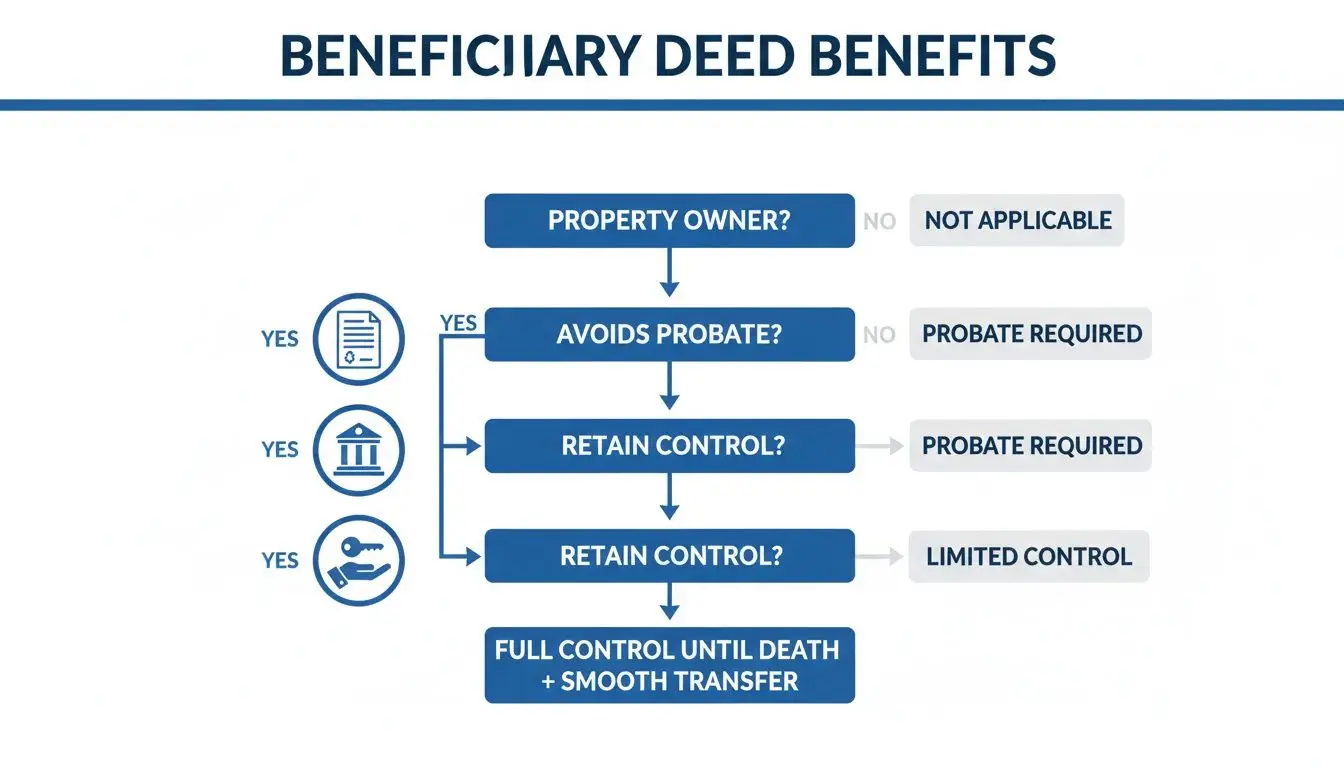
As you can see, it’s a simple way to pass on your house. You keep control while you’re alive, and it automatically goes to the person you choose, all without the court getting involved.
Beneficiary Deed vs. Will vs. Living Trust
To make the choice clearer, let’s compare these three options. This table shows their main features.
| Feature | Beneficiary Deed | Will | Living Trust |
|---|---|---|---|
| Avoids Court (Probate)? | Yes, for that one house | No, the house goes through court | Yes, for everything in the trust |
| Control While Alive? | Full control (sell, borrow, change) | Full control | Full control |
| How Property Transfers | Automatically when you pass away | Needs a court process | Automatically through the trust |
| Cost | Low (just filing a paper) | Medium (paying a lawyer) | High (paying a lawyer, moving property) |
| Privacy | High (a private transfer) | Low (becomes a public court record) | High (it’s a private paper) |
| What It Covers | Only a house or land | Covers everything you own | Covers everything you put in it |
A beneficiary deed is a great tool for one specific job: passing on a house easily. But it doesn't take the place of a will or trust that handles the rest of your things.
Essential Rules for a Valid Arkansas Beneficiary Deed
For a beneficiary deed to work right and keep your house out of court, you have to follow the rules exactly. Think of it like a checklist. If you miss even one step, the deed might not be good, and your house could end up in probate court anyway.
Here’s exactly what Arkansas law says you must do:
- It must be written down. You can't just say it.
- The property owner (you) must sign the deed.
- Your signature needs to be officially stamped by a person called a notary public.
- The deed must be filed at the Circuit Clerk's office in the county where the house is. This must be done before you pass away.
That last point is super important. Filing the deed before you die is a rule you can't break. If someone finds it in your desk drawer after you're gone, it's too late.
Remember that every state has its own rules for these deeds. It’s great that Arkansas has this option, but you have to follow our state's rules perfectly. For a bigger view, you can find more details on how different states handle these deeds at Larson Brown Law.
Common Mistakes with Beneficiary Deeds to Avoid
Beneficiary deeds seem simple, but don't let that fool you. Small mistakes can cause big problems for your family later. It all comes back to knowing what is a beneficiary deed (deed on death)? and how it really works.
One easy mistake is forgetting to name a backup person, called a contingent beneficiary. What happens if the person you chose dies before you do? Without a backup named, the deed might not work, and your house could go to probate anyway—the very thing you wanted to stop.
Another common mistake is thinking of the deed as a "one and done" thing. Life changes. You might get divorced, get married again, or have more kids. These events can change who you want to get the house, but an old deed won't know that. It will give your house to the person you named long ago.
We see sad stories about this all the time. For example, a woman was shocked to learn her late husband’s house went to an ex-wife he had divorced 40 years ago. He just never updated the form, and that one piece of paper was more powerful than what his will said. You can explore insights on beneficiary designations at Phillips Lytle to see how important these papers are.
Step-by-Step Guide to Creating a Beneficiary Deed

Making a beneficiary deed for your Arkansas house isn't too hard, but you have to pay close attention to the details. Think of it like a recipe—you need to follow every step for it to turn out right.
Here are the key steps for making your Transfer on Death (TOD) deed:
- Get the Legal Description: First, you need the official "legal description" of your property. This is more than the street address. You can find it on the deed you got when you bought the house or on your property tax bill.
- Name Your Beneficiaries: Decide who you want to get the house. It's important to name your main person, but I always tell people to name a backup person (a contingent beneficiary) too. This protects you if your first choice can't inherit.
- Write the Deed: You'll need to use a form that has the exact words Arkansas law requires for a beneficiary deed. This isn't a place to get creative—the words must be perfect.
- Sign in Front of a Notary: You have to sign the deed in front of a notary public, who will then stamp it. Don't sign it ahead of time.
- File the Deed: This is the last and most important step. The original, signed, and notarized deed must be taken to the Circuit Clerk’s office in the county where your house is. If you forget to do this, the deed doesn't work.
It's always smart to understand how these papers fit in with other property transfer documents. While you can do this yourself, getting help from a professional can make you feel sure that every detail is right.
Common Questions About Beneficiary Deeds
When you first learn about beneficiary deeds, you probably have some questions. Here are the answers to the ones we hear most often.
Can I Still Sell My House?
Yes, you can. A beneficiary deed doesn't stop you from doing anything. You are still the full owner of your house while you are alive.
That means you can sell it, get a mortgage, rent it, or even give it away. You don’t need the beneficiary’s permission. If you sell the house, the beneficiary deed is automatically canceled.
What Happens If My Beneficiary Dies Before I Do?
This is a very important question. If the person you chose dies before you do, the deed is canceled—it’s like it never happened. Your house will then be part of your estate and will probably have to go through probate court.
This is exactly why we always suggest naming a backup beneficiary just in case. It's a simple step that gives you a safety net.
Does a Beneficiary Deed Protect My House From Debts?
No, it doesn’t. The house goes to your beneficiary, but so do any mortgages, loans, or other debts that are tied to it.
Your beneficiary gets the house "subject to" those debts. This means people you owe money to can still try to get paid from the house's value after it's been transferred.
Figuring out if a beneficiary deed is the right choice for you can feel like a big decision. At Dewitt and Daniel's law firm, our job is to give you clear, simple advice to protect your property and your family. Contact us for a consultation and we can help you understand your options.