Have you ever been in a deal or a contract that you needed to get out of? An assignment and assumption agreement is the legal tool that lets you do just that. It’s an official paper that lets you pass your rights and duties from a contract to someone else.
Think of it like passing a baton in a relay race. You hand over the good parts (like getting paid) and the work (the promises you made) to the next person. This makes for a clean handoff.
Passing the Baton in a Contract
Let’s use a simple example. Imagine you signed up for a 12-month gym membership. You have the right to use the gym’s weights and machines, but you also have the duty to pay the monthly fee.
A few months later, you get a new job and have to move to a different city. You can’t just stop paying, but your friend wants to take over your membership. This is where an assignment and assumption agreement helps.
This one document does two important things:
- Assignment: You assign your right to use the gym to your friend.
- Assumption: Your friend assumes your duty to pay the monthly fee.
Without this official paper, you could still be in trouble if your friend stops paying. The document makes the switch official, protecting you and making it clear who has to do what.
The Three Key Roles in the Agreement
Every assignment and assumption agreement has three main people or groups. Knowing who does what makes it easier to understand.
Here’s a simple list of the key players and their roles.
| Party | Their Role | Simple Analogy |
|---|---|---|
| Assignor | The original person who is passing on their rights and duties. | The person moving away who wants to give up their gym membership. |
| Assignee | The new person who is taking over the rights and duties. | The friend who wants to take over the gym membership. |
| Obligor | The third person from the first contract who is owed the duty. | The gym, which is owed the monthly membership fee. |
In simple terms, the assignor hands everything to the assignee, and the obligor now deals with the new person.
This formal transfer is a critical legal tool used worldwide when contractual rights and obligations need to change hands after an agreement is already in place. For the transfer to be valid, the original contract must permit it, the original party must agree to hand off their duties, and the new party must formally accept them. Often, the third party involved in the original contract must also give their consent, as you can discover in more detail about these legal requirements.
Of course, knowing what the agreement does is only half the battle. Making one that is clear and legally strong is a skill. If you want to learn more about how to create these papers, check out some expert tips on how to write legal documents effectively.
In the end, this agreement builds a legal bridge, letting someone step into another person’s shoes in a contract, safely and officially.
When to Use This Agreement in Arkansas

An assignment and assumption agreement isn’t just for big companies. It’s a common and useful tool used all over Arkansas for everyday business and property deals. Think of it as the official paper that makes handing off a contract smooth and legal.
It’s like passing the baton in a business relay race. Whenever a contract needs to move from one person to another, this agreement makes sure everyone knows who is responsible for what. This simple step can stop a lot of confusion and protect everyone involved.
These agreements are very important when a business is sold. To keep the business running well, the new owner must officially step into the shoes of the old one. This means taking over all the contracts that help the business work.
Selling a Business
Let’s say you own a popular food truck in Fayetteville. A big part of your success is the great contract you have for a spot during Razorback games. When you decide to sell your truck, the buyer isn’t just paying for the truck—they’re paying for that amazing location contract.
This is where an assignment and assumption agreement is needed. You’ll use it to legally pass your rights and duties for that location contract to the new owner. Without it, you could still get in trouble if the new owner makes a mistake. The agreement officially passes the torch, so you can walk away without worry.
This same idea is used in almost any business sale in Arkansas, whether it’s a small coffee shop in Bentonville or a tech company in Springdale. The contracts most often passed on include:
- Supplier Agreements: This makes sure the new owner can keep getting important materials from the same sellers.
- Service Contracts: These agreements cover important services like cleaning, computer help, or machine repairs that need to keep going.
- Client Contracts: This is how current projects and jobs are handed off to the new leaders.
Commercial transactions, especially asset purchases and expansions, rely heavily on assignment and assumption agreements. For example, a 2022 deal between two tech companies used one to detail the transfer of both rights and liabilities in a strategic acquisition. In fact, legal market analysis suggests these documents make up an estimated 15-20% of all contract reassignments during mergers and acquisitions. You can see a real-world example of such a contract transfer on Justia.com.
Transferring Leases and Real Estate Contracts
This agreement is also very important in Arkansas real estate, especially for business leases. Imagine your business is growing and you need a bigger office, but you are still stuck in your current lease. You might find another company that wants to take over your space.
By using an assignment and assumption agreement, you can pass your lease duties to the new tenant. You will almost always need your landlord’s permission, but this process lets the new tenant take over your rent payments and responsibilities, which frees you from the original contract.
The same thing happens when one home buyer needs to pass their real estate purchase contract to another buyer before the sale is final. While this document is key for business and property deals, the idea of passing on assets is also important in other areas of law. For anyone planning for the future, our guide to estate planning in Arkansas offers tips on managing different kinds of assets for the long term.
No matter the case, the goal is always the same: to make a clear, legal record that one person has passed their contract duties to another, and that the new person has officially accepted them.
The Anatomy of an Assignment and Assumption Agreement
Think of an assignment and assumption agreement like a detailed plan for passing on a contract. At first, it might look like a lot of confusing words, but every part has a special and important job. Once you understand the key parts, you’ll see how they all work together to make sure the handoff is clean and legal.
Let’s look at the most important parts, or clauses. These are the pieces that make the whole agreement work.
The picture below shows the three main pillars of any good assignment and assumption agreement.
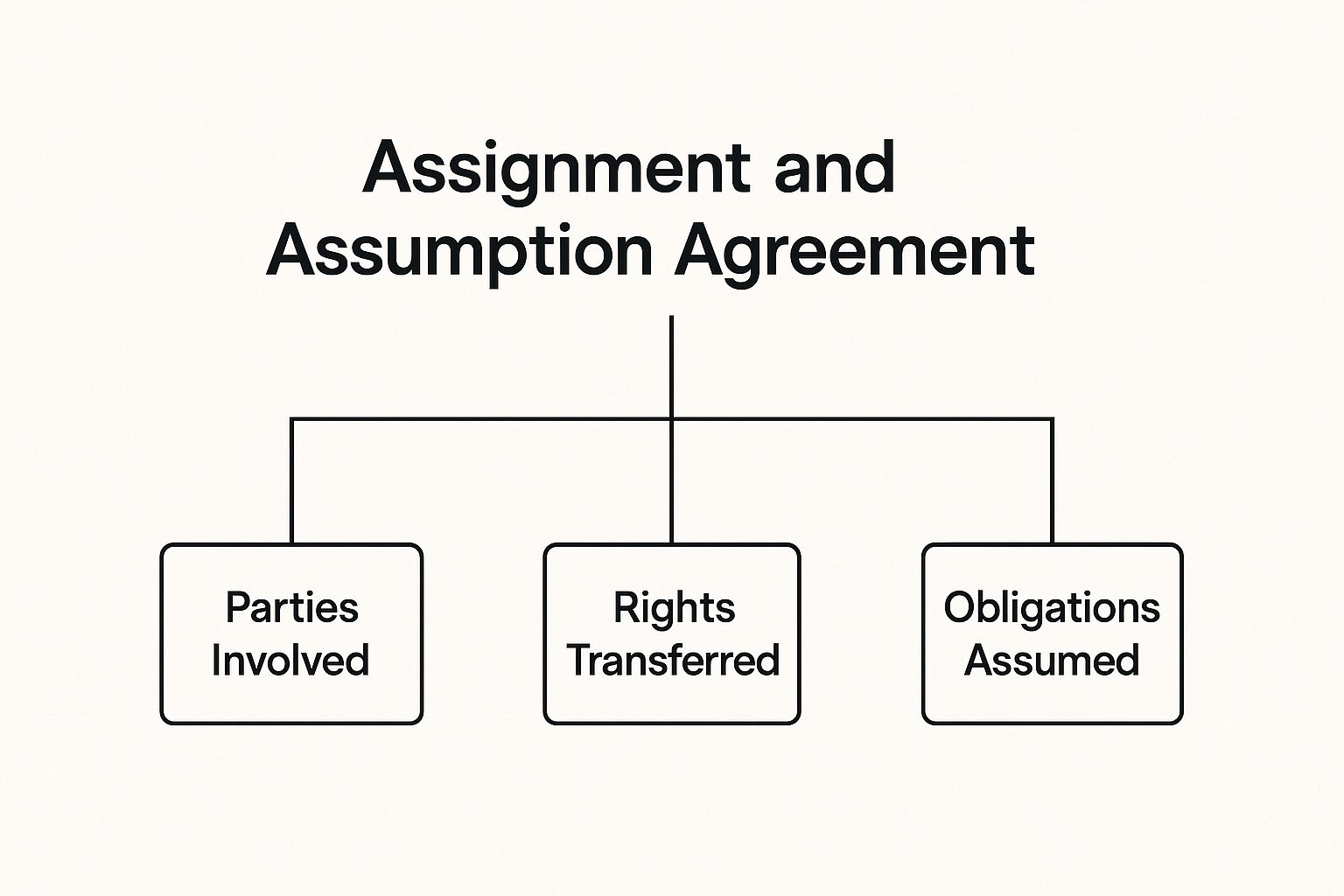
This picture shows what’s most important: clearly naming everyone involved, spelling out the good parts being passed on, and explaining the duties the new person is taking on. Getting these three things right is the key to a smooth switch.
The Core Clauses Explained
Every well-written agreement uses specific words to make sure there is no confusion. These parts get rid of any guessing about who is responsible for what, now and in the future.
Here are the most common clauses you will see:
- The Assignment Clause: This is the “giving away” part. It’s an official statement where the Assignor (the original person) officially passes their contract rights—like the right to be paid or use a property—to the Assignee (the new person).
- The Assumption Clause: This is the “taking on” part. Here, the Assignee officially agrees to do all the duties and tasks the Assignor was supposed to do, like making payments or providing a service.
- The Consent Clause: Many original contracts have a rule against assignment. This just means you must get written permission from the other person in the contract (the Obligor) before the switch can happen. This clause is the proof that everyone agrees to the change.
- The Indemnification Clause: You can think of this as a “have my back” promise. It’s made to protect the Assignor. It says that if any problems come up after the switch, the Assignee will step in and pay for any losses or lawyer fees. This makes sure the original person isn’t held responsible for the new person’s actions.
To help you understand, here’s a quick summary of these important clauses and what they do.
Key Clauses and What They Mean
| Clause Name | What It Does | Why It’s Important |
|---|---|---|
| Assignment | Officially passes the contract’s rights and good parts from the original person (Assignor) to the new person (Assignee). | This is the official “handoff.” Without it, the new person has no legal right to the contract’s good parts. |
| Assumption | Confirms the Assignee accepts all the original contract’s duties and promises. | This frees the Assignor from future duties and lets the other party know who is now responsible. |
| Consent | Shows the written permission from the other original person (Obligor) to allow the switch. | Many contracts do not allow assignment without permission. This clause stops you from breaking the original agreement. |
| Indemnification | Protects the Assignor from any future problems, lawsuits, or costs that come from the Assignee’s actions. | This is a very important safety net that keeps the original person from being blamed for the new person’s mistakes. |
As you can see, each clause has its own job, and they work together to create a full and protective legal paper.
Why Every Clause Matters
These clauses are not just extra words—they are the gears that make the whole machine work. A missing or poorly written clause can make the whole agreement fail. This can lead to fights over payments, deadlines, or other important duties.
Globally, a well-structured document is essential for clarity. To avoid arguments and confusion over liability, approximately 90% of contract transfers are formalized through written assignment and assumption agreements. In crucial sectors like real estate and technology, failing to execute these agreements properly can lead to serious legal trouble, including lawsuits. You can discover more about the global importance of these contracts and their role in modern business.
In the end, each part of the agreement works together. The assignment clause hands over the good stuff, the assumption clause passes on the duties, the consent clause gets everyone’s permission, and the indemnification clause gives a key safety net. Together, they make a legal bridge for one person to step right into another’s contract shoes.
Assignment vs. Novation in Arkansas

When you want to pass on a contract, you will hear two key terms: assignment and novation. They might sound the same, and it’s easy to get them mixed up. But in Arkansas, there’s a huge difference between them. Getting this right is very important because it decides who is responsible if something goes wrong.
Think of an assignment and assumption agreement like this: you hire a substitute to do your job. They do all the daily tasks, but you’re still officially the employee. If the substitute messes up or just stops coming to work, who will the boss call? You. You are still tied to the original promise.
A novation, however, is a total replacement. It’s not about getting a substitute; it’s about the company hiring a brand-new employee to take your place for good. Your original work contract is torn up, and a new one is made for the new person. Once that’s done, you’re completely free, with no leftover ties or duties.
The Critical Difference: Responsibility
The main difference comes down to one word: responsibility (or liability). An assignment passes on the contract’s good parts and duties, but it doesn’t always pass on all the risk. A novation, however, wipes the slate clean for the person leaving.
In Arkansas, a novation completely gets rid of the original contract and creates a new one to replace it. This needs the agreement of all three parties—the one leaving, the one taking over, and the other original party. It fully frees the person leaving from any future duties.
Let’s see how this works in a real situation. Say you use an assignment and assumption agreement to hand over your business lease to another company. If that new company suddenly stops paying rent, the landlord can—and probably will—come after you for the money they are owed. Why? Because your name is still connected to that original lease.
But if you had used a novation, it would be a completely different story. The novation would have made a totally new lease directly between the landlord and the new tenant. If the new tenant doesn’t pay, you have zero responsibility. Your original agreement is gone, and so is your risk.
Choosing the Right Path
So, which one should you choose? It really depends on what you want.
- An assignment is a simple, common way to pass along contract duties. It’s often easier and faster to do, as long as the original contract allows it.
- A novation gives you a much cleaner break. If you are the one leaving the contract, a novation is your safest choice. It completely cuts your ties and protects you from any future problems.
Getting a novation can take more work. The other person in the contract has to agree to let you go completely, which means they give up their right to blame you later. They are basically trusting that the new person will be reliable. But for the person passing on the contract, being completely free of responsibility gives the best peace of mind.
Common Mistakes to Avoid With Your Agreement
At first, an assignment and assumption agreement seems pretty simple. But don’t be tricked—a few small mistakes can cause big problems later. A single mistake could make your agreement weak or, even worse, not valid under Arkansas law. The whole point is to make a clean, legal switch, and staying away from these common mistakes is how you do it.
One of the most common—and worst—mistakes is forgetting to get written permission from the other person in the original contract. Let’s say you want to hand off your business lease to a new company. If your lease has a rule against assignment (and most do), your landlord has to approve the switch. If you skip that step, the landlord can say the whole switch is not valid, leaving you responsible for the rent.
Another big mistake is using unclear words. Your agreement needs to be very clear. If it doesn’t say exactly which rights are being passed on and which duties the new person is taking on, you’re just setting up a future fight over who is responsible for what.
Using Generic Templates
I understand. It’s easy to want to grab a free template from the internet. It seems like a quick and easy answer, but it’s a shortcut that can be risky. These one-size-fits-all papers rarely think about the specific laws of Arkansas or the special details of your agreement. Using a generic form can leave you unprotected when you need it most.
For example, that free template might be missing a strong indemnification clause, which is basically your safety net. This clause is what makes the new person responsible for any lawyer fees if they mess up and the original person decides to sue you. Without it, you could end up paying a huge legal bill for someone else’s mistake.
A poorly written agreement is often worse than no agreement at all because it creates a false feeling of safety. The goal is to get rid of confusion, not create more of it.
Other Common Pitfalls
Besides those big problems, a few smaller details can also cause trouble. It’s smart to know about all the possible mistakes. Besides this specific type of agreement, it helps to understand the common legal document mistakes and how to avoid them to make sure all your legal papers are good.
Here are a few more things to look out for:
- Forgetting to tell everyone: Everyone involved, especially the person or company on the other side of the original deal (the Obligor), needs to be officially told about the switch in writing. Just telling them in person is not enough.
- Not talking about future problems: The agreement must say, without a doubt, who is responsible if the new person doesn’t do what they promised later on.
- Not thinking about other legal issues: Passing on a contract can cause other problems you might not expect. For example, if you’re planning your estate, how you pass on assets can affect your plans. You can watch a quick video on how this works and how to avoid probate to get a better idea of how legal planning works together.
In the end, there’s nothing better than careful, state-specific writing. Taking the time to get the details right from the start is the best way to stop expensive and stressful fights later.
Finalizing Your Agreement and Next Steps
When it comes down to it, an assignment and assumption agreement is all about making a clean, easy handoff. Whether you’re in business or real estate, getting this paper right means everyone knows exactly what their role is, and the switch is legally strong.
If you remember just three things, let them be these: use clear words, get permission from everyone involved, and pay attention to the small details. Getting these basic things right from the start is your best protection against problems later.
This guide should give you a good start, but it’s not the same as talking to a professional. For any deal that really matters, talking to a good Arkansas lawyer is the smartest thing you can do. They can make sure your agreement is strong, protecting you and giving you peace of mind.
Remember, a well-written agreement is your best defense against future fights. It makes everyone’s duties clear and gives a clear record of the switch, which is very valuable if there are disagreements later.
As you get your papers in order, think about how you can make the whole process easier. Tools like document automation software can be a huge help, making sure your agreements are not only made quickly but also correctly every time.
In the end, taking the time to finish your agreement correctly, with help from a professional, is the best way to make sure everyone has a good outcome.
Frequently Asked Questions

When you are dealing with an assignment and assumption agreement, a few questions almost always pop up. Getting clear answers is the only way to feel sure that your contract switch will go well and be legal. Let’s answer some of the most common ones.
Do I Always Need Permission to Assign a Contract in Arkansas?
Most of the time, yes. Most contracts you will see in Arkansas have a rule called an “anti-assignment” clause. Think of it as a built-in rule that says you absolutely must get written permission from the other person before you can pass on your duties.
If you skip this step, the whole assignment could be canceled. That’s why it’s so important to always check the original contract for this kind of rule before you even think about passing it on.
What Happens if the New Party Fails to Deliver?
This is a big one, and it’s a very good question. If the new person (the Assignee) messes up, you (the Assignor) might not be free from blame. Unless your agreement was a special type called a “novation”—which officially frees you from all future responsibility—you could still be responsible.
What does that mean in real life? If the new party misses payments or doesn’t do their duties, the other original party can come after both you and the new party to fix things. It’s a risk you have to take seriously.
Using a free template for an assignment and assumption agreement is extremely risky. These generic documents often fail to comply with specific Arkansas laws or adequately protect your unique interests, which can lead to serious legal and financial consequences.
Can I Use a Free Template for My Agreement?
It’s easy to want to grab a free template online to save money, but it’s a shortcut that can cost you a lot in the long run. These one-size-fits-all papers almost never follow the specific rules of Arkansas law or the special details of your deal.
For any important business deal or property switch, your best choice is to have an experienced Arkansas lawyer write or at least look over the agreement. It’s the only sure way to protect yourself and make sure the document is strong.
If you need help call our business law attorney.