A quitclaim deed is a simple way to give your ownership of a piece of property, like a house or land, to someone else. But it’s a special kind of deed that you have to use very carefully.
Think of it like this: it lets someone pass their ownership to another person, but it makes absolutely no promises that they own it free and clear. It’s a fast way to get a name on or off a property record, but it gives no protection to the person getting the property.
What Is a Quitclaim Deed Explained Simply
Imagine you have a cool baseball card and you want to give it to your friend. You write a note that says, “I’m giving you whatever right I have to this card.” That’s basically what a quitclaim deed does for property in Arkansas.
You’re not promising that you’re the only owner of the card, that it’s in perfect shape, or that someone else doesn’t also think they own it. You are simply “quitting” your claim to it and giving that claim to your friend.

When this is done with a house or land in Arkansas, the person getting it (called the grantee) gets only what the person giving it (called the grantor) actually has. That could be full ownership, a small piece of ownership, or maybe even nothing at all. This guide on what is a quitclaim deed offers some additional basic insights.
The biggest risk? The new owner gets no guarantee that someone else doesn’t have a claim on the property. This is the main thing that makes a quitclaim deed different from a warranty deed, which we’ll talk about later.
Quitclaim Deed At A Glance
Here’s a quick look at what a quitclaim deed does and doesn’t do.
| Feature | Description |
|---|---|
| What it Does | Gives whatever ownership the grantor has to someone else. |
| How Easy Is It? | It’s one of the simplest and fastest ways to give property away. |
| Promises? | None. The person receiving it gets no promises or protection. |
| When to Use It | Giving property to family, in a divorce, or fixing title mistakes. |
| Risk for New Owner | High. The new owner takes all the risks of ownership problems. |
Because it offers no protection, a quitclaim deed is best used between people who trust each other a lot, like family.
There are many ways to transfer property, and each has a special purpose. For a bigger picture, you can review our guide on how deeds are used in estate planning.
How Quitclaim Deeds Work in Arkansas
So, what do you have to do to use a quitclaim deed here in Arkansas? It’s more than just signing a piece of paper. You have to follow a few important steps to make sure it’s done right.
First, the deed itself must be written correctly. The paper must name the person giving away their ownership (the grantor) and the person getting it (the grantee). It must also have the property’s full legal description—not just the street address. This is the official description you find in county records. If it’s wrong, the whole transfer might not count.
Once the deed is ready, it needs to be signed. In Arkansas, the grantor must sign it in front of a notary public. A notary is someone who watches you sign to make sure it’s really you. Without the notary’s stamp, the deed is not legal.
Think of a deed you don’t file with the county like a car title you never take to the DMV. Until you make it official with the government, it doesn’t really count.
The last and most important step is recording the deed. You must take the notarized paper to the County Clerk’s office in the county where the property is, like Washington or Benton County. Filing it there makes the transfer an official public record. This is what truly protects the grantee’s new ownership.
While the idea of a quitclaim deed is known everywhere, the exact rules for using one are different in each state. For a deeper look, you can read a comprehensive analysis of quitclaim deeds on LoopNet.com.
Quitclaim Deed Versus a Warranty Deed
When you transfer property, not all deeds are the same. The kind of deed you use is very important because it decides how much protection you get.
Think of a quitclaim deed like buying a used toy “as-is” from someone at a garage sale. They give you the toy, but they don’t make any promises about it. You’re just getting whatever they have. This is why quitclaims are usually only for people who trust each other, like family.
On the other hand, a general warranty deed is like buying a brand new toy from a big store. The store gives you a promise, or a warranty, that the toy is perfect and truly yours.
A general warranty deed is your best protection when you buy property. It’s a legal promise from the seller that they will protect you from anyone else who tries to claim your property, making sure you are the real owner.
To see how they compare, here’s a quick chart.
Quitclaim Deed vs. General Warranty Deed
| Feature | Quitclaim Deed | General Warranty Deed |
|---|---|---|
| Ownership Promise | None. You get whatever ownership the seller has, with no promises. | Full Promise. The seller promises the property is free of problems and you are the true owner. |
| Seller’s Responsibility | None. After signing, the seller is done and doesn’t have to help you with problems. | Full Responsibility. The seller legally has to defend you if someone else claims your property. |
| Buyer’s Protection | None. The buyer takes on all the risk of any problems with the property’s history. | Highest Protection. The buyer is fully protected from any past problems. |
| When to Use It | Family gifts, divorce, adding a spouse to a house title. | Most normal sales of homes between people who don’t know each other. |
As you can see, how much protection you get is the biggest difference.
This flowchart shows the basic steps for using a quitclaim deed.
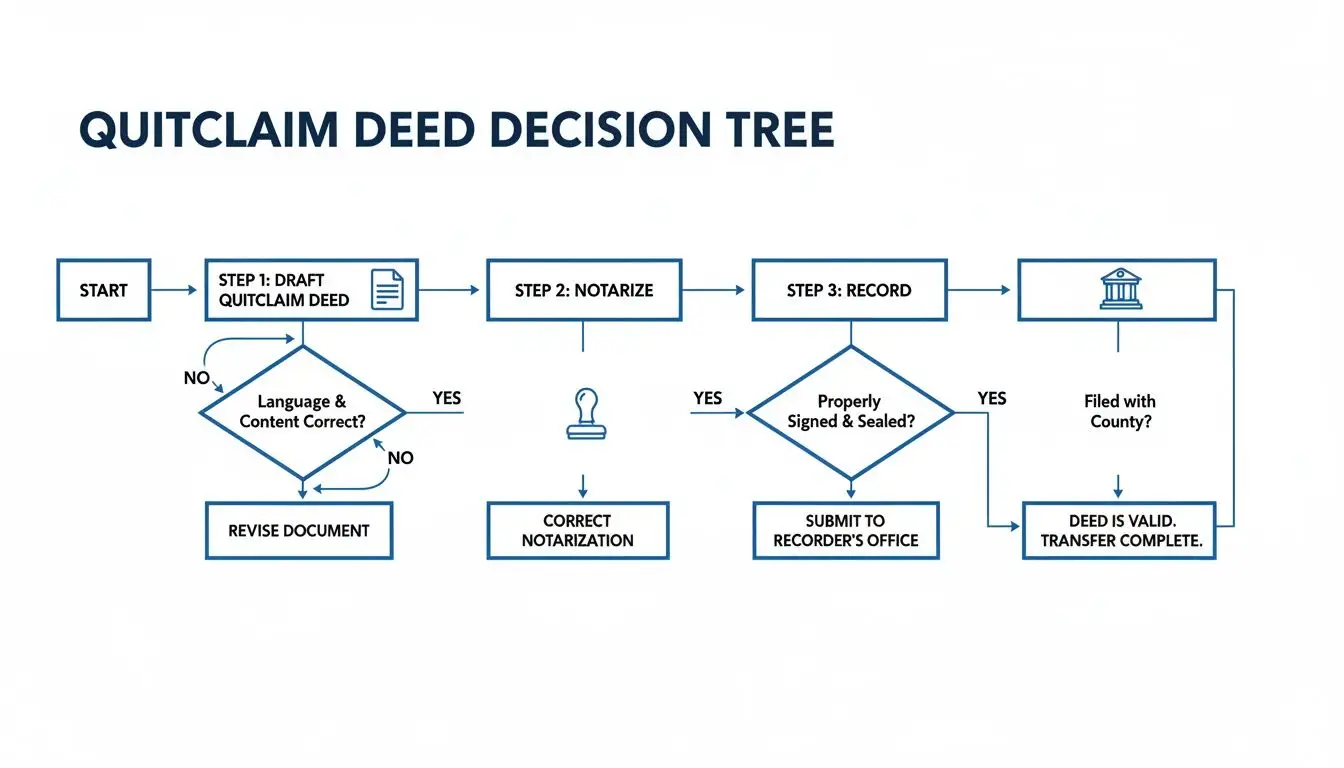
Even though the steps—writing, signing, and recording—look simple, the lack of protection is a big deal. Understanding this helps you decide if a quitclaim is right for you, or if you need the safety of a warranty deed. If you’re not sure, the team at DeWitt & Daniels can help you choose.
When Should You Use a Quitclaim Deed?
Think of a quitclaim deed as an “as-is” deal for a house or land. It’s really only a good idea when the people involved know and trust each other completely. You wouldn’t use it to buy a house from a stranger, but it’s a simple tool for fixing property ownership issues between family members.
Because a quitclaim deed has zero promises, you should only use it in low-risk situations where you’re not worried about hidden problems.
Common Uses for a Quitclaim Deed
In Arkansas, people often use these deeds in a few key situations:
- Adding a Spouse: After you get married, you can use a quitclaim deed to easily add your new husband or wife to the title of your home.
- Gifting Property: A parent might use one to give their house to their adult child. This makes the transfer official without the hassle of a sale.
- Putting Property in a Trust: To plan for the future, people often use a quitclaim deed to move their property into a special legal account called a living trust.
One of the most common uses is during a divorce. For example, if two people are divorcing, one person can sign a quitclaim deed to give their share of the family home to the other person, making them the only owner.
Quitclaim deeds are very useful in divorces because they offer a simple way to divide property. You can find more information about this on the LoopNet.com CRE insights page.
Major Risks of Using a Quitclaim Deed
Using a quitclaim deed can be like walking a tightrope with no safety net. The biggest risk is that it gives zero protection to the person getting the property. You are just getting whatever ownership the other person has—and all the problems that might come with it.

This means you could get a property with serious and expensive problems, and you can’t blame the person who gave it to you. For example, what if there’s an old unpaid bill on the property? Or what if a long-lost relative of a past owner shows up and says they own it? Even worse, the person who gave you the deed might not have had any right to the property at all.
Here’s another important thing people often forget:
A quitclaim deed does not get rid of the mortgage. Even if someone gives away their ownership, if their name is on the loan, they still have to make the payments.
There’s a reason why most lawyers say you should not use quitclaim deeds for anything other than simple transfers between people who deeply trust each other. As you can explore in more detail at CourthouseDirect.com, the lack of promises makes it a big gamble.
These risks are why buying property from a stranger with a quitclaim deed is almost always a bad idea. If you find a problem later, you’re the one stuck with the legal and money mess. Fixing these issues often means going to court, which you can learn about in our guide on how to quiet title in Arkansas.
When to Speak with an Arkansas Attorney
It can be easy to think of a quitclaim deed as a simple form you fill out. And sometimes, it is. But a small mistake on that paper can cause big trouble later. Knowing when to stop and ask a lawyer for help is one of the smartest things you can do.
While it’s always a good idea to have a lawyer look over any quitclaim deed, there are a few times when you absolutely must talk to one:
- Complicated Family Transfers: Things can get messy fast when you’re dividing property between several family members.
- Divorce: You need to be sure the deed matches your divorce papers perfectly to protect your money.
- You’re Not Sure About the Title: If you have any doubt about old problems or claims on the property, it’s time to call an expert.
For those of us in Fayetteville, Bentonville, and across Northwest Arkansas, getting a little professional help can give you a lot of peace of mind. The team at DeWitt & Daniels deals with this all the time, and they can make sure your property transfer is done right.
Frequently Asked Questions About Quitclaim Deeds
Even when you understand the basics, a few common questions always come up about quitclaim deeds in Arkansas. Let’s answer some of the big ones.
Does a Quitclaim Deed Affect My Property Taxes?
Yes, it can. Once a quitclaim deed is recorded in an Arkansas county, the county government sees a new owner. That new owner—the grantee—is now responsible for paying all future property taxes.
Also, if you’re giving the property to someone for free, the government might see it as a gift. Depending on how much the property is worth, there could be a gift tax.
What if I Get a Quitclaim for Property the Grantor Doesn’t Own?
This is the biggest risk of a quitclaim deed. If the person giving you the deed (the grantor) doesn’t actually own the property, then the deed is worthless. You get what they had—which is nothing.
A quitclaim deed only gives you the owner’s interest, if they have any. It is not a promise of ownership, which is why you should only use them with people you trust completely.
Because the deed makes no promises, you can’t sue the grantor for giving you a worthless deed. When dealing with something this important, it’s always smart to talk to a good real estate attorney.
Do I Have to File a Quitclaim Deed with the County?
Yes, you must. A signed and notarized deed is a good start, but in Arkansas, the transfer isn’t legally finished or protected until it’s officially recorded.
This means taking the deed to the County Clerk’s office where the property is. If you don’t record it, the new owner is at risk because their ownership isn’t part of the official public record.
Figuring out property transfers can feel tricky, but you don’t have to do it by yourself. The team at DeWitt & Daniels knows Arkansas law and can guide you through every step. For trusted legal advice in Northwest Arkansas, visit Dewitt and Daniels Law Firm.