
When you hear the words “legal guardianship,” it might sound like a big, confusing legal idea. But it’s really just a way to protect people who can’t protect themselves. Think of it like this: a judge chooses a trusted person (called a guardian) to make important choices for someone who can’t.
The person who needs help is called the “ward.” A ward could be a kid whose parents can’t take care of them anymore. Or it could be a grown-up who has a serious illness and can’t manage their own life. Guardianship is a legal way to make sure the ward is safe and their health and money are looked after.
What is Legal Guardianship in Arkansas?

Imagine a guardian is like a co-pilot on an airplane. If the main pilot can’t fly the plane, the co-pilot takes over to land everyone safely. A guardian does something similar for a person. They step in to make important life decisions when someone can’t do it for themselves.
A guardian is usually needed in two kinds of situations:
- For Kids: This is for children under 18 whose parents can’t take care of them. This might be because a parent has passed away, is very sick, or other sad things have happened.
- For Grown-ups Who Can’t Make Decisions: This is for adults who, because of an illness or disability, can no longer make good choices about their health or money.
The Two Main Kinds of Guardianship
Guardianship in Arkansas is not the same for everyone. A judge decides what kind of help a person needs. There are two main jobs a guardian can have.
These are called Guardianship of the Person and Guardianship of the Estate. It’s important to know the difference because they handle very different parts of a person’s life.
Here’s a simple chart to show you what each one does.
Guardianship of the Person vs. Guardianship of the Estate
| Type of Guardianship | What It Covers | Example Decisions |
|---|---|---|
| Guardianship of the Person | The ward’s daily life and health. It’s all about making sure they are safe and well. | Choosing where the ward lives, saying “yes” to a doctor’s treatment, making school choices. |
| Guardianship of the Estate | The ward’s money, home, and other things they own. This job is about managing their money safely. | Paying the ward’s bills, managing their savings, filing taxes, selling their house if needed. |
Sometimes, one person is chosen to do both jobs. But in other cases, a judge might pick two people. For example, a family member might take care of the person, while a banker takes care of the money.
This legal system is very important for protecting people all over the country. About 1.3 million adults in the U.S. have a guardian. These guardians look after about $50 billion in total. If you want to learn more, you can read about understanding the nuances of legal guardianship. Arkansas has its own specific laws to make sure people are protected right here at home.
When Do Children and Adults Need a Guardian?
No one ever plans to need a guardian. It usually happens after a tough time in life when someone can’t take care of themselves anymore. For both kids and grown-ups in Arkansas, the law provides a way to make sure they are safe.
Of course, getting a guardian for a child is different than for an adult. Let’s look at the most common reasons why a family might need one.
Guardianship for Children in Arkansas
A safe and loving home is the most important thing for a child. When parents can’t give their kids that kind of home, another trusted adult needs to step in. That’s when legal guardianship is needed.
This can happen for a few sad reasons:
- One or both parents pass away, leaving a child with no one to legally care for them.
- A parent has a serious sickness that makes it impossible to be a good parent.
- A parent is in jail, leaves the child, or doesn’t take care of them properly.
In these hard times, grandparents, aunts, and uncles are often the first to help. This is called kinship care. It’s a great way to let kids stay with family they already know and love.
Kinship care is more than just a nice family helping out. It’s a key part of how we protect children. Studies show that kids who live with relatives are happier and do better in life after going through a tough time.
Arkansas knows how important family is. The state has made changes to its laws to help children in foster care. Arkansas now has a Guardianship Assistance Program. This program gives money to relatives who become legal guardians for kids who might otherwise stay in foster care. You can read more about these legislative updates and see how they help families.
Guardianship for Adults Who Can’t Make Decisions
For grown-ups, the need for a guardian can happen slowly. It might start with them forgetting things or making bad choices. Over time, it can get to a point where they can’t safely manage their life. If an adult can’t handle their own business, a guardian might be the only option, especially if legal papers like a other legal tools like a Power of Attorney weren’t signed earlier.
Choosing a guardian for an adult is a very big deal. It means taking away their right to make their own choices. Arkansas judges do not do this unless it’s absolutely necessary.
Before a judge will even think about it, the person must be legally found to be incapacitated. This is a legal term, not just a doctor’s opinion. In Arkansas, an incapacitated person is someone who can’t make good decisions because of a condition like:
- Mental illness or a disability they were born with
- A long-term problem with drugs or alcohol
- A serious physical sickness or disability
The key is that their condition must be so bad that the person can’t understand information to make good choices. Because of this, they can’t decide things about their health, safety, or money. For example, a person with bad Alzheimer’s might forget to pay their house payment or not understand why they need surgery.
When a family sees a loved one getting worse, like an older parent with memory loss, it can be scary. Our guide on obtaining guardianship for elderly parents talks more about this. In these cases, a judge picks a guardian to make the big decisions and protect the adult from getting hurt or being taken advantage of.
The Arkansas Guardianship Process: A Step-by-Step Guide
Getting a legal guardianship in Arkansas can feel like a lot to handle. It’s a serious court process for a good reason—it involves giving someone else control over a person’s life. But even though it’s serious, it follows a clear path.
Let’s go through the steps, from the first paper you file to the judge’s final decision.
This chart shows how the process begins, whether you are worried about a child or an adult.
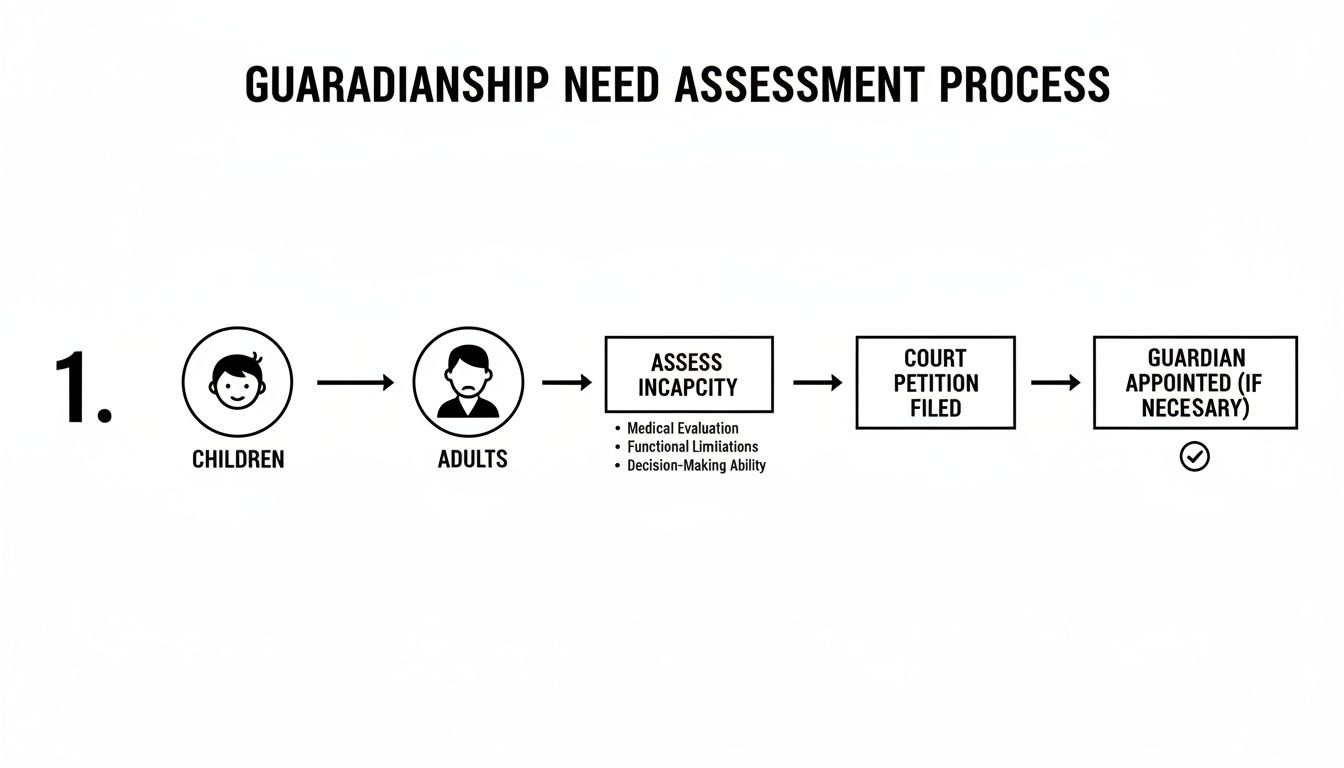
As you can see, the court first has to decide if a person truly needs legal protection before it will do anything.
Step 1: Filing the Petition
The first step is filing a paper called a Petition for Appointment of Guardian. You give this paper to the court in the county where your loved one lives. This is your official request to the judge, explaining why you think a guardian is needed.
This is not a simple form. The petition needs to have a lot of details, including:
- Your name and your connection to the person.
- The name, age, and address of the person who needs help.
- A clear reason why they need a guardian.
- The names and addresses of close family members, who legally have to be told about the case.
Arkansas law is very specific about what must be in the petition. You now have to give at least 11 specific pieces of information, like how much power the guardian should have. The good news is that recent changes make it easier to file one petition for two or more siblings. You can find more on federal programs that support these efforts, which can be very helpful for families.
Step 2: The Doctor’s Report and the Ad Litem
After you file the petition, the court does two important things to protect the person’s rights. For adults, the court will order a report from a doctor or another expert. This expert will check the person’s health and mind and give a report to the judge.
Next, the judge picks an attorney ad litem. This is a lawyer who does not work for you or your family. Their only job is to look out for the best interests of the person who might need a guardian. The ad litem acts like a detective. They will meet with your loved one, talk to family, look at medical records, and then tell the judge what they think should happen.
The attorney ad litem is like the judge’s eyes and ears. Their work is very important. It helps make sure the judge gets a fair and honest look at the situation before taking away someone’s rights.
Step 3: The Court Hearing
The last step is the court hearing. This is when everyone goes before the judge. It’s your chance to explain why a guardian is needed. You will need to show proof to back up your story. The attorney ad litem will also be there to tell the judge what they found out.
At the hearing, the judge has to answer two big questions:
- Is the person legally incapacitated? You must prove this with “clear and convincing evidence.” This is a high legal bar to meet.
- Is the person you suggested a good choice for guardian? The judge needs to know you are responsible, honest, and will always do what’s best for the ward.
If the judge agrees on both points, they will sign a court order making you the guardian. This paper is called the Letters of Guardianship. It gives you the legal power to start making decisions. After that, the process of getting a guardianship is finished.
What It Means to Be a Guardian

When the judge signs the court order, you officially become a guardian. This is more than just a new title. It’s a promise to always do what’s best for another person. You are stepping in to handle the parts of their life they can no longer manage.
As a guardian, you have big responsibilities, and the court will check on you. In Arkansas, your duties are about two main things: taking care of the person and managing their money. The law says you must handle both with great care.
This is a job with a lot of trust. You are legally required to put the ward’s needs first—before your own needs or wants.
Taking Care of the Person
If you are a guardian of the person, you are their main protector. You make the choices that affect their health and safety every day.
This can include many different things, big and small.
- Choosing Where They Live: You will decide on a living arrangement that is safe and lets them be as independent as possible. This could be helping them stay in their own home, moving them to an assisted living place, or finding a nursing home.
- Managing Medical Care: You will have the power to agree to medical treatments, pick their doctors, and make sure they get the care they need. This covers everything from check-ups to emergencies.
- Arranging for Daily Needs: This is about the basics—making sure the ward has healthy food, clean clothes, and chances to see friends and do things they enjoy.
Your goal should always be to respect the ward’s dignity. You should also try to honor any wishes they had before they needed a guardian, while helping them live the best life possible.
Managing the Ward’s Money and Property
If the court also makes you guardian of the estate, you are in charge of their money. Your job is to manage the ward’s money and property responsibly. This is a fiduciary duty, which is the highest level of care in the eyes of the law.
You have to be very careful and honest. Your main jobs include:
- Making a List of Everything They Own: One of your first jobs is to find and list all of the ward’s assets—bank accounts, houses, cars, furniture, everything. You must file this list with the court.
- Making a Budget: You’ll need to create a budget to keep track of the ward’s money. This makes sure their bills are paid and their needs are met.
- Protecting Their Assets: It’s your job to protect their property from being lost or wasted. This could mean keeping their home in good repair or managing their savings wisely.
A guardian of the estate is like the manager of a company. You have been trusted to handle someone else’s money, and you are responsible for every single choice you make.
Reporting to the Court is a Must
Being accountable is a very important part of legal guardianship Arkansas. You are not allowed to act alone. The court needs you to provide regular updates to make sure you are doing your job right.
The most important report is the annual accounting. Every year, you have to give the court a detailed report of the ward’s finances. It must show every dollar that came in and every dollar that went out. You will need bank statements and receipts to prove it.
You will also file a yearly report about the ward’s health and well-being. These reports are not optional. They are the main way the court supervises you and makes sure the ward is safe.
How a Guardianship Can Be Changed or Stopped
A guardianship does not always last forever. It’s a legal tool that should only be used as long as it’s needed. The same court that starts a guardianship can also change it or end it when things in life change.
The main goal is to protect the person, called the ward, while letting them be as free as possible. So, when the reasons for the guardianship are gone, the guardianship should go away too.
When a Child Turns 18
The most common reason a guardianship ends is when a child turns 18. In Arkansas, 18 is the age when you legally become an adult. This means you get the right to make your own choices.
The guardianship automatically ends on the child’s 18th birthday. The guardian’s legal power is over. Their last job is to give a final report to the court and turn over any money or property to the new adult.
Giving an Adult Their Rights Back
For an adult ward, ending a guardianship means proving to the court they can make their own decisions again. This is called a restoration of capacity. It’s a great moment when someone who needed help has recovered enough to take back control of their life.
This can happen for a few reasons:
- A person gets better from a bad sickness or injury that had affected their mind.
- Someone gets help for an addiction and can now take care of themselves.
- An adult with a mental health issue gets treatment that works so well they can make good decisions again.
To start this process, the ward (or someone helping them) files a request with the court. They need to show strong proof, usually a new report from a doctor, that says the person is now able to manage their own life. If the judge agrees, the court will sign an order to end the guardianship and give the person all their legal rights back.
The judge’s main job is to protect the ward. If that person can safely take back control of their life, the court is happy to step aside. The goal is always to give back independence when it is safe to do so.
Changing the Guardian
Sometimes, a guardian is still needed, but the person acting as guardian is no longer the right fit for the job. Arkansas law has a way to remove a guardian who is not doing a good job or can no longer serve.
A family member or the ward can ask the court to remove a guardian for serious reasons, such as:
- Not taking care of the ward’s health or personal needs.
- Wasting or stealing the ward’s money.
- Getting sick or being unable to do the job anymore.
- Moving far away, which makes it hard to give good care.
If the court agrees the guardian is not doing what’s best for the ward, it will remove them. The judge will then choose a successor guardian to take over. This makes sure the ward stays protected. This is an important safety check in the legal guardianship Arkansas system.
How a Good Lawyer Can Help Your Family
Knowing the steps to get a guardianship is one thing. Going through the process alone is much harder. It’s a journey with strict rules, deadlines, and a lot of stress. Having a good lawyer to help can make a huge difference. They can turn a confusing time into a clear plan.
A lawyer does more than just fill out papers. They help you build the strongest case to show why a guardianship is needed. They make sure every paper is filed right and on time. This helps you avoid simple mistakes that can cause long and costly delays.
Avoiding Common Problems
The Arkansas guardianship process has its own rules, and it’s easy to make a mistake if you don’t know them. A lawyer helps you avoid the common problems that can hurt your case or even get it thrown out.
Some of the most common issues are:
- Wrong Paperwork: Forgetting even one of the 11 required items in the petition or not telling all the right family members can stop the whole process.
- Not Enough Proof: It’s not enough to just think a loved one needs help. You have to prove it to the judge. A lawyer knows what kind of doctor’s reports and witness stories will work best in court.
- Missing Deadlines: The court has many deadlines for filing papers. Missing one can cause big problems and may make the judge think you aren’t ready to be a guardian.
A lawyer handles all these details so your case looks professional. This lets you focus on what’s most important: helping your loved one.
Trying to handle a court case alone is like trying to cross a river without a bridge. A good lawyer is that bridge. They give you a safe path to the other side and protect you from legal troubles.
Your Guide in Northwest Arkansas
At DeWitt & Daniels, we help families all over Northwest Arkansas with the legal guardianship Arkansas system. We handle the legal work so you can focus on your family. Our job is to build a strong case, support you in court, and make sure every step is handled with care.
We know this is about more than just a court case; it’s about protecting someone you love. If you are thinking about guardianship for someone in your family, you don’t have to do it alone. Please give our team a call. Let’s talk about your situation and find the best way forward for your family.
Common Questions About Arkansas Guardianship
It’s normal to have questions when you are thinking about guardianship. It’s a big legal and personal step, and getting clear answers can help you feel more sure about what to do. Here are some of the most common questions we hear from families in Arkansas.
How Much Does Legal Guardianship Cost?
There is no single price for a guardianship. The total cost depends on how complex your family’s situation is.
You will have to pay court filing fees, fees to send legal notices to family, and a fee for the doctor’s report. You will also have lawyer fees—both for your own lawyer and for the separate lawyer the court picks to represent the person (the ad litem).
If everyone in the family agrees, the case will be much cheaper. If a family member fights the guardianship and you have to go to trial, the legal costs can be much higher.
Are There Other Options Besides Guardianship?
Yes, and Arkansas courts have to look at them first. A common choice that is less serious is a Power of Attorney. This is a legal paper that lets a person choose someone to handle their money and health decisions if they can’t later on. The important thing is that it has to be signed while the person is still able to understand it.
Other helpful tools include:
- Trusts: These can be set up to manage money and property, often without the court getting involved.
- Advance Directives: This is also called a living will. It’s a paper that says what kind of medical care a person wants at the end of their life.
If these plans are already in place and working well, a judge will probably decide a full guardianship is not needed.
A judge will always try to use the “least restrictive means” to protect someone. If a Power of Attorney is doing the job, a judge will almost always choose that over taking away a person’s rights with a guardianship.
What if There Is an Emergency?
Sometimes, you can’t wait for the normal court process. If someone is in immediate danger, Arkansas law allows for an emergency guardianship. This is a much faster process to get protection right away.
You will need to file a request that explains the emergency very clearly. If the judge agrees it’s urgent, they can name a temporary guardian for a short time, usually up to 90 days. This helps keep things stable until a full hearing can be held to decide if a permanent guardian is needed.
Can a Guardian Live in Another State?
It is possible, but it makes things more complicated. The judge’s main worry is always what is best for the person who needs care.
A guardian who lives out of state has to prove to the judge they can manage the person’s care, doctor visits, and money from far away. To be honest, judges often prefer a guardian who lives nearby and can be there in person, especially if the ward has a lot of health problems. The judge will look at all the facts before making a decision.