
Picking the right family law attorney is more than just finding a legal expert. It’s about finding a partner who understands your goals, knows their way around Arkansas courts, and talks to you in a way you can understand.
The whole process starts with a little bit of homework. Before you even start searching, take some time to figure out what you want and gather your important papers. This small step can save you a lot of time, money, and stress later on.
Knowing What You Need Before You Start
Looking for a family law attorney without a clear plan is like starting a road trip without a map—you’ll get lost. Before you type a single name into a search engine, thinking about your goals will make your search much easier. This first step is all about you: what you want to achieve, what’s most important, and what your situation really is.
What does a “win” look like for you? Are you hoping to agree on things peacefully, or do you need to get ready for a fight in court? The answer will help you find the right kind of lawyer. A lawyer who is good at helping people agree is perfect for one situation, while a tough lawyer who is ready for court is needed for another.
Figure Out Your Personal Goals
First, get very clear on what you want to happen. Is the most important thing to protect your time with your children? Or is it to make sure your property and money are split fairly? Sometimes just making a simple list can make a confusing situation feel much clearer.
For example, if you are dealing with child custody, it’s a smart idea to learn about the local rules. You can learn more by reading our guide on child custody laws in Arkansas.
This first step—figuring out goals, listing what’s important, and gathering papers—builds the foundation for a good search.
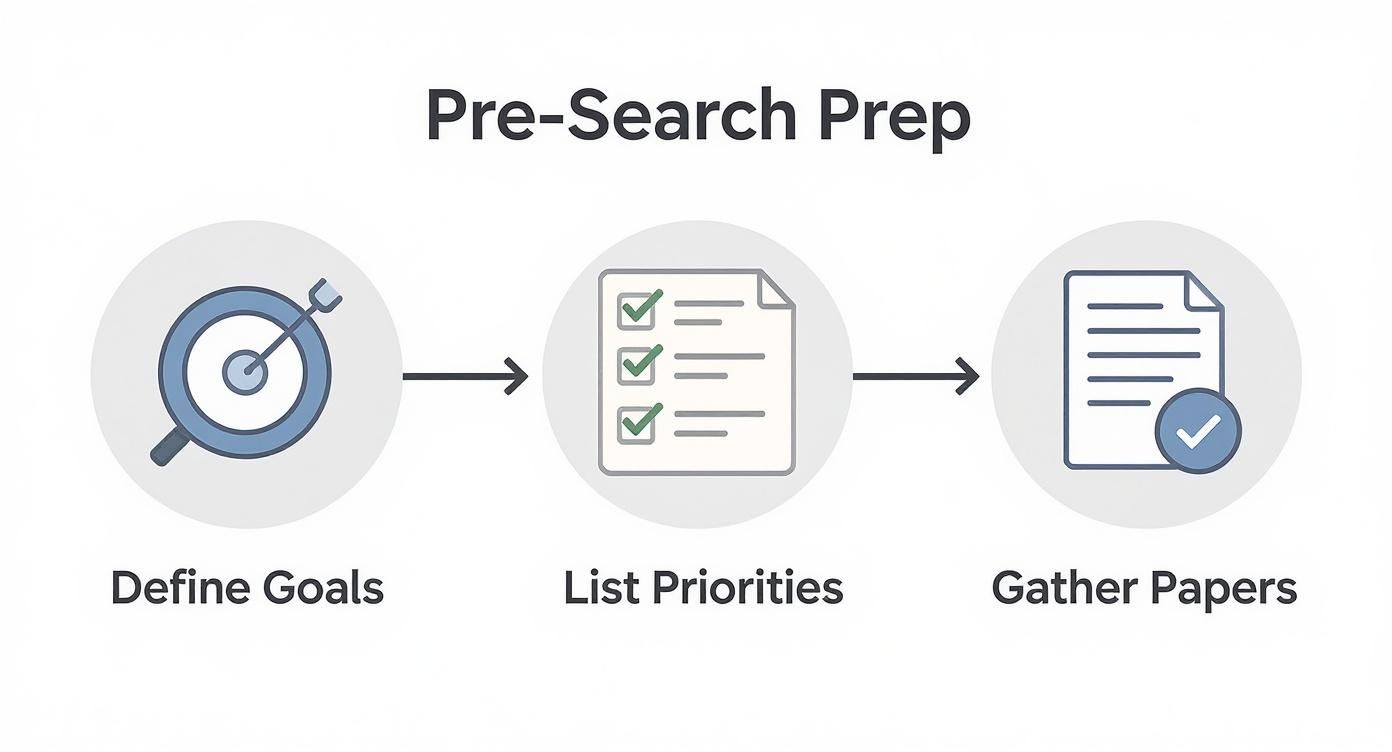
As you can see, getting ready ahead of time makes the path forward much clearer. It helps you and your future attorney get on the same page and work together from the start.
To help you get started, here’s a quick checklist to organize your thoughts.
Your Personal Family Law Needs Checklist
Use this table to quickly figure out what you need from an attorney before you start looking.
| Area of Need | Your Specific Goal (Example) | Key Papers to Gather |
|---|---|---|
| Child Custody | “I want a 50/50 schedule for the kids.” | Children’s school and doctor records, a sample parenting plan. |
| Splitting Property | “I need to protect my retirement money.” | Bank statements, investment records, house deeds, tax papers. |
| Spousal Support (Alimony) | “I need help with money while the divorce is happening.” | Pay stubs, a list of monthly bills, tax papers. |
| Prenuptial Agreement | “I want to make sure our prenup is followed.” | The signed prenuptial agreement, papers showing finances from when it was signed. |
Taking a few minutes to fill this out for your own situation will make your first meetings with lawyers much more useful.
Gather Your Important Paperwork
Next, it’s time to start collecting your important papers. Don’t worry about building a whole legal case yet. This is just about getting organized.
Start gathering things like:
- Money Records: Recent bank statements, tax returns, and pay stubs are very important.
- Legal Papers: Any existing court orders, separation agreements, or prenuptial agreements.
- A Simple Timeline: Write down a short history of important dates and things that happened.
Walking into a meeting with these items shows you’re serious and ready. It lets an attorney give you real advice right away, instead of just talking in general terms. In 2025, there are nearly 56,970 family law attorneys in the U.S., so a client who is organized will stand out. This is especially true when you think that in about 72% of cases, at least one person doesn’t have a lawyer.
By doing this prep work, you are not just hiring a lawyer; you are starting a team. You bring the ideas of what’s most important, and they bring the legal plan to make it happen.
Finding and Researching Lawyers in Arkansas
Once you know what you’re looking for, it’s time to find lawyers. You can start with a simple online search, but to build a good list of choices, you need to dig a little deeper. The goal isn’t just to find any lawyer in Arkansas; it’s to find a few who are the right fit for you.
Start your search with places you can trust. The Arkansas Bar Association is the best place to begin. It has a list of every licensed attorney in the state. This is an important first step to make sure anyone you think about hiring is allowed to practice law here and is in good standing.
Don’t forget about asking people you know. Ask friends, family, or coworkers if they can recommend someone they’ve worked with, especially if they had a similar legal problem.
Building Your First List
As you start collecting names, try to get it down to three to five good choices. This gives you a small enough group to research well without feeling buried in options. When you go to a lawyer’s website, look past the nice design and get straight to the important stuff.
Here’s what to look for:
- Specific Experience: Do they actually practice family law? Look for pages on their site about divorce, child custody, or whatever you need help with. A lawyer who only does family law will know more about it than a lawyer who does a little bit of everything.
- Lawyer Bios: Get to know the lawyers. Do their bios say they have worked in local Arkansas courts, maybe in Pulaski or Washington County? Knowing the local courts can be a big help.
- What Past Clients Say: See what other people are saying. Look for comments about how well the lawyer talks to clients, solves problems, and, most importantly, the results they got in cases like yours.
Think of their website as a first impression. It should give you a gut feeling about who they are and if they seem like someone you could work with. It’s also helpful to have a basic understanding of how law firms market themselves. Knowing a bit about SEO strategies for lawyers can give you a better lens through which to view their online presence and how they position their expertise.
The point here is to build a short, high-quality list. It’s much better to have three well-researched options than ten names you found randomly online. A focused approach is key.
With so many lawyers out there, you can be picky. In the United States, there are roughly 402 lawyers per 100,000 people, which means you have plenty of choices. This is great, but it also makes it very important to do your homework and check a lawyer’s skills and specific experience before you move forward. You can read more about the availability of legal professionals to get a sense of the broader landscape.
Asking the Right Questions in Your First Meeting
Think of the first meeting like a job interview, but you’re the one doing the hiring. This is your chance to look past the website and fancy bio to get a feel for the real person who will help you through a tough time.

This meeting is all about seeing if you’re a good match. You’re not just looking for a smart lawyer; you need a supportive guide whose style works for you. Your goal is to leave that office with a clear idea of what it would really be like to work with them.
Questions About Experience and Strategy
Don’t just ask, “How long have you been a lawyer?” That’s a simple question. You need to get more specific. A lawyer with 20 years of general experience might have spent less time in an Arkansas family courtroom than a dedicated family law lawyer with only five years of experience.
Try asking these more specific questions instead:
- How many cases like mine have you handled here in Arkansas?
- What part of your work is focused on family law?
- From what I’ve told you, what are your first thoughts about my situation?
- What do you think are the good points and bad points of my case?
Their answers will show how much they know about local courts and judges in places like Bentonville or Fayetteville. That kind of local knowledge can make a big difference. It’s not just about knowing the law; it’s about knowing how it works in the real world, right where you live.
Understanding Communication and How They Handle Cases
Nothing is more frustrating for a client than when they and their lawyer don’t communicate well. Before you hire anyone, you need to know exactly how they work.
Be direct and ask about their process:
- How will you keep me updated on my case?
- Will I be talking mostly with you, or with a helper like a paralegal?
- How long does it usually take you to answer a phone call or email?
These questions help set expectations from the beginning. You’ll quickly find out if they are a hands-on lawyer who does everything themselves or if they give a lot of work to their team. Neither way is right or wrong, but you need to know which you are more comfortable with.
A good attorney won’t just answer your questions; they’ll make you feel heard. Pay close attention to how they listen. Are they cutting you off to get to the point, or are they letting you tell your story?
Checking for a Personal Connection
At the end of the day, this is a very personal choice. You’re going to share some of the most private details of your life with this person during a very stressful time. You have to feel comfortable with them.
Once you’ve talked about the facts, take a moment and think about the conversation itself. Did they explain complicated legal words in a way you could understand? Did you feel seen and respected? Trust your gut. A lawyer can have the best resume in the state, but if you don’t feel that you can trust them, they aren’t the right fit for you. This is as much about feeling safe as it is about their legal skills.
What to Look for in a Lawyer’s Style and Background
Once you’ve met with a few lawyers, the real work starts. It’s time to look at the details and figure out who is truly the best fit for you. This is about more than just a law degree; you’re looking for the right mix of experience, personality, and how they handle cases.
Think about it this way: any licensed attorney in Arkansas can legally handle a family law case, but you want someone who really focuses on it. A lawyer who only does family law knows all the little details of the local court system, from how different judges act to the common tricks other local lawyers might use. That’s inside knowledge you can’t get from a book.
Understanding a Lawyer’s Approach
Every lawyer works differently. Some are aggressive and ready to fight in the courtroom. Others are natural problem-solvers who prefer to calm things down and find a solution everyone can agree on, more like a referee.
Neither style is automatically better, but one is probably better for you.
Let’s say your goal is a peaceful, low-stress divorce. Hiring a “fighter” lawyer might just make things worse, making the process longer and costing you more money and stress. But if you are dealing with an ex-spouse who will not be reasonable, a gentle approach might not work. In that case, you’ll need someone who won’t back down.
The key is to match the lawyer’s style with your situation and your goals. Getting this wrong can lead to a lot of extra fighting and frustration.
It’s also important to know that family law is changing. More and more, the focus is on finding ways to solve problems without a big court battle, like through mediation. The 2026 Best Lawyers Awards, for instance, showed a significant number of women being recognized for these skills. In fact, women made up 71% of the lawyers honored for Collaborative Family Law and 58% for Family Law Mediation. This shows a growing trend of solving family problems without going to court. You can read more about these trends in family law recognition.
Good Communication Is a Must
How a lawyer communicates can make or break your whole experience. You probably got a sense of their communication style during your first meeting. Now is the time to really think about what you need from them.
People have different needs when it comes to being kept in the loop. Which of these sounds more like you?
- The Constant Updater: This is the lawyer who sends regular emails and makes frequent calls, even if it’s just to say, “no news yet.” If not knowing what’s going on makes you nervous, this style can be very comforting.
- The “Big Picture” Lawyer: This attorney focuses on the big steps. You’ll hear from them when something important happens or a decision needs to be made, but not for every little thing. This works great if you trust them to handle the small stuff and don’t want to be bothered with minor updates.
There’s no “correct” style here. The goal is to find someone whose communication habits match your own. Being honest with yourself about what you need will save you a lot of frustration later. You’re not just hiring a legal expert; you’re choosing a guide for one of life’s toughest journeys.
Understanding Legal Fees and Agreements
Let’s talk about the big topic: money. Hiring a lawyer costs a lot, so it’s very important to talk about the financial side of things from the start. Understanding how Arkansas family law attorneys charge isn’t just about the final bill; it’s about making sure you’re comfortable and don’t get any surprise bills later. You should never sign anything until you completely understand the costs.

Most family lawyers in Arkansas use a few common ways to charge for their services. Once you understand these, you can compare your options and know exactly what you’re paying for.
Common Ways Lawyers Charge for Their Time
The most common way is the hourly rate. This is simple: you pay for the actual time the attorney and their team (like paralegals) spend working on your case. This includes everything from writing papers to making phone calls. It’s always smart to ask how they bill their time—many law firms bill in small chunks, like six-minute blocks.
Another way you might see is a flat fee. Here, you pay one single price for a specific task. This is common for things like a simple divorce where both people agree on everything, or for writing a prenuptial agreement. Flat fees are great because you know the cost upfront, but you won’t see them for complicated cases where it’s hard to know how much time it will take.
Finally, you will almost certainly hear the word retainer.
Think of a retainer as a down payment for your lawyer’s future work. You pay a sum of money upfront, which the lawyer puts into a special bank account. As they work on your case, they take their fees from this account.
Once the retainer money gets low, you’ll usually need to add more money to it to keep your case going. A good question to ask is what happens to any leftover retainer money after your case is over. (It should be given back to you!)
To help you sort through these options, here’s a quick look at the most common legal fee types you’ll see.
Comparing Attorney Fee Structures
A breakdown of common legal fee arrangements to help you understand what to expect.
| Fee Type | How It Works | Best For |
|---|---|---|
| Hourly Rate | You are billed for each hour (or part of an hour) the legal team works on your case. | Complicated or unpredictable cases where the total time is unknown, like a difficult divorce or custody battle. |
| Flat Fee | A single, set price for a specific legal service. | Simple, predictable cases like an agreed-upon divorce, adoption, or name change. |
| Retainer Fee | An upfront payment that the lawyer bills against as they do work. It’s like a deposit. | Most ongoing family law cases. It makes sure the lawyer is paid for their time as they work. |
Understanding these is the first step, but you also need to ask the right questions to get the full picture.
Key Questions to Ask About Billing
Your first meeting is the perfect time to be direct about costs. Don’t be shy—a professional and honest attorney will have no problem talking openly about their fees.
Here are a few important questions to start the conversation:
- What is your hourly rate? What are the rates for other people in your office, like paralegals, who might work on my case?
- Do you charge for quick phone calls or emails?
- What is the starting retainer amount, and what does it cover?
- How often will I get a bill that shows all the charges in detail?
- Besides your fees, what other costs should I expect? (Think about court filing fees, fees for experts, etc.)
Getting clear answers to these questions will help you manage your budget and avoid problems later.
Carefully Review the Fee Agreement
Before any work starts, your chosen attorney will give you a fee agreement. This is a contract that explains all the financial details of your relationship with the lawyer.
Do not sign this document until you’ve read it and understand every single word.
This agreement is your financial guide. It should clearly list the hourly rates, the retainer amount, when you’ll get bills, and any other possible costs. If anything is confusing, ask them to explain it. A good fee agreement makes sure you and your lawyer are on the same page from day one, which builds a relationship based on trust.
Making a Confident Final Decision
You’ve done the work. You’ve researched, met with lawyers, and looked at the costs. Now it’s time to choose the right person to guide you through a very hard time in your life. This isn’t just about the facts; it’s a mix of logic and your gut feeling.
By now, you’ve probably narrowed it down to your top two or three choices. Lay it all out. A simple side-by-side comparison can make the best choice surprisingly clear.
Your Head vs. Your Heart
Think back through your conversations. Who had the most direct experience with Arkansas family courts? Whose plan for your case felt the most solid and right for your situation? And what about the money talk—was one person clear and open while another left you feeling confused about the details?
But facts and figures only tell half the story. The other half is all about your gut feeling. Legal skills are a must, of course, but you can’t ignore the power of a real human connection. You are about to trust this person with the most private details of your life during a very stressful time.
Take a quiet moment and ask yourself:
- Who really listened and made me feel heard?
- Who explained the legal stuff in a way that actually made sense?
- When I left their office, who made me feel the most confident and respected?
Often, the answers to these questions will point you directly to the right choice. You’re not just looking for a smart legal expert; you need a supportive, steady guide who you feel comfortable relying on.
Taking the Final Steps and Moving Forward
Once you feel sure about your choice, it’s time to make it official.
Your first step is to call the attorney’s office and tell them you’re ready to hire them. They’ll prepare and send you the fee agreement you talked about during your meeting. Read it one last time very carefully to make sure every detail matches what you discussed. There should be no surprises.
After you’ve signed it, there’s one last polite thing to do. Contact the other attorneys you met with and let them know you’ve made your decision. A quick, polite email is all you need. It’s the right thing to do, and it lets them focus on other clients.
And that’s it. You have officially hired your lawyer. Now you can get to work on getting the best possible result for your family.
Got Questions About Hiring a Lawyer?
It’s completely normal to still have questions, even after you’ve done your research. Let’s answer a few of the most common ones that come up when you’re looking for a family law attorney in Arkansas.
When Is the Right Time to Hire a Lawyer?
Honestly, the best time to get a lawyer is the moment you think you might need one.
Even if you’re just starting to think about separating or getting a divorce, an early meeting with a lawyer can be very helpful. It gives you a clear picture of your rights and what to expect. If you wait until things get tense or angry, you could be starting at a disadvantage.
What If I Can’t Afford an Attorney?
This is a big worry for many people, but you do have options.
If money is a serious problem, start by looking into Legal Aid of Arkansas. They provide free or low-cost legal help to low-income people in Arkansas for non-criminal cases, which includes family law.
Also, don’t be afraid to ask about payment options during your meetings. Some attorneys are willing to create flexible payment plans to make their help more affordable. It never hurts to ask.
Your financial situation shouldn’t stop you from getting legal help. Looking into these options can make sure you understand your rights and get the support you need when it matters most.