
A Financial Power of Attorney is a super important legal tool. Think of it like giving a trusted person a spare key to your money matters. If you ever get sick or hurt and can’t handle your own finances, this person can step in and help.
This document lets you pick someone you trust to pay your bills, manage your bank accounts, and handle your money. They can only do this when you need them to, and they have to follow the rules you set up.
What Is a Financial Power of Attorney?

Imagine your money and property are a ship that you are steering. A Financial Power of Attorney lets you name a trusted co-captain. In legal terms, this person is called your agent or attorney-in-fact. They can take over steering the ship if you are unable to.
This isn’t just a document for older people or rich people. It’s a smart plan for every adult in Arkansas. A surprise illness or a bad accident could make it impossible for you to manage your money.
What would happen then? Without a Power of Attorney (or POA for short), your family might be locked out of your bank accounts. They wouldn’t be able to pay your house payment or your medical bills. Their only choice would be to go to court and ask a judge for permission to help you. This process is public, costs a lot of money, and is very stressful.
A Financial Power of Attorney is like your own private rulebook. It keeps your money matters out of court and makes sure the person you trust is in charge, not a judge.
The Key People in a Financial Power of Attorney
To understand how a POA works, you need to know who is involved. There are two main roles.
This simple table breaks down who’s who.
| Role | Who It Is | What They Do |
|---|---|---|
| Principal | This is you. | The person who makes the POA and gives the power. |
| Agent | Your trusted person. | The person you pick to make money decisions for you. |
Choosing the right person for these roles is the first step to making a solid plan that protects you.
What Powers Your Agent Can Have

Giving someone control over your money can sound scary. But here’s the most important thing to remember: you are in charge. When you make a financial power of attorney, you decide exactly how much power your agent has.
You can give them broad powers to handle everything, or you can limit them to just one or two specific things. It's like giving a friend your keys. You decide if they get the master key for the whole house or just the key for the shed.
General vs. Limited Powers
The powers you give decide if the POA is "General" or "Limited." It’s the difference between giving someone your whole toolbox and just handing them one wrench for one specific job.
A General Power of Attorney is the whole toolbox. It gives your agent the power to manage almost everything about your money. This is often the best choice because it prepares your agent for anything that might happen.
A Limited Power of Attorney (also called a Special Power of Attorney) is for one specific task. For example, you could let someone sell your car in Fayetteville while you're away. As soon as the car is sold, their power is gone.
Common Powers You Can Give
When you create a POA in Arkansas, you are basically making a custom job description for your agent. You will check off the specific powers you want them to have.
Some of the most common powers include:
- Handle Banking: This lets your agent deposit your checks, pay your bills, and manage your bank accounts.
- Manage Real Estate: Your agent can pay your mortgage and property taxes, or even sell your house if the document says so.
- Oversee Investments: This allows your agent to manage your stocks, bonds, and retirement accounts.
- File Your Taxes: You can give your agent the power to prepare and file your tax returns.
- Deal with Government Benefits: This is a big one. It includes applying for benefits like Social Security, Medicare, or VA assistance.
It is very important to understand this: your agent can only do what the document says they can do. They have a legal duty to act only in your best interest. They can’t just use your money for themselves.
By choosing the powers carefully, you give your agent the tools they need to help you without giving away too much control. This makes a financial power of attorney a powerful and safe tool.
Why a Durable Power of Attorney Is So Important
We've talked about what a financial POA is and the powers you can give. Now, let’s talk about the most important part: making it durable. What good is a plan if it stops working right when you need it most?
A regular, non-durable power of attorney has a big problem: it becomes useless the moment you become incapacitated (unable to make decisions for yourself). This means the document is no help at the exact time your family needs it. It’s like having a spare key that only works when the door is already unlocked.
The Power of "Durable"
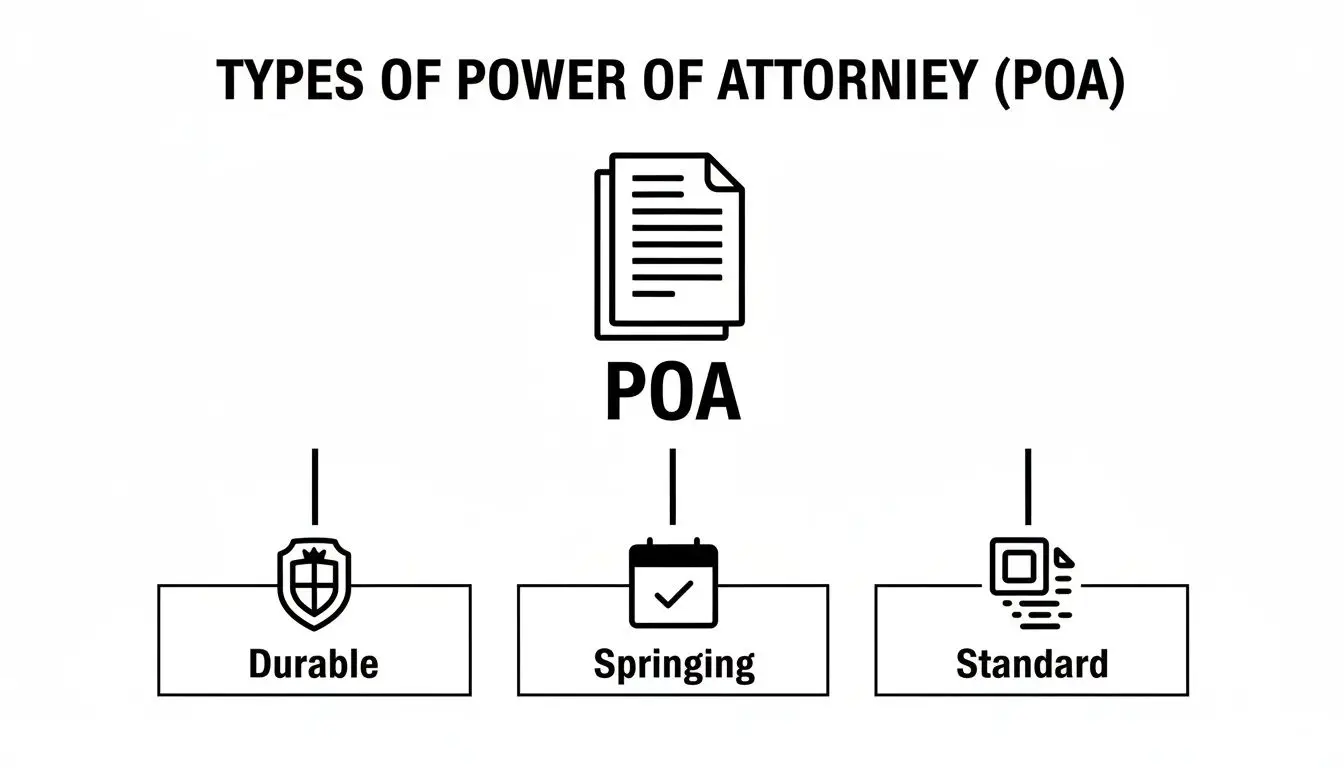
This is where a Durable Power of Attorney saves the day. Adding the word "durable" is a simple but powerful legal step. It means the document keeps working even if you can't make decisions for yourself because of an accident or illness.
Good news! In Arkansas, a financial power of attorney is automatically durable unless you write in the document that it shouldn't be. This is a big help for Arkansans, as it makes sure your POA will work when you need it.
The need for this is more common than you might think. A durable POA is a key tool for protecting your life’s savings.
Springing Power of Attorney: A More Cautious Option
You might also hear about a "springing" power of attorney. This document only “springs” into action after something specific happens—usually, when a doctor writes a letter saying you are incapacitated.
That might sound good because you keep total control until your agent needs to take over. But in real life, springing POAs can cause big problems. Your family might have to wait for a busy doctor to sign the papers, or banks might not want to accept it. This can leave your money stuck right when you need it.
For this reason, an immediately effective durable power of attorney is almost always the safer and easier choice in Arkansas. It lets your agent step in right away without having to prove you're incapacitated to every bank. For a deeper look, you can learn more about durable power of attorney in our other article.
A financial power of attorney is a must-have on any caring for aging parents checklist. By choosing an immediately effective durable POA, you give the person you trust the power to help you today so they can act without delay tomorrow.
Now that we’ve covered the different kinds of financial powers of attorney, a common question comes up: How is this different from other legal roles I’ve heard about? It’s very easy to mix up a Financial POA with a Healthcare POA or a guardianship.
Think of it like this: you wouldn't ask your plumber to fix your car. They are different experts for different jobs. These legal papers work the same way—each one has its own special job.
A Financial Power of Attorney gives your agent the power to manage your money and property. They are like your personal "Chief Financial Officer," paying bills and handling bank accounts. They have zero power over your medical care.
Keeping these jobs separate is key to a good plan in Arkansas. It makes sure every part of your life is looked after by the right person.
Financial POA vs. Healthcare POA
A Healthcare Power of Attorney is for your medical needs. This document names your "healthcare advocate"—someone who can make medical decisions for you if you can't.
This person talks to your doctors and agrees to treatments based on what you would want.
- Your Financial Agent manages your money.
- Your Healthcare Agent manages your health.
You can pick the same person for both jobs, but many people choose two different people. This spreads out the work. Your brother who is good with money might be your financial agent, while your best friend who is a nurse could be your healthcare agent.
Think of it as building your own personal team. You’re picking a money expert and a health expert to protect you when you can’t.
Financial POA vs. Guardianship
This is the most important difference to understand. A Financial Power of Attorney is a tool you create to avoid guardianship.
A guardianship is what happens when a court has to get involved because someone is incapacitated and has no POA. Your family has to go to a judge and ask for control over your life and money.
This court process takes a long time, costs a lot of money, and is totally public. Worst of all, the judge—not you—gets to decide who manages your life.
This table shows how these roles are different.
Financial POA vs Healthcare POA vs Guardianship
Understanding the key differences between these important but distinct legal roles.
| Feature | Financial Power of Attorney | Healthcare Power of Attorney | Guardianship |
|---|---|---|---|
| What It Controls | Your money and property. | Your medical decisions. | Everything a court decides. |
| How It’s Created | You sign a private document while you are able to. | You sign a private document while you are able to. | A judge gives a public court order after you are unable to decide. |
| Who Chooses | You choose your agent. | You choose your agent. | A judge chooses your guardian. |
| Cost & Time | Not very expensive and made ahead of time. | Not very expensive and made ahead of time. | Very expensive and takes a long time with courts and lawyers. |
By setting up a Financial POA and a Healthcare POA now, you stay in control. You make your own choices today so a stranger in a courtroom doesn’t have to make them for you tomorrow.
Arkansas Rules for a Valid Financial POA
When you make an important document like a financial power of attorney, a simple handshake won’t work. For a POA to be legal in Arkansas, it has to be done the right way. These rules are not meant to be difficult; they are meant to protect you.
Getting these details right makes sure your document is strong. It means that when your agent needs to help, they can do it without problems or delays from banks.
The Three Main Rules for a Valid POA
In Arkansas, the law has three main requirements. Your financial power ofattorney must be:
- In Writing: You can't just say it. The whole agreement must be on paper.
- Signed by You (the Principal): Your signature shows that you agree to what the document says.
- Signed in Front of a Notary Public: This is the final step that makes your POA official and legally binding.
What Does a Notary Public Do?
So, what's a notary? Their job is simple but very important. They are an official witness who checks your ID and makes sure you are signing the document because you want to.
A notary does not read your document or give you legal advice. They just watch you sign it, check who you are, and add their official seal. This step adds a strong layer of legal protection and makes it hard for anyone to say the document was fake.
Of course, having a valid document is only half the battle. You also have to pick the right person for the job. Your agent must be an adult (18 or older) and be able to make good decisions.
Most importantly, your agent must be someone you trust completely. This person might one day be managing all your money. Honesty is a must-have.
Life is unpredictable, and this document makes sure your money matters can continue without any problems. This is especially important when you think about how many older adults will need long-term care, which can be very expensive. Some reports show that 70% of seniors will need long-term care, which could cost over $100,000 a year. You can explore more insights on long-term care costs on Thomson Reuters.
By following these legal steps, you make sure your Arkansas financial power of attorney is a solid, legal document that will work when you need it most.
How to Protect Yourself from Misuse

Giving someone control of your money is a big act of trust. It's normal to worry, "What if my agent misuses this power?"
Luckily, you are not just relying on trust. Arkansas law and the document itself have strong protections to prevent abuse and give you peace of mind.
The most important protection is called a fiduciary duty.
An Agent’s Legal Duties in Arkansas
When you name an agent, they are taking on a serious legal job. A fiduciary duty is the highest level of loyalty and care in the law. It legally requires your agent to act only in your best interests.
This duty includes a few basic rules:
- Act in Your Best Interest: Your agent must always put your financial health first, above their own.
- Avoid Conflicts of Interest: They cannot use your money to help themselves. For example, selling your house to themselves for a very low price is illegal.
- Keep Your Finances Separate: Your agent must never mix your money with their own money. Your money stays in your accounts.
- Keep Good Records: Your agent has to keep a clear record of every dollar that comes in and every dollar that goes out.
An agent who breaks these rules can face serious trouble. A court can fire them, make them pay back any money they misused, and they could even face criminal charges.
Practical Protections You Can Add
Besides the duties the law requires, you can add extra layers of safety right into the document. Think of it like putting a custom alarm system on your money.
For example, you can require co-agents for big decisions, like selling your house. This "two-key" system means no single person has total power over your biggest assets.
Another smart idea is naming a protector. This is a trusted person—like another family member or a close friend—who has the right to ask for and check the financial records your agent is keeping. If the protector sees something wrong, they can ask a court to help.
Since your agent will have so much control, it makes sense to be as careful in choosing them as you would be when choosing a financial adviser.
A well-made POA does more than just name someone to help; it helps prevent fights. Some court statistics from 2026 showed that 82% of estates with a POA were settled much faster than those without one, saving families thousands of dollars in court fees. If you're interested in how the financial world is changing, you can read the full research about these 2026 financial shifts.
The best way to prevent misuse is to have a lawyer help you create a detailed document. This turns your trust into a clear, legal, and protective plan.
Common Questions About Financial POAs
It's one thing to know what a financial power of attorney is, but it's another to know how it works in real life. This document involves your family, your money, and a lot of trust, so it's normal to have questions.
Let's go over some of the most common questions we hear from our clients here in Arkansas.
How Do I Choose the Right Agent?
Picking your agent is the most important decision you'll make. This isn't just about finding someone who's good with math; it's about trusting someone with your money.
Think about who in your life is:
- Trustworthy: This is the most important quality. You need someone who is honest and will always do what's best for you.
- Responsible: Are they organized and dependable in their own life? Do they handle their own money well?
- Willing and Able: Being an agent can take a lot of time. You need to ask the person if they are really willing and able to do the job.
- Located Nearby: While your agent can live anywhere, having someone close by can make daily tasks like going to the bank much easier.
Don't just automatically pick your oldest child. Think about who is really the best person for this specific job.
Key Takeaway: Always name at least one successor agent. This person is your backup. They can take over if your first choice can't do the job.
Do I Need a Lawyer to Create a Financial POA?
You can find fill-in-the-blank POA forms online, but this is one area where trying to save a little money can cost you a lot later. Arkansas law has specific rules, and a simple mistake can make the whole document useless when you need it most.
Working with a lawyer makes sure your POA is legal and also says exactly what you want. A lawyer can help you think through the powers you want to give and add protections to keep you safe. With a huge amount of money expected to be passed down to the next generation in the coming years, having a solid financial plan has never been more important. You can read the full research about these future regulatory shifts on ey.com to learn more.
How Can I Change or Cancel My POA?
What if you change your mind? As long as you are mentally able to make decisions, you have all the power. You can change or cancel your financial power of attorney at any time.
To cancel it, you’ll need to sign a paper called a revocation. This is a simple legal document that says you are canceling the old POA. To make the cancellation official, you must sign it, have it notarized, and—this is very important—give a copy to your old agent and to any bank that has the old POA.
If you make a new POA, it's a good idea to include a sentence that cancels all old ones, just to be safe.