
When you hear “elder law,” you might think it’s just for very old or very rich people. But that’s not really true.
Think of NW elder law as building a strong roof for your family’s future before a storm hits. It’s a special kind of law that helps you make a plan for your health, your money, and your things as you get older. It’s not just for older people—it’s for any family in Arkansas that wants to be ready for the future.
What Is NW Elder Law and Why It Matters

Elder law is all about getting ready for life’s “what-ifs” with a clear, legal plan. It gives you control over your medical choices if you can’t speak for yourself. It also helps protect the money you’ve saved from the high cost of long-term care. It’s really about having peace of mind.
This kind of planning is very important for families in Northwest Arkansas right now. Our area has a lot more older people than it used to. From 2020 to 2023, the number of people aged 65 and older grew by 13.5%. That’s almost 80,000 new seniors in our towns. You can explore more about this demographic shift and see what it means for our area. This growth shows why it’s so important for families to plan ahead.
The Main Parts of Elder Law Planning
So, what does an NW elder law plan actually do? It covers a few key things that work together to keep you safe.
- Estate Planning: This is like writing a clear instruction book for your stuff. With tools like Wills and Trusts, we make sure your property goes to the people you choose. This helps your family avoid arguments later on.
- Long-Term Care Planning: This is about figuring out how to pay for care you might need someday, like help at home or a nursing home. The goal is to get this care without using up all your savings. This often means planning to qualify for Arkansas Medicaid eligibility.
- Guardianship and Other Choices: This part of the plan answers the question, “Who will make choices for me if I can’t?” By making documents like a Power of Attorney now, you can often avoid a public and costly court case.
To help you see how these pieces work, we’ve made a simple table.
Core Areas of Elder Law at a Glance
This table breaks down the main parts of elder law into simple terms. It shows what each area protects for you and your family.
| Area of Elder Law | What It Helps You Do | Why It’s Important in NWA |
|---|---|---|
| Estate Planning | Control who gets your stuff and when. | Makes sure your property goes where you want, not where the state decides. |
| Long-Term Care | Plan how to pay for a nursing home or care at home. | Protects your life savings from being spent to get Medicaid. |
| Guardianship | Pick someone to make choices for you if you get sick or hurt. | Avoids a costly, public court fight and keeps your family in charge. |
Each part does a special job, but they all have the same goal: to protect your family’s future and what you’ve worked hard to build.
The goal of elder law is simple: to help you live on your own, protect your money, and make sure your wishes are followed, no matter what happens. It’s about keeping you in charge of your own story.
Putting these legal protections in place isn't just a chore. It’s a way of showing you care for yourself and the people you love.
Creating Your Arkansas Estate Plan
Most people think estate planning is only for the very rich. That's not true. It’s really about making a clear, personal instruction book for your life and your stuff. It’s your chance to decide who gets your property, who makes big choices for you if you can't, and how you want things handled.
A good plan gives you two great things: peace of mind for you now, and a clear guide for your family to follow later. You're just taking steps to stop confusion and fights down the road.
The Key Tools in Your Planning Toolbox
So, how do we make this plan? In Arkansas, we use a few powerful legal tools. Each one has a specific job, but they work together to protect everything from your money to your health choices. Learning about them is the first step to taking control.
An experienced NW elder law lawyer will almost always start with these three core documents:
- Last Will and Testament: This is the document most people know about. Think of it as your official instruction sheet for the court. It says who you want to get your property. It also names a person you trust (your executor) to make sure it happens. If you die without a Will, Arkansas state law will make these choices for you, and you might not like the result.
- Trusts: A Trust is like a private, protected box for your things. You put property into it and set rules for how it’s managed and paid out, both while you’re alive and after you’re gone. The big plus is that things in a Trust usually skip the court system. This saves your family a lot of time, money, and stress.
- Powers of Attorney: These papers are for planning in case you can't make decisions yourself. You pick a trusted person—your "agent"—to legally make choices for you. We usually make two: one for money matters and another for healthcare choices.
A good estate plan is one of the best gifts you can give your family. It replaces worry with clearness, stops arguments, and makes sure your wishes are respected.
Putting these documents in place now makes sure that you—not a judge—get to make the big decisions about your life and property.
Avoiding the Probate Process in Arkansas
Probate is the court process for checking a Will and giving out someone's property. Here in Arkansas, it’s a public process that can be slow and expensive, especially in busy local courts like those in Washington and Benton counties. It's not strange for a probate case to take months, or even years.
The good news is that good planning can help your family skip probate completely.
For example, by using a Revocable Living Trust, you move your property into the Trust while you’re alive. You still control everything, but the Trust owns the property. When you pass away, there's nothing for the probate court to handle because the property isn't in your personal name. The person you picked can then give out everything privately and quickly, just like you wanted.
Many families get stuck on hard issues like selling a house during probate. A Trust can make things like this much simpler or even get rid of the problem.
This smart planning is what NW elder law is all about. It’s not just about what happens after you’re gone—it’s about making life easier and safer for you and the people you love.
Getting Long-Term Care and Using Arkansas Medicaid
When planning for long-term care, one question worries Arkansas families more than any other: How can we pay for it without losing the home and savings we've worked a lifetime to build? It's a big worry, but it can be solved. For many people, the answer is understanding how to work with Arkansas Medicaid.
Medicaid is a government program that helps pay for healthcare for people with not a lot of money. When it comes to long-term care, it can be a lifesaver, but getting help isn't easy. You have to follow very specific money rules. Knowing those rules is the key to making a good plan.
The first step in any long-term care plan is making a basic choice. Are you going to plan ahead, or wait and see what happens?
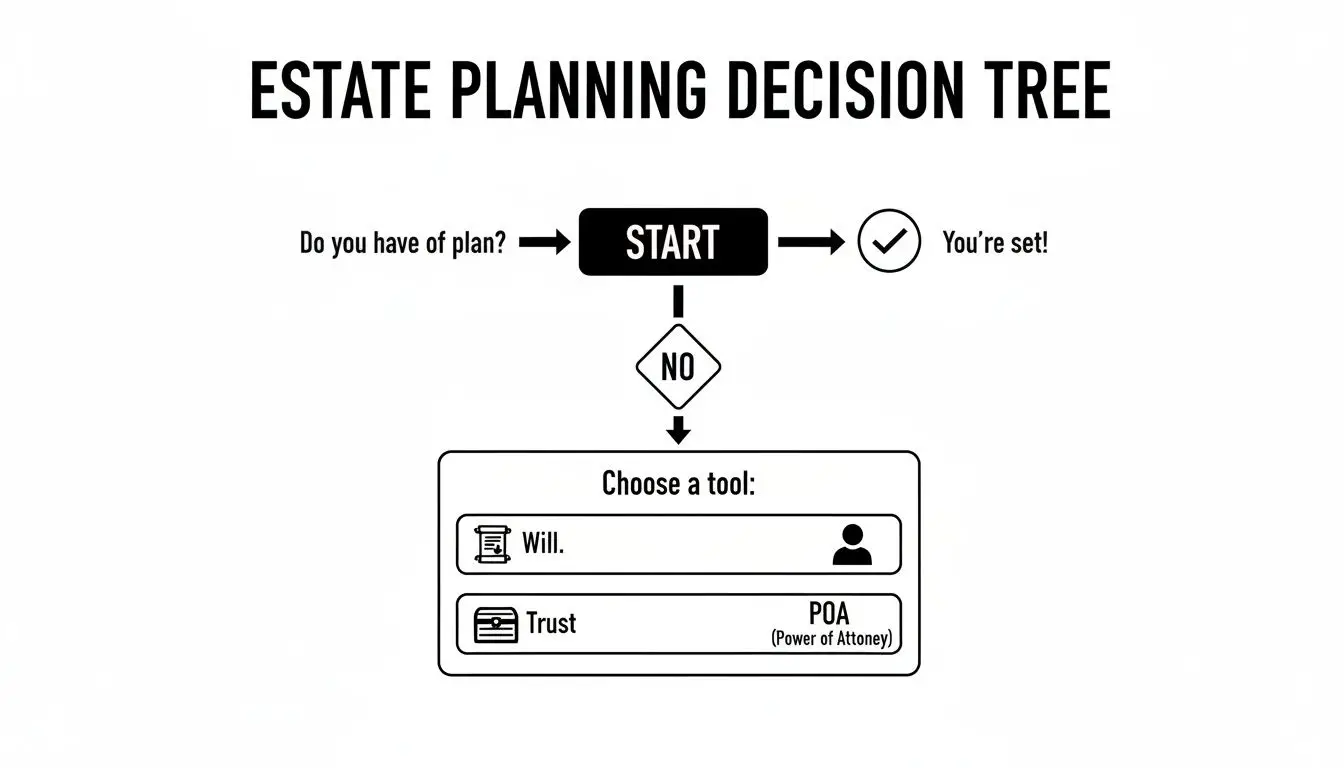
As you can see, the only wrong choice is doing nothing. Taking action with simple tools like a Will, Trust, or Power of Attorney is the start of protecting your family’s future.
Understanding the Five-Year Look-Back Period
If there’s one Medicaid rule you need to know, it’s the five-year look-back period. Think of it as a close look at your money history. When you ask for Medicaid long-term care help, the state will look at all the money you've moved around for the past five years (60 months).
Why do they do this? They're looking for any money or property you gave away or sold for less than it was worth. The government wants to stop people from giving all their savings to family right before they ask for help.
If they find a gift like this, they will give you a penalty. This is a period of time when you can't get Medicaid and will have to pay for your own care.
For example, say you gave your son $50,000 for a new house three years ago. That kind gift could sadly stop you from getting help for several months, leaving you with a huge bill. This is exactly why planning ahead with an NW elder law expert is so important. We help you avoid these expensive, accidental mistakes.
The Medicaid look-back rule isn't there to punish you. It’s to make sure the program is there for people who really need it. With smart planning, you can follow the rules and still help your family while making sure you can get the care you need later.
Protecting Your Spouse and Your Home
A common worry is when one spouse needs to move into a nursing home, but the other—the "community spouse"—is still living at home. Many people worry that the healthy spouse will be left with no money. Luckily, Arkansas has special rules to stop this from happening.
These are called "spousal impoverishment" rules. They let the spouse at home keep a certain amount of money and property to live on. A key number here is the Minimum Monthly Maintenance Needs Allowance (MMNA). This sets the lowest amount of income for the spouse at home. In 2026, the lowest MMNA is expected to be $2,643.75, with the highest at $4,066.50. These numbers are very important for protecting the money of the spouse at home. You can get a deeper look into these key 2026 elder law figures and their impact on money planning.
Of course, the biggest worry for most people is losing the family home. Your main house is usually a protected asset for Medicaid, but the rules are tricky. There are limits on the home's value and other things that can cause problems. An experienced NW elder law lawyer can use legal tools, like special trusts, to protect your home. This makes sure it won’t have to be sold to pay for care and can be passed on to your family, just like you always wanted.
Protecting Your Property From Rising Costs
For many of us in Northwest Arkansas, the idea of living well on a set income in retirement feels harder to reach. With prices going up all the time, it's easy to worry about your money. Let's talk about how to build a defense around your property, making sure your savings—and especially your family home—are kept safe.
The money pressure on older people here is real. The amazing growth in Fayetteville, Springdale, Rogers, and Bentonville has made housing very expensive. Since 2019, the average home price has jumped by 70.9%, and rent has gone up by almost 50%. If you have a set income, that kind of pressure is huge. You can learn more about the report on Northwest Arkansas's housing needs to see the full story.
This is exactly where an experienced NW elder law lawyer can help. We use specific Arkansas laws to protect your property from the market and the high costs of long-term care.
Creating a Legal Shield for Your Home
One of the best tools we have for protecting your property is the Asset Protection Trust. The best way to think of it is as a legal safe for your most important things, especially your house. Instead of owning the home in your name, you move the title into this special trust.
Once the house is in the trust, it's legally no longer yours. That might sound scary, but it’s a smart move. It means that if you ever need nursing home care and have to ask for Arkansas Medicaid to help pay, the value of your home isn't counted against you.
This simple plan does two very important things:
- It helps you get care. You can meet the strict money limits for Medicaid without having to spend everything you own.
- It protects your family's future. Your home is safe from being sold to pay nursing home bills, so it can be passed down to your kids just like you wanted.
This isn't a secret trick. It's a completely legal and common way to plan that gives families a way to get ready for the future. It’s about taking control.
How Different Trusts Work for You
Of course, not all trusts are the same. The right one for you depends on your family and what you want to do. An elder law lawyer will help you with the choices, but it helps to know the two main types.
| Type of Trust | Key Feature | Best For |
|---|---|---|
| Revocable Trust | You stay in control and can change it anytime. | Managing your stuff and avoiding court (probate). It does not protect from long-term care costs. |
| Irrevocable Trust | You give up control; it can’t be easily changed. | Protecting your stuff from nursing home costs after the 5-year Medicaid look-back period. |
A Revocable Trust is great for everyday control and keeping your property out of court, but it does not protect your stuff from nursing home costs. Because you still control it, Medicaid sees that property as yours. For real protection, the Irrevocable Trust is the right tool for the job.
An Asset Protection Trust legally separates the home you’ve worked your whole life for from the money risks of getting older. It’s a clear step that gives you and your family real peace of mind, knowing your family home is safe.
Making this plan gives you a feeling of sureness when things feel unsure. It makes sure the home your family grew up in stays in the family.
Protecting your property isn't just about legal papers. It also means watching out for scams and money abuse. We always tell clients to look over these practical tips for protecting seniors from scams with their family. Being informed is just as important as any legal paper when it comes to keeping your money safe.
Understanding Guardianship and Better Choices
What happens if a loved one can no longer make safe decisions, and there’s no plan? Here in Arkansas, the answer is often a court process called guardianship. It's a serious step where a judge has to pick someone—a guardian—to take over that person's personal and money life.
While sometimes it's the only choice, we see guardianship as the last thing we want to do. The whole process happens in a public courtroom, it can be very expensive, and most importantly, it takes away a person's freedom. A judge, not the person or their family, gets the final say on who takes control.
When a Court Takes Over
A guardianship case usually starts when a worried family member, or even a hospital, asks the court for help. They have to prove that the person, called the "ward" in court, can't take care of themselves. This means they can't manage their own food, health, safety, or money.
If the judge agrees, they name a guardian to make big decisions. This can include:
- Choosing where the person will live, either at home or in a care facility.
- Making all health and medical choices.
- Managing their money, paying bills, and handling all their property.
This process takes away a person’s basic right to make their own choices. It's a big step that good planning is meant to avoid. Luckily, Arkansas law gives us much better tools that keep you and your family in charge.
A guardianship puts a stranger in a black robe in charge of your life's most personal decisions. Planning ahead lets you pick your own trusted helpers now, making sure your wishes are followed without ever going to a courthouse.
The Better Way: Pre-Approved Helpers
The best way to avoid a court-ordered guardianship is to make legal papers that act as your own personal instruction book. These tools let you choose your decision-makers before you ever need them. An expert in NW elder law can help you put these powerful protections in place.
The most common and best choices instead of guardianship are Powers of Attorney. Think of them as giving permission ahead of time for trusted people to step in for you if you can't act for yourself.
- Durable Power of Attorney for Finances: This paper lets you name a trusted person (your "agent") to manage your money life if you can't. They can pay your bills, manage your savings, and handle your property. The word "durable" is very important—it means the paper is still good even if you become unable to make decisions.
- Durable Power of Attorney for Health Care: This works the same way, but for your medical choices. You pick an agent to talk to your doctors and make healthcare choices based on what you want. We often make this with a Living Will, which explains your wishes for end-of-life care.
By making these documents now, you make your wishes legally known. You decide who helps, what they can do, and how you want things done. This simple planning keeps your private business out of the public court system and protects your freedom and self-respect. To learn more, you can learn more about the role of a guardian for elderly parents in our detailed article. Taking this small step today gives your family a clear, loving guide to follow in the future.
How a Local Law Firm Can Help Your Family Plan

Thinking about the future can bring up a lot of worries. Our goal is to turn those worries into a solid, simple plan for your family. It doesn't have to be a stressful process. It all starts with a simple chat.
At DeWitt & Daniels, we don’t use high-pressure sales tricks. We start by listening. We want to understand your family, your goals, and what’s important to you here in Northwest Arkansas. Our job is to take the confusing legal words and explain them in plain English, so you can feel good about the path you choose.
From there, we’ll work with you to build a plan that really fits your life. There is no one-size-fits-all plan in NW elder law. It’s all about making a plan that works for you and the people you care about most.
The Advantage of Local Arkansas Experience
Knowing the law is one thing, but knowing the local courts is something else. We have spent years working in the Washington and Benton County court systems. That hands-on experience makes a real difference. We know the exact steps, the small details, and the people who handle these cases every day.
This local knowledge means we can write papers and create plans that are made to move easily through our community’s legal system. We can often see possible problems before they happen, helping you avoid annoying delays. In the end, this direct experience is what makes a plan not just legal, but truly helpful.
Choosing a law firm is about more than just hiring a lawyer. It’s about finding a partner who will take the time to understand your story and protect your family's future with care.
We want to be that partner for your family. Taking the first step can feel like the hardest part, but you don't have to do it alone. Let’s start a conversation and see how we can help protect what matters most to you.
Your Elder Law Questions Answered
We get a lot of questions from families all over Northwest Arkansas who are trying to figure these things out for the first time. Let's go through some of the most common ones with simple, clear answers.
When Should I Start Elder Law Planning?
The best time to start is now, long before you think you’ll need it. Think of it this way: you wouldn't wait for a storm warning to start fixing your roof. Planning ahead gives you the most control and the best protection for your family and your property.
Many people think NW elder law is only for older people, but that's a mistake. A sudden sickness or a bad accident can happen at any age. Having a good plan already made means your wishes are set and your family won’t be left trying to figure things out during a hard time.
What's the Real Difference Between a Will and a Trust?
This is probably the number one question we hear. They are both important parts of a plan, but they do very different things.
- A Will is like an instruction letter for the probate court. It says who gets your stuff after you die. But it only starts working after you die and has to go through the public, and often long, court process.
- A Trust is more like a private, safe box for your stuff. You put your property into the trust while you're alive and set clear rules for it. It almost always avoids the cost and long wait of probate court.
While having a Will is important, a Trust gives you much more privacy, control, and protection. This is especially true if you have a complicated family or just want to save your loved ones from dealing with the courts.
Think of it this way: a Will is a map for the court to follow, while a Trust is a private car that takes your property directly to your loved ones without needing a judge's permission.
Can I Just Give My House to My Kids to Get Medicaid?
Please be very careful here—this is a bad and often expensive mistake we see families make. Arkansas Medicaid has a strict five-year look-back period. This means that when you ask for long-term care, the state will look at every bit of money you've moved around for the last 60 months.
If you have given away big things—like your home, savings, or other property—during that time, you'll get a penalty. You will be told you can't get Medicaid for a certain amount of time. This forces your family to pay for expensive care themselves. It is very important to work with an NW elder law lawyer to make a legal plan to protect your property that follows the rules, instead of breaking them.
I Already Have a Will. Do I Really Need a Power of Attorney?
Yes, one hundred percent. These papers do completely separate and equally important jobs. A Will is only for what happens after you have passed away.
A Power of Attorney is for while you are still alive but can no longer make decisions for yourself because of a sickness or injury. It lets you pick a trusted person to handle your money or make healthcare choices for you. Without one, your family could be forced into an expensive and public guardianship case just to get the power to pay your bills or talk to your doctors.
What Happens If I Don’t Have Any Plan at All?
If you pass away in Arkansas without a Will or Trust, the law says you died "intestate." This means the state, not you, decides who gets your property. The law follows a strict formula based on your family tree. Your property could easily go to relatives you would not have chosen.
Even more importantly, if you become unable to make decisions and have no plan, a judge in Washington or Benton County will name a guardian to take over your life. This court process can be tiring, public, and takes away your freedom and control. Making even a simple plan is the only way to make sure you and your family stay in charge.