
Choosing the right estate planning lawyer is the first big step you'll take to protect your family's future. This person will do more than just write up papers; they'll help you make a clear plan using tools like a will or a trust. This makes sure your wishes are followed and your loved ones are taken care of.
Think of this like finding a trusted guide who will help you with one of the most important things you'll ever do.
Why Finding the Right Lawyer Is Your First Big Step

Let's be honest—thinking about this stuff can feel heavy. It brings up big questions about your family, your money, and what happens later. It's no surprise so many people put it off.
But a lot of people—around 6 out of 10—don't even have a will. This leaves their families and everything they've worked for at risk if something unexpected happens. When you wait, you leave your loved ones guessing. They could end up in a long, stressful court process called probate just to figure things out.
Picking the right lawyer from the start is your best defense against that kind of confusion and sadness.
What Is an Estate Plan, Anyway?
An estate plan is just a set of instructions. It says what should happen to your things after you pass away or if you get sick and can't make choices for yourself. This isn't just for rich people; it’s for anyone who wants to protect what they have and provide for the people they love.
Here in Arkansas, a good plan usually has a few main parts:
- Last Will and Testament: This is the one everyone knows. It’s a legal paper that says who gets your property. It also says who you want to be the guardian for your young children, which is very important.
- Trust: A trust is a special tool that holds your property for the people you want to have it. The big benefit? It usually helps your family skip the probate court process, which keeps your family business private and saves a lot of time and money.
- Power of Attorney: This paper lets you pick someone you trust to handle your money and health choices if you can't. It makes sure your bills get paid and things are taken care of without a court needing to get involved.
An estate plan is more than just paperwork. It's a final gift to your family. It gives them clear directions and peace of mind when they need it most. And it all starts with finding the right lawyer to help you.
What Your Lawyer Does
A good estate planning lawyer doesn’t just fill in blanks on a form. They are your personal guide, helping you understand Arkansas law and how it fits your life. They are trained to ask the right questions to find out what you really want and to see problems you might not notice.
Do you have kids from a previous marriage? Own a small business? Need to care for a child with special needs? A good lawyer knows how to build a plan that handles these kinds of situations.
Many of the key qualities to look for in a professional advisor are true here, too. You need a lawyer who is an expert and really cares about what's best for you. You need someone who listens more than they talk and can explain complicated legal ideas in a way that's easy to understand. This is a team effort built on trust, which is why it’s so important to choose the right person.
To get you started, here's a quick list of what to look for.
Quick Checklist for Your Lawyer Search
| What to Look For | Why It's Important | How to Check |
|---|---|---|
| Focus on Estate Planning | This area of law is complicated. A lawyer who does a little bit of everything might not know all the details. | Find someone whose main job is estate planning, wills, and trusts. |
| Knows Arkansas Law | Laws are different in every state. You need someone who knows Arkansas probate and trust laws very well. | Look for a lawyer in your area who knows how the local courts work. |
| Easy to Talk To | You'll be talking about personal things. You need to feel comfortable and understood. | Find someone who listens, answers your questions simply, and doesn't use confusing legal words. |
| Clear Fees | Surprise legal bills are very stressful. You need to know the cost up front. | Look for a lawyer who charges one single price (a flat fee) for your whole plan, not by the hour. |
This checklist doesn't cover everything, but it gives you the basics to help you find a great lawyer you can work with for a long time.
Look for a True Estate Planning Specialist

When you need a lawyer, you might think any lawyer can help. But the law has many different specialties. You wouldn't ask your family doctor to do heart surgery, would you? The same idea is true for estate planning.
A lawyer who handles car accidents, divorces, and business deals might offer to write a will for you. They might be a great lawyer for those things, but they won't have the deep knowledge needed to create a plan that truly protects your family. Estate planning is its own world of special laws, tax rules, and plans.
This is very important here in Arkansas. When you make your plan, you need a lawyer who is an expert in our state's laws. You can find some good general information from Arkansas Estate Planning resources, but only a specialist will know how to use those laws for your family's specific needs.
Why a Specialist Is a Big Deal
A real specialist works with estate law every single day. They keep up with changes in state and federal laws that could affect your plan. A lawyer who only does this sometimes might create a simple will that looks okay, but it could miss important opportunities or, even worse, cause problems for your family later.
Think of it this way: a general lawyer might know how to build a basic birdhouse. A specialist is like a master woodworker. They understand the small details of the wood and how to build something that will last for many years. Your family’s future deserves that kind of skill.
How to Find a Real Specialist
So, how can you tell a real specialist from someone who just dabbles in it? The clues are usually easy to find if you know what to look for. Start by looking at their website.
Here’s what you should look for:
- Main Focus: Is "estate planning" or "wills and trusts" the first thing you see? If it's just one item in a long list of other services, that’s a red flag.
- Helpful Information: Does their website have a blog or free articles all about estate planning? A real specialist likes to share what they know and help people learn.
- Special Groups: Many dedicated estate planning lawyers belong to professional groups, like the National Academy of Elder Law Attorneys (NAELA) or local estate planning groups.
A dedicated specialist's whole job is built around helping families like yours. They've seen hundreds of different situations and know how to avoid problems a general lawyer might not even think about. This experience is what you are paying for.
Asking the Right Questions
Once you have a short list of possible lawyers, your first meeting is the time to check their skills. Don't be afraid to ask direct questions about their experience. This isn't about being mean; it's about being a smart customer protecting your family.
A real specialist will be happy to answer these questions with confidence. A general lawyer might get defensive or give you unclear answers.
Try asking questions like these:
- "What part of your work is focused on estate planning?"
- "Have you helped families with situations like mine before?" (Be specific if you have a blended family, a business, or a child with special needs).
- "How do you keep up with changes to Arkansas estate and tax laws?"
For example, if you own a small farm outside of Little Rock, you need a lawyer who understands the special challenges of passing that farm to your kids—not just someone who can fill out a generic will. Their answers will tell you everything you need to know.
Choosing a specialist is the most important step in building a plan that gives you and your family real peace of mind.
Making Sense of Lawyer Fees and Costs
Let's talk about money. It can be a strange topic, but when you're hiring a lawyer, it’s one of the most important talks you’ll have. You need to know what you’re paying for. Any good estate planning lawyer will be open and honest about their fees—if you feel like you’re asking a secret question, that’s a bad sign.
Understanding how lawyers charge for their work is the first step. It helps you compare your choices and find someone whose price makes sense for you. The goal isn't to find the cheapest lawyer; it's about making a smart investment in your family's future.
Flat Fees vs. Hourly Pay
When it comes to estate planning in Arkansas, you’ll usually see two different ways lawyers charge for their work. Knowing the difference is key to avoiding bad surprises later.
Most true estate planning specialists work on a flat-fee basis. This means you get a single, all-in-one price for your entire plan. You know the total cost from the very beginning. There are no hidden charges or mystery bills. This is great because it means you can talk openly. You won’t be afraid to call with a question because you're worried you're being charged for every minute.
Some lawyers, however, might charge by the hour. This is more common with lawyers who only do a little estate planning work. The hourly model is hard to predict and not great for this kind of work, as it can make you hesitant to ask for help. It makes more sense for a long court case where no one knows how much time it will take. For most families, a flat fee gives you valuable peace of mind.
A flat fee makes the lawyer's goal the same as yours: to create a good, strong plan as quickly and easily as possible. With hourly billing, you might not ask important questions, which could lead to a plan that doesn't really cover all your needs.
What Should an Arkansas Estate Plan Cost?
So, what’s the final price? The cost of an estate plan really depends on your life—your family, your property, and what you want to do. But I can give you a general idea of what to expect.
Here in Arkansas, a basic plan for one person (including a will, power of attorney, and health care document) might start somewhere in the $1,500 to $2,500 range. For a married couple needing a more complete plan, maybe with a trust to skip probate, you’re likely looking at something between $3,000 and $6,000.
Remember, these are just general numbers. If you own a business, have rental houses, or have a blended family, your plan will be more complicated and the cost will be higher to cover that extra work. Think of it like buying a suit: you can get one off the rack, or you can get one made just for you. The better it fits, the more valuable it is over time.
Questions to Ask About Fees and Costs
Your first meeting is the perfect time to get everything out in the open. A good lawyer will be glad you asked and will appreciate that you are being careful. Don't leave that first meeting with any confusion about the money side of things.
Be ready to ask some direct questions. Here are a few you must ask:
- Do you charge a flat fee or by the hour? This is your first question.
- What, exactly, is included in your flat fee? Does it cover writing the papers, the meeting where I sign them, and any follow-up questions I have?
- Are there any other possible costs? Sometimes there are outside costs, like county fees to file a deed for your house, that you should know about.
- How do you handle updates to the plan later? Life changes. Your plan will need to change with it. Ask about their process and what future changes might cost.
Getting clear, confident answers to these questions will help you choose a lawyer you can trust. Remember, you're not just paying for a stack of papers; you're investing in a professional relationship and your family’s safety.
Finding a Lawyer You Genuinely Connect With
Knowing a lawyer's skills and costs is important, but it's not the whole story. When you choose an estate planning lawyer, you're picking a long-term helper for your family. This is someone you’ll be sharing very personal information with—about your money, your family, and your biggest hopes for the future.
Because of this, you need more than just a smart lawyer. You need someone you feel truly comfortable with. This process is too important to spend it feeling rushed, confused, or like you're just another file on their desk.
The Power of a Good Connection
A great estate planning lawyer does more than just write papers; they act as a guide and helper. They should be able to take complicated Arkansas legal ideas and explain them in simple English, making sure you understand exactly what your plan does and why.
If you leave a meeting feeling more confused than when you started, that’s a big red flag. A good connection means you feel heard and respected. It means you aren't afraid to ask what you think might be a "silly" question. This trust is the start of a good, long-term working relationship.
The picture below shows a simple, three-part way to help you check for this important connection.
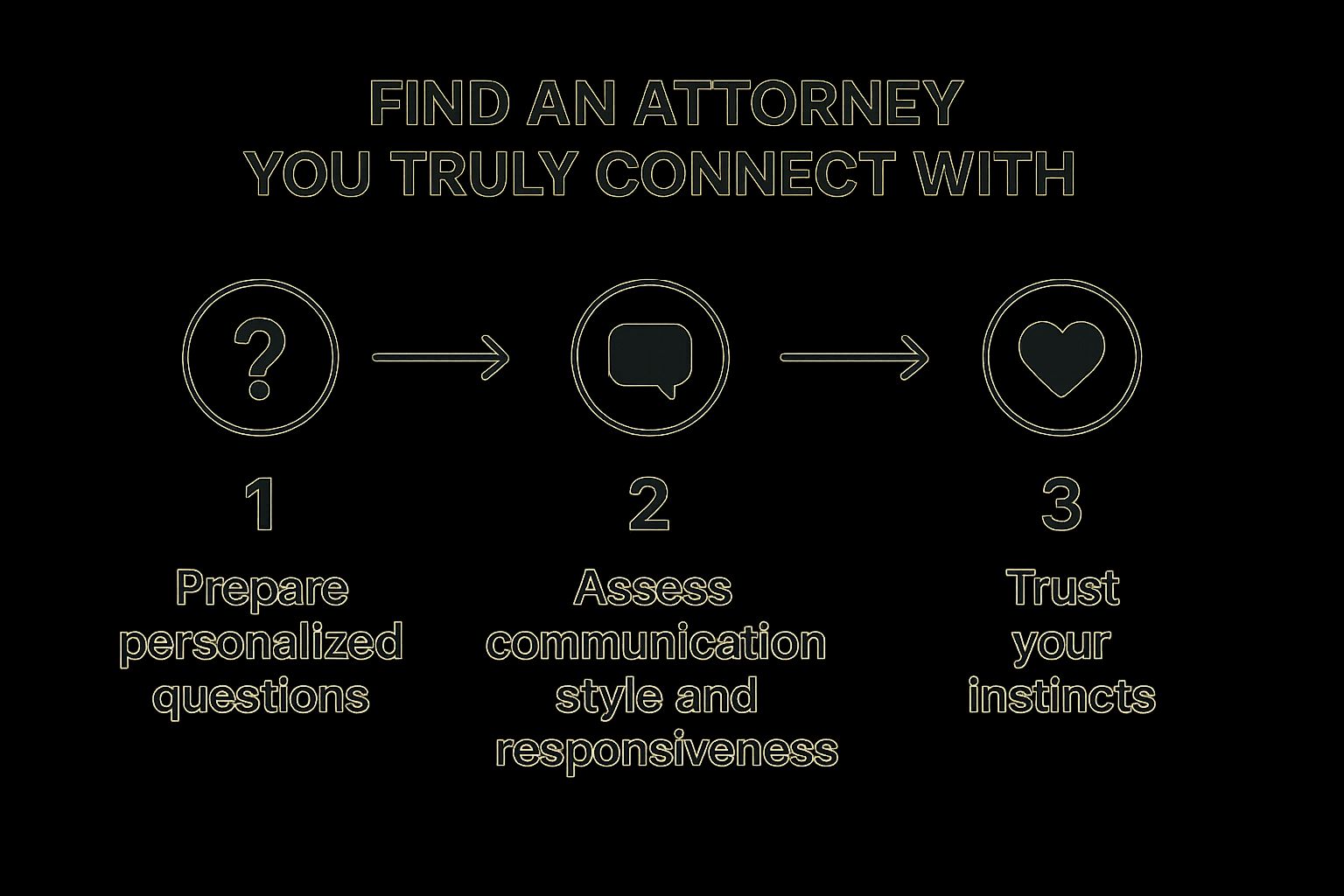
As you can see, finding the right fit starts with getting ready and ends with trusting your gut feeling.
Checking How They Talk and Act
During your first meeting, pay close attention to how the lawyer talks to you. Are they really listening, or just waiting for their turn to talk? Do they look you in the eye and show real interest in your family's story? These small things say a lot about how they'll treat you as a client later.
This personal connection is becoming more important than ever. A recent study showed that 65% of people say that being trustworthy is the most important thing when picking someone to manage their things. The report also says that people see their advisors as partners in their whole financial life. You can read more about these trends in client expectations on esquirex.com.
A good lawyer should feel like a trusted partner—someone who is patient, kind, and truly wants to help you feel at ease.
Key Questions to Ask About How They Work
Your first meeting is the perfect time to ask how a lawyer works with their clients. The answers will tell you a lot about their professional style. I've put together a few key questions to get you started.
Key Questions to Ask a Potential Lawyer
Use these questions during your first meeting to understand a lawyer's experience, how they talk to clients, and how they charge.
| Category | Sample Question |
|---|---|
| Experience & Focus | "What part of your work is just for estate planning?" |
| Client Communication | "Who will I talk to most of the time—you, a helper, or a newer lawyer?" |
| Their Process | "How will you help me understand my choices, like a will versus a trust, to make the best decision?" |
| Fee Structure | "Do you charge a flat fee for the whole plan or bill by the hour? What's included?" |
| Long-Term Relationship | "How do you handle reviewing and updating plans as my life changes?" |
These questions aren't just about getting information; they're about starting a conversation and seeing how the lawyer answers.
Your relationship with your estate planning lawyer might last for many years. It's worth taking the time to find someone you not only trust with your property, but who you trust as a person.
Think about it this way: this is the person your family might have to call during one of the hardest times of their lives. You want them to hear a voice on the phone that is kind, patient, and ready to help. After you've checked all the boxes on experience, focus, and fees, the final choice often comes down to a gut feeling. Trust your gut—it's usually right.
How to Get Ready for Your First Meeting
Walking into a lawyer’s office can make you nervous, but it doesn't have to. Think of this first meeting less like a serious legal event and more like an interview—where you're the one hiring. Many lawyers in Arkansas offer a free or low-cost first meeting, giving you a chance to see if they're the right person for the job without any risk.
Going in prepared makes a huge difference. It helps you stay focused, ask the right questions, and leave with the answers you need. It also shows the lawyer that you're serious, which is a great way to start a working relationship.
What to Bring With You
You don't need to bring a huge pile of papers, but a few key things will make your talk much more useful. The idea is to give the lawyer a quick, clear picture of your money and your family.
Try to gather these items:
- A Simple List of Your Property: Just write down rough numbers. Think about your house, bank accounts, retirement funds like a 401(k) or IRA, and any other big investments. You don't need exact numbers.
- A Quick List of Debts: Include your house loan, car loans, or any other large debts. This helps the lawyer see the whole picture.
- Your Family Information: A simple list with the full names and birthdays of your spouse, kids, and anyone else you plan to include.
- Any Papers You Already Have: If you already have a will or trust—even an old one—bring a copy. It’s much easier for a lawyer to help you update it when they can see the original.
Doing this prep work isn't just for the lawyer. I’ve found that just gathering this information often helps my clients figure out their own goals before we even meet. For more on this, our article about why the initial interview is so critical in estate planning explains how this first talk is the foundation for everything else.
Know Your Goals and Questions
More important than any paper is having an idea of what you want to do. Are you mostly worried about naming a guardian for your young kids? Is your main goal to help your family avoid the headaches of probate court?
Spend a little time thinking about these big-picture items. And definitely come with a list of questions. We talked about some good ones in the last section, but be sure to add any that are special to your own life.
By the time you leave, you should have a clear idea of the lawyer's plan for you, a firm price for the total cost, and a good gut feeling about working with them. If any of those pieces are missing, it's a sign to keep looking.
Bad Signs to Watch For
A good first meeting is as much about spotting the wrong person as it is about finding the right one. Trust your gut here. A good lawyer should make you feel calm and understood, not confused or pushed.
Keep an eye out for these warning signs:
- Speaking in "Lawyer Talk": A great lawyer knows how to explain complicated things in simple English. If they use a lot of legal words and don't bother to explain them, they might not be a good teacher.
- Pushy Sales Pitches: You should never feel like you're being forced into a decision. If a lawyer is pushing you to sign a contract right then and there, that’s a huge red flag.
- Unclear Answers About Fees: As we've talked about, a trustworthy lawyer will be direct and honest about their costs. If they avoid the question or give you a fuzzy answer, be careful.
- Not Paying Attention: Does the lawyer seem distracted or not interested? Are they checking their phone while you’re talking? You are paying for their expert help, and you deserve their full attention.
This first meeting is your chance to make a smart, informed choice. By getting your papers in order, thinking about your goals, and watching for any bad signs, you can confidently choose the right legal partner to protect your family’s future.
Your Top Questions Answered
By now, you have a good plan for finding a great estate planning lawyer. You know how to check their skills, what to ask about fees, and how to get ready for that first talk. But there are always a few more questions that pop up. Let's answer some of the most common ones I hear from people here in Arkansas.
Can I Just Use an Online Service Instead of a Local Lawyer?
It's easy to see why you might think about it. You see ads for cheap, do-it-yourself wills online. They promise a quick and easy fix, and who doesn't want to save money? But the truth is, this can be very risky and can create a huge mess for your family later.
The biggest problem is that these online sites use generic, one-size-fits-all forms. That's a big problem because estate law is very local. A paper that is perfectly fine in New York could have problems or even be useless here in Arkansas. Our state has its own specific laws for everything from wills and trusts to probate court, and a generic form from a national website can’t know those local rules.
An Arkansas lawyer who works with this every day will give you advice that actually fits your life. They understand how things work here, whether you're a small business owner in Fayetteville, part of a blended family in Jonesboro, or need to protect a child with special needs.
Here's a simple way to think about it: An online service sells you a generic blueprint for a house. An experienced local lawyer is like an architect who sits down with you to design and build a custom home—one that’s made to last and protect your family for many years.
How Often Should I Update My Estate Plan?
Getting your first plan done is a huge step, but it’s not something you can just check off your list and forget about. Life happens. Your family grows, your money situation changes, and laws change. A plan that's out of date can sometimes cause more problems than having no plan at all.
As a general rule, it's smart to meet with your lawyer for a review every three to five years. This is just a simple check-in to make sure your papers still match your wishes and the current laws.
Besides that regular review, there are certain life events that should make you call your lawyer right away. These are the big moments that almost always mean you need to update your plan.
You should update your plan after:
- Getting Married or Divorced: These events completely change who gets your property and who has legal power in your life.
- Having or Adopting a Child: You’ll want to name a guardian and make sure your new child is included in your plan.
- A Big Change in Your Money: If you sell a business, get an inheritance, or have a big change in how much you're worth, your plan needs to show that.
- The Death of a Key Person: If a person you named in your plan (like a beneficiary or executor) passes away, you have to name someone new.
- Moving to Another State: As we just talked about, laws are different in each state. An Arkansas plan will need a new look from a lawyer in your new home state.
What If I Don't Like the First Lawyer I Meet?
This is a great question, and the answer is simple: keep looking. You should never feel forced to hire a lawyer you don't feel 100% comfortable with. This relationship has to be built on trust. If that gut feeling isn't there, it's not the right person for you.
Think of that first meeting as an interview—and you’re the one in charge. If the lawyer rushes you, uses a lot of confusing words, or just doesn't seem to get what’s important to you, that’s your sign. Simply thank them for their time and schedule a meeting with someone else.
Finding the right estate planning lawyer is about finding a long-term helper for your family. It’s completely normal to meet with two or even three lawyers before you find the one who just feels right. That doesn't mean you failed; it means you’re taking this decision as seriously as you should. The peace of mind for your family is worth the extra effort.