
If you just got charged with a DWI, the first thing you probably did was search for a “DWI defense attorney near me.” That was a smart thing to do. Having a lawyer who knows your town and the local courts can be the most important part of your case.
Why a Local DWI Attorney Is Your Strongest Defense

When you’re facing a DWI, you need more than just a lawyer with a fancy degree. You need someone who knows the legal maze you’re about to walk through.
Think about it like this: a lawyer from another city is like a tourist with a map. They can see the big streets, but they don’t know the secret shortcuts or the roads that are suddenly closed.
A local lawyer, though, grew up in that city. They know every back road. This “insider knowledge” is a huge deal in a courtroom.
The Home-Field Advantage
Every courthouse in Arkansas is a little different. They have their own way of doing things that you won’t find in any law book. A local attorney works there all the time.
This gives you some real advantages:
- They Know the People: A local lawyer knows the prosecutors and judges. This isn’t about getting special treatment. It’s about respect. It makes talking and negotiating much easier and more direct.
- They Know the Other Team’s Plays: They’ve seen how the local prosecutor’s office works again and again. They can guess what the other side will do and build a defense to stop it.
- They Know What the Judge Likes to Hear: They know which arguments work best with which judges. This helps them tell your side of the story in the best possible way.
A local DWI lawyer doesn’t just know the law; they know the people who work in the court every day. This can make a big difference in how your case turns out.
Why Local Rules Matter
The way drunk driving laws are used can be very different from one town to the next. Just look at the numbers across the country—some states are much tougher. In a state like Texas, which has over 20,781 DWI arrests each year, a good local lawyer is a must. You can see more crime statistics from Grow Law Co to get a bigger picture.
This is also true on a smaller scale. A prosecutor in Fayetteville might handle a case very differently than one in Bentonville. A local attorney knows these small but important differences.
Local vs. Non-Local DWI Attorney Key Differences
Choosing the right lawyer is the most important decision you will make after a DWI arrest. This chart shows why hiring a local Arkansas attorney is so helpful.
| Factor | Local Attorney Advantage | Non-Local Attorney Disadvantage |
|---|---|---|
| Courtroom Familiarity | Knows the judges, prosecutors, and unwritten rules. | Is learning the local system as they go. |
| Legal Strategy | Plans a defense based on how the local prosecutor acts. | Might use a general plan that doesn’t work as well. |
| Convenience & Access | Easy to meet in person to talk about your case. | Meetings can be hard to schedule. |
| Reputation | Has a professional reputation the court already knows. | Is a stranger to everyone in the courtroom. |
Choosing a local DWI defense attorney gives you a partner who can use their insider knowledge to help your case.
What an Arkansas DWI Charge Really Means
When a police officer says, “You’re charged with DWI,” it can be scary and confusing. But the first step to feeling better is understanding what a DWI charge really is.
In Arkansas, DWI stands for Driving While Intoxicated. This doesn’t just mean being drunk from alcohol. You can get a DWI if your driving is affected by alcohol, illegal drugs, or even prescription medicine. Anything that messes with your ability to drive can lead to a DWI.
The most common way police try to prove you’re intoxicated is with a Blood Alcohol Concentration (BAC) test. Think of BAC as a legal line.
The Legal BAC Limits in Arkansas
Arkansas law has clear BAC limits. If you’re over that line, you are legally considered intoxicated. But the line is different depending on your age and the type of vehicle you’re driving.
- For most drivers (age 21 and up): The limit is .08%. If your BAC is at or above this number, you’re over the legal limit.
- For commercial drivers: The rule is much stricter. If you’re driving a big truck or another commercial vehicle, the limit is .04%.
- For drivers under 21: Arkansas has a zero-tolerance rule. If your BAC is just .02% or higher, you can be charged with DWI.
These numbers are a big part of a DWI case. But a number from a machine doesn’t tell the whole story, and it doesn’t mean you’re automatically guilty.
More Than Just a Number
A lot of people think you can only get a DWI if your BAC is over the limit. That’s not true. You can be charged and found guilty even with a BAC below .08%.
The key word in Arkansas law is intoxicated. This means your abilities are affected to the slightest degree.
If a police officer thinks your mind or body is not working right because of a substance, and you can’t drive safely, that can be enough for an arrest. This could be based on how you look, talk, or do on the roadside tests.
This is very important. The prosecutor can try to build a case based only on the officer’s opinion. That’s why having a good DWI defense lawyer is a must. They know how to question an officer’s opinion and the roadside tests they use.
From the moment you see flashing lights, a legal process begins. It includes the traffic stop, the roadside tests, the chemical test (like a breathalyzer), and the arrest. Every single step must follow the law exactly.
Knowing what a DWI charge means helps you talk to a lawyer. To learn more about the rules, you can read about the DWI law in Arkansas in our detailed guide. This knowledge helps you and your lawyer build a strong defense from the very beginning.
The First 7 Days After Your DWI Arrest
The time after a DWI arrest in Arkansas is confusing and stressful. It’s normal to feel lost. But you need to know that a clock starts ticking as soon as you are released. You have to fight two different battles at the same time.
First, you have the criminal charge. That will go through the court system. Second, you have a separate, immediate fight with the Arkansas Department of Finance and Administration (DFA) to save your driver’s license. You need to act on both, right away.
The Most Important Deadline: The 7-Day Rule
Your driver’s license is the first thing you need to worry about. From the day of your arrest, you have only seven days to ask the DFA for a hearing. This is your only chance to fight to keep your license from being suspended.
If you miss that seven-day deadline, you lose your right to a hearing. It’s that simple. Your license will be suspended, and there’s nothing you can do about it. It’s like not showing up for a game—you automatically lose.
The seven-day deadline is strict. It is the biggest reason why you must call a DWI defense attorney near you right away. It’s not just a good idea—it is something you must do to protect your right to drive.
This timeline shows how fast things happen and why the first week is so important for your license.
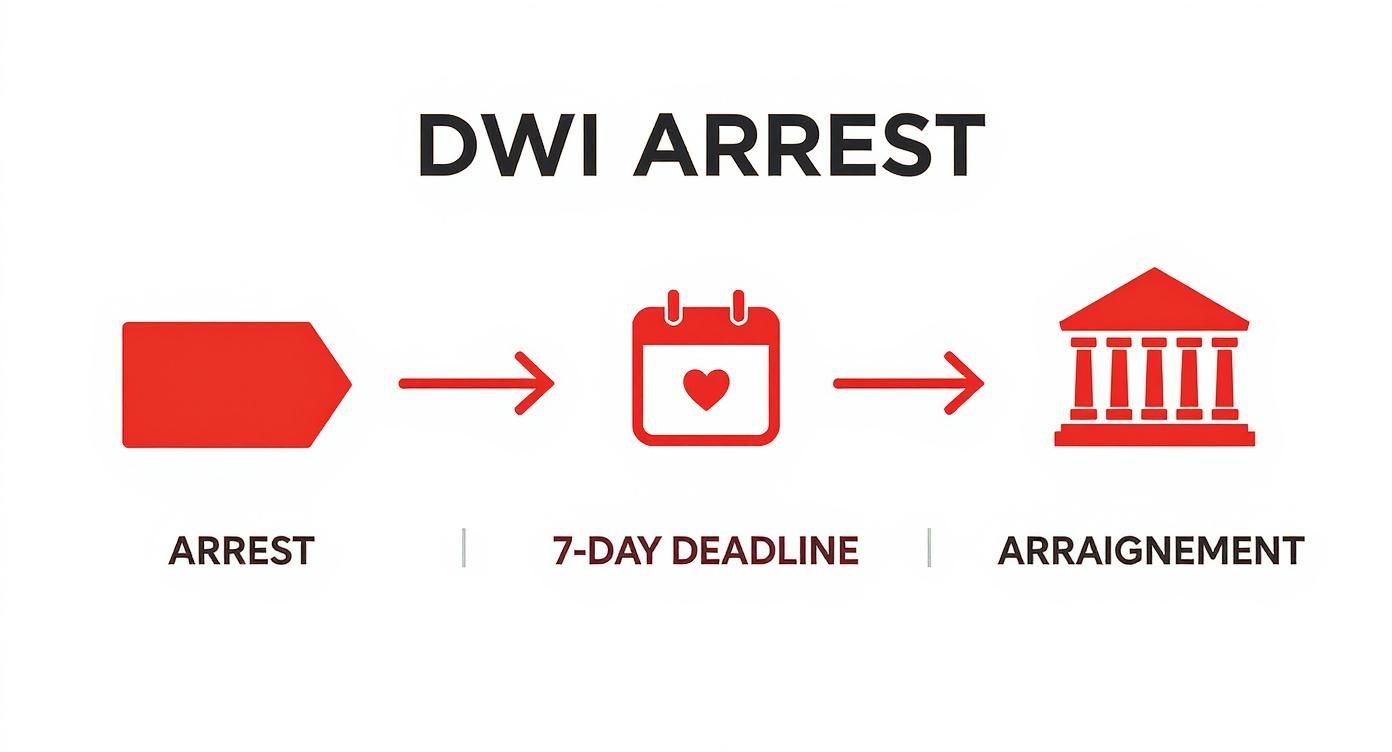
As you can see, the steps to save your license happen long before your first day in court for the criminal charge. This is why getting a lawyer immediately is so important.
Understanding Your First Court Date: The Arraignment
While you are dealing with the DFA deadline, your criminal case is also starting. Your first time in court is called an arraignment. It’s important to know what this is. It is not your trial.
The arraignment is a short, formal meeting where a few things happen:
- The Judge Reads the Charges: The judge will officially read the DWI charges against you out loud.
- You Enter a Plea: You will be asked to say if you are guilty, not guilty, or no contest. A good lawyer will always tell you to plead “not guilty” at this stage. This keeps all your options open for later.
- Future Dates are Set: The judge will schedule your next court dates.
The arraignment starts the criminal case. Having a lawyer with you is a very good idea. They will do the talking and make sure you don’t accidentally say something that could hurt your case later.
DWI arrests happen a lot more than you might think. In the U.S., about 1.5 million people are arrested for driving under the influence each year. That’s about one arrest for every 121 drivers. You can read more about this at Georgia Criminal Defense. These numbers show that many people end up in this situation and why a strong defense is so important.
Taking smart steps in the first week is the best way to start building a good defense.
How to Find the Right DWI Attorney for Your Case
Choosing a lawyer after a DWI arrest can feel like a huge task. With so many lawyers out there, how do you find the one who can help you the most? Here is a simple guide to finding the best person for your case.
The most important thing is to find a lawyer who focuses their work on DWI defense. You don’t want a lawyer who just handles a few DWI cases on the side. Think of it like this: if you needed surgery on your heart, you wouldn’t go to your regular family doctor. You’d find a heart surgeon. The same is true for the law.
Look for a DWI Specialist
A real DWI specialist knows everything about this area of law. They understand the science behind breathalyzers, they know the rules for a legal traffic stop, and they have seen what defense plans work in Arkansas courts. This special knowledge is a huge benefit for you.
A general lawyer might know the basics but might miss the small details needed to challenge the evidence against you. They could easily miss mistakes that a specialist would see right away. That difference can change the outcome of your case.
Questions to Ask During Your Consultation
Your first meeting with a lawyer is like an interview—and you are the one hiring. Don’t be afraid to ask a lot of questions. Your future is at stake, and you need to feel sure about your legal team.
Here are some questions you should definitely ask:
- What percentage of your cases are DWIs? This is a big one. If they say 50% or more, it shows they really focus on this type of law.
- How often are you in the courthouse where my case will be? This tells you if they have that “home-field advantage” we talked about.
- What is your plan for my DFA license hearing? A good DWI lawyer will immediately have a plan for saving your license, not just for the criminal case.
- Who will be working on my case? Make sure you know if you’ll be working with the lawyer you’re meeting or if they will give your case to someone else in the office.
There are a lot of lawyers out there. In 2025, there are more than 252,000 criminal defense attorneys in the U.S. You can find more legal statistics at LawFirm.com to see what the field looks like.
Red Flags to Watch Out For
It’s just as important to know what to avoid. Some things are major red flags and should make you think twice before hiring someone.
One of the biggest warning signs is a lawyer who promises a certain result. No good lawyer can ever guarantee that your case will be dismissed or that you’ll be found “not guilty.” The legal system is just too unpredictable.
A lawyer can and should promise to fight hard for you and build the best defense possible. But if they promise a specific result, especially in the first meeting, they might just be telling you what you want to hear.
Another red flag is bad communication. When you first contact a law firm, see how quickly they respond. A firm’s intake process says a lot, and it’s worth understanding how law firms leverage AI receptionists to make sure clients get a quick response. If they take a long time to call you back, imagine what it will be like after they have your money.
Your goal is to find a lawyer who is experienced, trustworthy, and easy to talk to. By asking the right questions and watching for red flags, you can find the right DWI defense attorney to help you.
Common Defense Strategies That Can Win a DWI Case
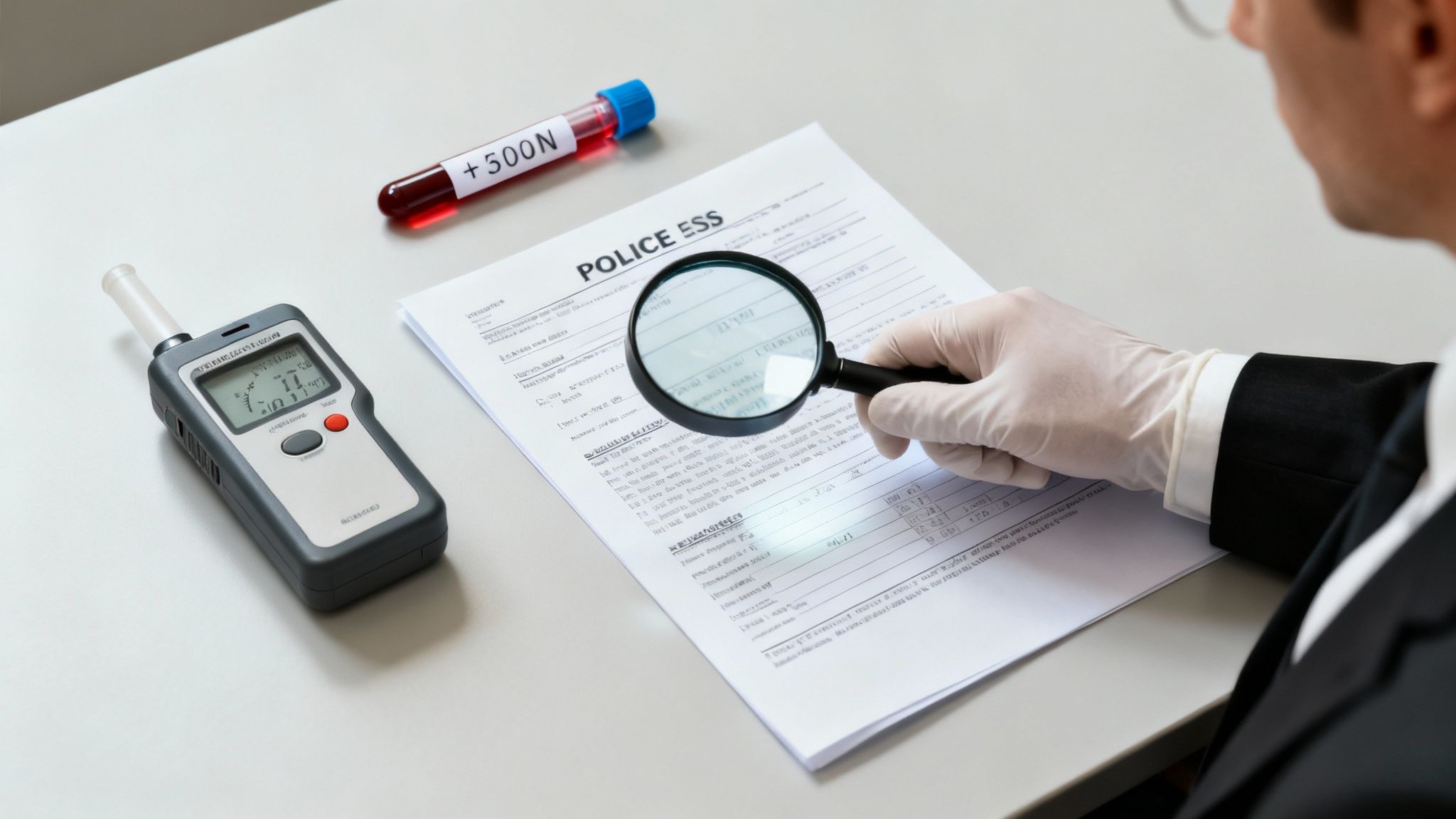
When you’re arrested for a DWI, it can feel like the case is already over. But it’s really just the beginning. A good lawyer will look at every single detail to find weak spots in the case against you.
Think of your lawyer like a detective. They won’t just believe what’s in the police report. They will check the evidence, question how things were done, and look for mistakes.
When you search for a good “dwi defense attorney near me,” you are looking for someone who knows where to find these mistakes. Finding them can lead to lower charges or even get your case thrown out completely.
Questioning The Initial Traffic Stop
Every DWI case starts with the police officer pulling you over. If the officer did not have a good reason to stop you, then everything that happened after—the breath test, the roadside tests, and the arrest—might not be allowed in court.
Officers need reasonable suspicion to pull you over. They can’t just do it because they have a hunch. They must be able to name a specific reason, like you were speeding or swerving.
Your lawyer will check the officer’s report and watch any video from the police car. They will ask:
- Did you actually break a traffic law, like speeding or running a stop sign?
- Was the reason for the stop too general, like “driving weird”?
- Does the video show the same thing the officer wrote in the report?
If the traffic stop was not legal, the judge can throw out all the evidence. If that happens, the prosecutor might not have a case anymore.
Challenging Field Sobriety Tests
The roadside tests, like walking in a straight line or standing on one leg, seem official. But they are tricky, and even sober people can fail them when they are nervous.
These are not simple pass-or-fail tests. They are designed to divide your attention, and many people mess them up even if they haven’t been drinking.
This is a great place for your lawyer to build a defense. They can point out things like the officer gave confusing instructions, the ground was uneven, or your shoes were slippery. Any of these things can make a jury doubt the test results.
Scrutinizing The Breath And Blood Tests
A .08% result from a breathalyzer test seems like strong evidence. But the machines can be wrong. Sometimes officers don’t use them correctly, or the samples are not handled right.
An expert lawyer will look at every step:
- Breathalyzer Maintenance: Was the machine checked and adjusted regularly? Are the records up to date?
- Operator Error: Did the officer know how to use the machine correctly? Did they watch you for the required amount of time before the test?
- Medical Conditions: Things like acid reflux or even some diets can cause a false high reading.
- Blood Sample Handling: The “chain of custody” for a blood sample must be perfect. If there’s any mistake in how it was labeled, stored, or moved, the test can be thrown out.
An arrest is just the start of the story, not the end. With the right plan, a good lawyer can find mistakes, question the science, and create reasonable doubt to help you win your case.
Your Arkansas DWI Questions Answered
When you start looking for a “DWI defense attorney near me,” you probably have a lot of questions. Not knowing the answers can be stressful. Let’s go over some of the most common questions people have after a DWI arrest in Arkansas and give you some clear answers.
How Much Does a DWI Defense Attorney in Arkansas Cost?
This is usually the first question people ask. The honest answer is: it changes from case to case. The total cost depends on how complex your case is, how much experience the lawyer has, and if your case goes to trial.
The good news is that most DWI lawyers in Arkansas offer a free first meeting. This is your chance to talk to them, explain what happened, and get a clear idea of the cost with no strings attached. Many lawyers use a flat fee. This means you pay one set price for the whole case, so you don’t get any surprise bills later. Others might charge by the hour.
Try to think of it as an investment, not just a cost. You are investing in protecting your driver’s license, your job, and your future. When you compare the cost to the problems a DWI conviction can cause for years, paying for a good lawyer is often worth it.
Should I Just Plead Guilty to Get It Over With?
It can be tempting to plead guilty just to make the problem go away. But this is almost always a bad idea. A DWI conviction in Arkansas is not like a speeding ticket—it’s a criminal record that follows you for years.
The consequences are serious:
- Big fines and court fees
- Losing your driver’s license for a while
- Having to go to alcohol education classes
- Your car insurance rates will go way up
- A permanent criminal record that shows up on background checks for jobs and housing
Even if you think the police have a strong case, you are only seeing one side of it. A good DWI lawyer knows how to find mistakes the police made, challenge breathalyzer results, and find weak spots in the prosecutor’s case that you would never see on your own. You should always, always talk to a lawyer before you plead guilty to anything.
Pleading guilty closes the door on every possible defense you have. Talking to a lawyer first keeps all your options open and gives you a real chance for a better result.
What Happens If I Refused the Breath or Blood Test?
Arkansas has a law called “implied consent.” This just means that by having an Arkansas driver’s license, you have already agreed to take a chemical test (like a breathalyzer) if a police officer arrests you for DWI.
If you refuse to take the test, there is an immediate consequence: your driver’s license gets suspended right away. This is handled by the Department of Finance and Administration (DFA) and is separate from your criminal case.
Refusing the test means the prosecutor won’t have a BAC number to use against you, but it doesn’t make the case go away. The prosecutor can tell the jury that you refused the test and argue that you only refused because you knew you were guilty. It makes your case more complicated, so it’s even more important to have a good lawyer who can fight both the license suspension and the criminal charge.
Can I Get a DWI Off My Record in Arkansas?
Yes, in many cases, you can. Arkansas law allows you to have a first-time DWI conviction sealed. This is a legal process that hides it from the public. This means most bosses or landlords won’t see it when they do a background check.
To get a first-time DWI sealed, you have to do a few things:
- You must finish your entire sentence—pay all your fines, complete any classes, and do everything the judge ordered.
- You have to wait five years after you finish your sentence.
- You cannot get into any more trouble with the law during that five-year waiting period.
This doesn’t happen by itself. You have to file special paperwork with the court. A lawyer can help make sure you do it right so everything goes smoothly. Getting your record sealed is the final step to truly putting a DWI behind you.