
Getting arrested for DWI in Arkansas can be scary. But it is important to remember one thing: being arrested does not mean you are guilty. The time right after your arrest is your chance to protect your future. The first person you should call is a DWI defense attorney.
Your First Step After A DWI Arrest

It’s easy to feel lost after a DWI arrest. The legal system is confusing. It can be tempting to just hope for the best. That is almost always a mistake.
The best thing you can do is call a lawyer who works on DWI cases all the time. This isn’t just about having someone stand with you in court. It’s about getting an expert to start building your defense right away.
Why Acting Fast Matters
Every second is important. A good lawyer wants to start working right away. They will save evidence, talk to people who saw what happened, and look for mistakes in the police report.
An arrest is just the start of the legal fight, not the end. What you do in the first 24 hours can change your whole case. A good DWI lawyer makes sure every move you make is the right one.
Waiting is one of the worst things you can do. For example, Arkansas law gives you only a few days to ask for a meeting to fight for your driver’s license. If you miss this deadline, you lose your chance. A good lawyer will make sure that doesn’t happen.
Taking Control of the Situation
Hiring a lawyer is about more than just legal defense; it’s about getting control back. Instead of feeling confused, you have a professional to guide you. Here’s what they do for you right away:
- Protect Your Rights: They make sure you don’t say or do anything that could be used against you later.
- Handle Important Deadlines: Your lawyer will file all the right papers on time, like the request to save your driver’s license.
- Start Your Defense: They begin looking at the evidence and searching for weak spots in the case against you from day one.
For many, a DWI arrest is also a wake-up call. If you’re looking for help, a science-backed alcohol recovery timeline can offer a path forward.
What a DWI Defense Attorney Actually Does
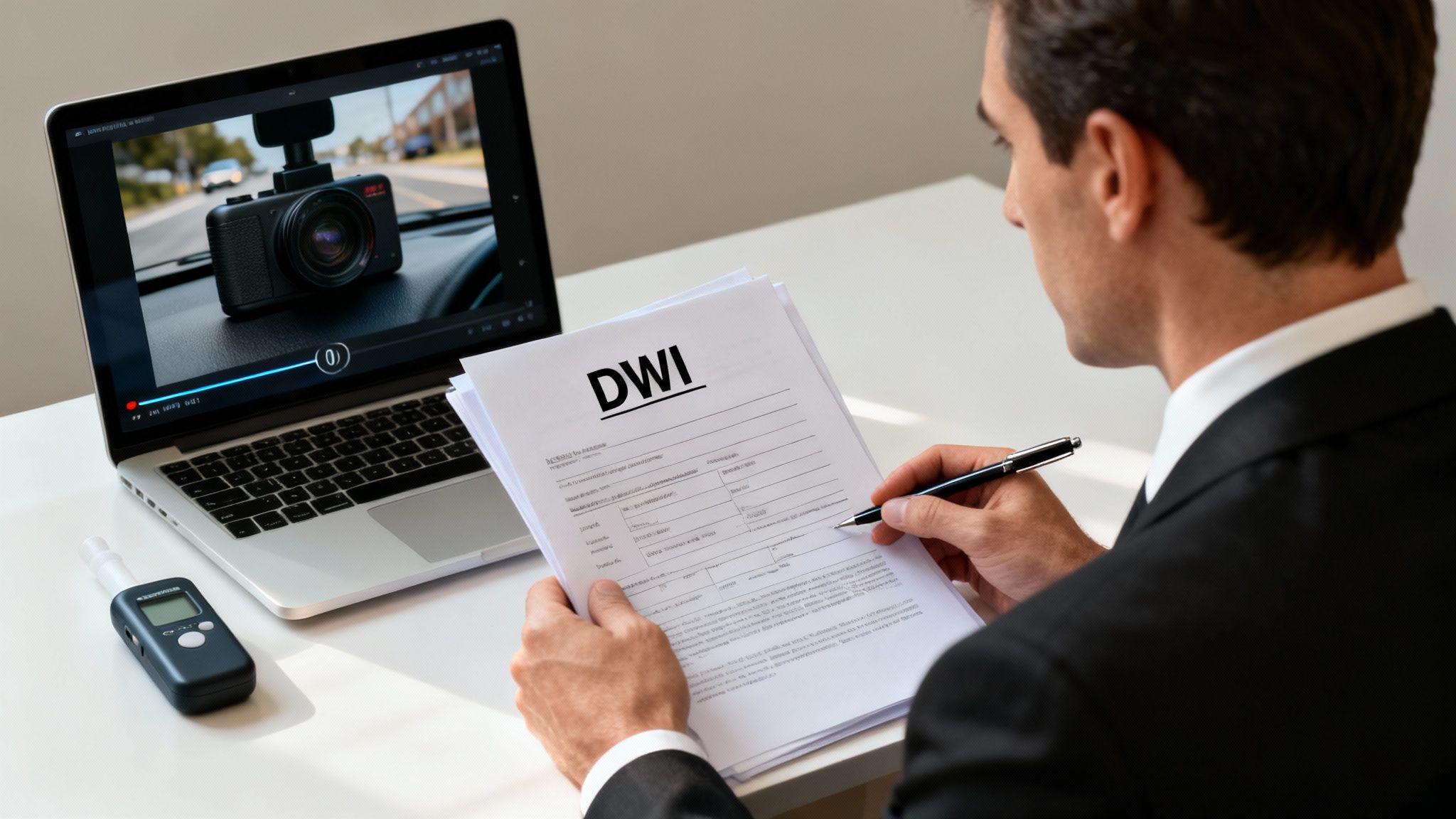
Most people think of a lawyer making big speeches in a courtroom. That can happen, but a great DWI defense attorney does their most important work long before they see a judge.
Think of them like a detective and a strategist. They don’t just believe what the police report says. They look into every single detail of your arrest. They search for mistakes or times when your rights were not respected. This work done behind the scenes is what often wins a case.
Looking at Every Part of the Case
The first step for any good DWI defense attorney is to get all the evidence. This means everything, not just the breath test number. They will collect everything related to the traffic stop and your arrest.
This deep look usually involves:
- The Police Report: Reading it very carefully to find things that don’t match up or mistakes in procedure.
- Dashcam and Bodycam Video: Video can show what really happened, which might be different from the written report.
- Breathalyzer Records: Was the machine working right? They’ll check the repair logs to find out.
- Officer’s Training Records: They’ll check if the officer who arrested you was properly trained to do the sobriety tests and use the equipment.
This is where a strong defense starts. For example, your lawyer might find out the officer did not have a good legal reason—called reasonable suspicion—to pull you over. If the stop was not legal, any evidence found after that could be thrown out.
Questioning the Prosecutor’s Evidence
Once your lawyer has all the facts, they start looking for holes in the prosecutor’s case. A big part of this is challenging the “evidence” used against you.
Let’s talk about field sobriety tests—like walking a line or standing on one leg. These tests are known to be tricky and not very reliable. Were you nervous? Do you have a health problem that affects your balance? Was the ground bumpy? A good lawyer will point all these things out to argue that the test results don’t mean anything.
The numbers show that a good defense works. While statistics vary, many DWI cases across the country are dismissed or reduced to a lesser charge because a smart lawyer found weaknesses in the case.
The same is true for breathalyzer results. These machines are not perfect. Things like the officer not using it correctly, certain health problems, or even what you ate can cause a high reading that isn’t true. Your lawyer knows exactly how to question these tests in court.
Working for a Better Result
Finally, your DWI lawyer is your negotiator. They take all the problems they found in the case and use them to bargain with the prosecutor. They will talk to the prosecutor, show them the weak spots, and push for a better deal.
This could mean getting the charge changed from a DWI to something less serious, like reckless driving. In the best case, it could mean getting the case dropped completely. This is where knowing the local courts helps a lot. Having a lawyer who understands Arkansas law and the local system is a big plus. To see what’s possible, you can look at these statistics on winning or losing a DWI case and see how a good defense can make a difference.
Common Defense Strategies in Arkansas DWI Cases
Winning a DWI case is not usually about one big “aha!” moment in court. It’s more like taking a machine apart, piece by piece. A good DWI defense attorney looks at every single part of the prosecutor’s case to find weak spots and mistakes. These are not tricks; they are your rights, protected by Arkansas law.
The process often starts at the very beginning: the moment the police car’s lights flashed behind you. An officer cannot pull you over just because they have a feeling. They need a real, factual reason to believe you broke a traffic law. This is called “reasonable suspicion.”
Questioning the First Traffic Stop
Let’s say the police report says you were swerving all over the road, but the officer’s own video camera shows your car driving perfectly straight. That is a big problem for the prosecutor.
The whole case against you depends on that first traffic stop being legal. If the start is shaky, the whole case can fall apart. Any evidence collected after an illegal stop—the breath test, the field tests, everything—can be thrown out of court. This is often the fastest way to get a case dismissed.
A strong DWI defense is about making sure the police followed the rules. If the reason for pulling you over was not legal, it can ruin all the evidence that came after, no matter what a breath test showed.
A smart lawyer will immediately ask for all the evidence, especially the police report and any video. They will check to see if the officer truly had a good reason to stop you.
Challenging Breath and Sobriety Tests
Most people think that blowing over the legal limit on a breathalyzer means the case is over. It’s not. These machines are complex and are not always right. A good lawyer knows how to show their flaws.
There are several ways we can question the results:
- Bad Maintenance: Breathalyzers are like any sensitive tool; they need to be checked and cared for regularly. We can look at the machine’s service records to see if it was broken or needed a check-up.
- Medical Conditions: Things like acid reflux, diabetes, or even being on a special diet can make your breath have chemicals that trick the machine into showing a false high alcohol level.
- Officer Mistakes: The officer who gives the test has to follow a strict set of rules. If they rush, get distracted, or skip a step, the test result is not reliable and can be challenged.
The same goes for those roadside “field sobriety tests”—walking a line or standing on one leg. They are hard for anyone to pass perfectly. Was the ground bumpy? Was it cold or windy? Do you have an old injury? Even being nervous can make a sober person seem to “fail.” It’s your lawyer’s job to show a judge or jury how unreliable these tests are.
Understanding the Two Battles of a DWI Charge
Getting arrested for a DWI in Arkansas is not just one legal problem—it’s two. This confuses a lot of people. You are suddenly fighting on two different fronts at the same time. Each one has different rules, deadlines, and punishments.
That’s why having a good DWI defense attorney is so important. They know how to handle both of these battles for you.
The first battle is the one everyone thinks of: the criminal court case. This is where the state tries to prove you are guilty of driving while intoxicated. If you are found guilty, you could face jail time, big fines, and a criminal record that follows you for years.
The second battle is the administrative license hearing. This is not a criminal case. It is run by the Arkansas Department of Finance and Administration (DFA). Their only job is to decide if you should lose your driver’s license.
The Criminal Case vs. The License Hearing
These two cases happen at the same time but are separate from each other. You could win your criminal case but still lose your license in the DFA hearing. The opposite can also happen. They don’t wait for each other, which can cause big problems if you don’t know this.
Here’s a simple way to think about it: the criminal court is about punishment for breaking the law. The DFA hearing is about public safety and your permission to drive a car.
One of the most important—and often missed—deadlines has nothing to do with your court date. After a DWI arrest in Arkansas, you have just seven days to ask for a hearing with the DFA. If you miss that deadline, you lose your license automatically.
To help you see it clearly, let’s look at the key differences between these two separate legal fights.
Arkansas DWI Two Legal Battles Explained
| Thing to Know | Criminal Court Case | Administrative License Hearing (DFA) |
|---|---|---|
| Purpose | To decide if you are guilty of a crime. | To decide if your driver’s license should be taken away. |
| Who’s In Charge | Prosecutor, Judge, and maybe a jury. | A hearing officer from the DFA. |
| Possible Punishments | Jail time, fines, probation, classes, criminal record. | License taken away, special device in your car (ignition interlock). |
| How Much Proof is Needed | “Beyond a reasonable doubt”—a very high level of proof. | “Preponderance of the evidence”—just means “more likely than not.” |
| Important Deadline | The court sets this, usually weeks or months after the arrest. | You must ask for it within 7 days of your arrest. |
Handling both of these processes well is the key to a strong DWI defense. A lawyer who understands both can create a plan to protect your freedom and your ability to drive.
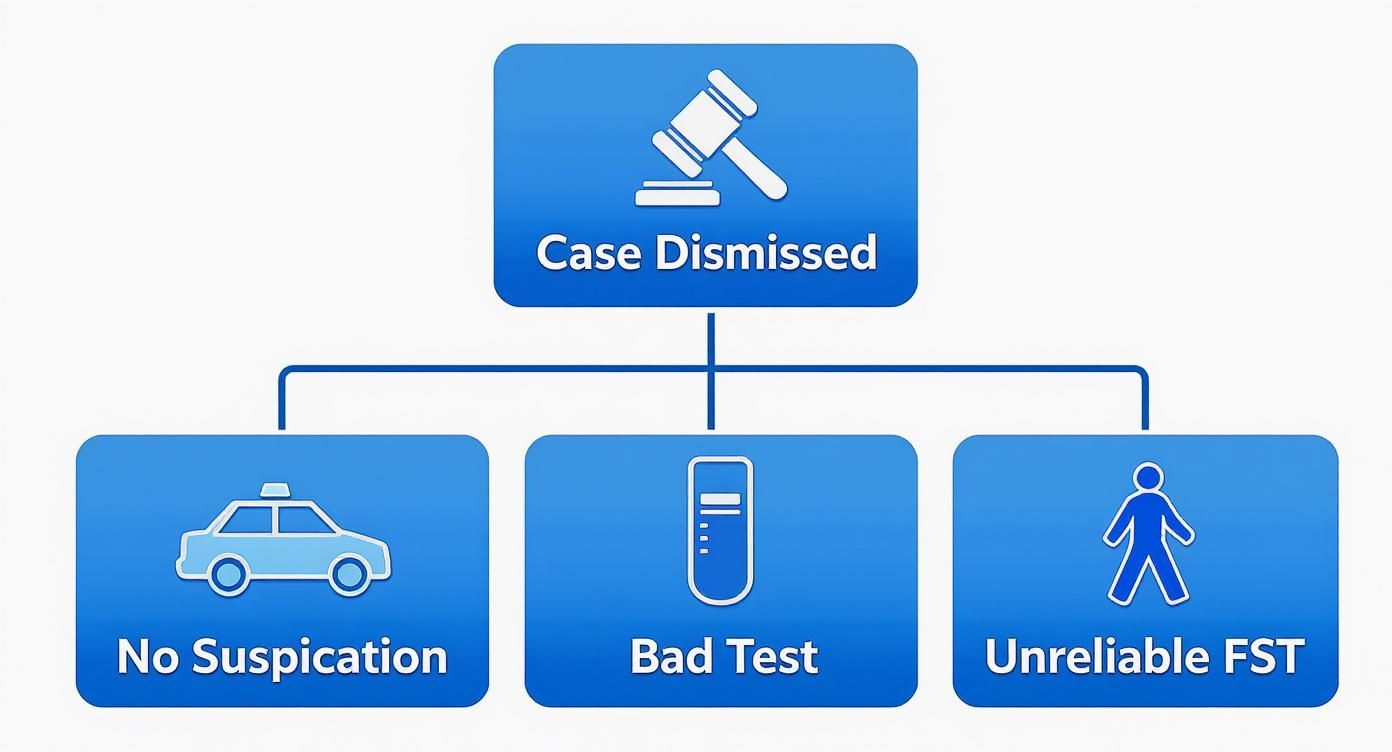
As you can see, a good defense often starts by questioning the traffic stop itself or the tests that were used against you. These challenges are important in both your criminal case and your DFA hearing. A good lawyer knows how to use the same evidence to fight for you in both places.
You can learn more about the legal process in our guide on DWI Arkansas law.
Finding the Right DWI Attorney for Your Case
Choosing a lawyer after a DWI arrest can feel like a huge task. But here’s the most important thing to know: not all lawyers are the same. Hiring a regular lawyer for a special DWI charge is like asking your family doctor to do brain surgery. You need a specialist.
What you’re looking for is a true DWI defense attorney, someone who works on these specific cases every day in Arkansas.
A lawyer who only handles DWI cases knows the science behind a breath test—and its problems. They know the common mistakes police officers make during traffic stops. Most importantly, they know what arguments work with local judges and prosecutors. This special experience is a huge help and lets them see defense chances that other lawyers would miss.
Questions to Ask a Lawyer
When you meet with a potential lawyer, remember that you are interviewing them for a very important job. Don’t be afraid to ask direct questions to make sure they are the right person to protect your future.
Here are a few key questions to ask:
- How many DWI cases have you handled in this court?
- What part of your work is focused on DWI defense?
- Based on what you know so far, what are some defense ideas you are thinking about for my case?
- Will you be the lawyer working on my case, or will someone else at your office handle it?
Their answers will tell you a lot about their experience. It’s also a good idea to see how they look online; good reputation management for attorneys can be a sign that they are professional.
Why Knowing the Local Courts Is a Big Deal
Knowing Arkansas DWI law is just the first step. A great lawyer needs to know the local courts well. They understand how the local prosecutors and judges think and act. This “insider” knowledge lets them build a defense that is made not just for the law, but for the people who will be deciding your case.
A lawyer who is in the same courthouse week after week builds relationships and learns the unwritten rules. Knowing the local system can be just as important as knowing the law itself.
How DWI cases are handled can be very different from one county to another. This makes local knowledge even more important. Things like what local police focus on can change how many people are arrested and what kinds of cases go to court. Having a local expert who knows these things is a great advantage.
Common Myths About DWI Charges
When you’re facing a DWI charge, bad information can be your worst enemy. Friends, family, and the internet will offer advice, but a lot of it is wrong. Believing these myths can hurt your case and lead to worse results under Arkansas law.
One of the most dangerous ideas is that failing a breath test means you have no chance of winning. That is not true. These machines are not perfect. They are complex and can make mistakes. A skilled DWI defense attorney knows where to look for errors, from bad maintenance records and wrong police actions to your own health problems that might have changed the results.
Another myth is that you can save money by handling the case yourself. Yes, you avoid paying a lawyer at the start. But the money you will lose long-term from a conviction is almost always much worse. We’re talking about big fines, insurance costs that go way up, and even losing job chances. Think of a lawyer’s fee as an investment in protecting your future.
Setting the Record Straight on DWI Myths
Let’s clear up a few more common but wrong ideas about DWI charges in Arkansas. Knowing the truth is the first step to building a real defense.
A lot of people think that refusing to take a breath test is a smart move. In Arkansas, it’s a terrible one. The state has an “implied consent” law. This means that just by driving on a public road, you have already agreed to take a chemical test if a police officer legally asks you to. Refusing the test means your driver’s license will be taken away right away, automatically.
This is very important: losing your license for refusing a test is a separate punishment. It happens right away, even if you are never found guilty of the DWI charge.
It’s common for younger drivers to get into this kind of trouble. Statistics show that people aged 21 to 34 make up over 52% of all DWI arrests. This makes this group more likely to get bad advice. If you want to see how age plays a role in these cases, you can learn more about DWI statistics from the experts. A good lawyer understands these facts and can help you get through the system without falling for these common mistakes.
Answering Your Top Questions About Arkansas DWI Defense
After the police lights and the arrest, your head is probably spinning. It’s normal to feel overwhelmed and have a million questions. Getting clear answers is the first step to feeling in control again. Let’s answer some of the most common questions we hear every day.
How Much Does a DWI Lawyer Cost?
This is usually the first question people ask. Hiring a strong DWI defense attorney is an investment, but the cost is not the same for everyone. Some lawyers charge a flat fee, which is one price for handling your whole case. Others charge by the hourly rate, keeping track of the time they spend on your defense.
The final cost often depends on how complex your case is and how much experience the lawyer has. It might seem like a lot of money at first. But a good lawyer can save you a fortune later by helping you avoid huge fines, court costs, and the crazy high insurance bills that come with a conviction.
Can I Ever Get a DWI Off My Record?
The fear of a DWI conviction following you forever is a big worry. The good news is that in Arkansas, you might be able to get your record sealed. Think of it like putting the record in a locked box. It still exists, but it’s hidden from most people, like bosses or landlords.
However, sealing a record is not automatic, and it’s a tricky process. You have to finish your whole sentence, and a certain amount of time must pass with no new trouble. A lawyer is a huge help here. They know how to handle all the paperwork to give you the best chance at a fresh start.
What if This Is My Second or Third DWI?
If you have been in this situation before, you need to know that things are much more serious now. Arkansas law is very tough on repeat offenses. The punishments get much worse with each conviction.
For a second DWI charge within five years, you will face at least seven days in jail. That is up from 24 hours for a first offense. A third offense raises that to at least 90 days in jail.
On top of the jail time, the fines are much higher, and you will lose your driver’s license for a lot longer. When you are facing a second or third charge, trying to handle it alone is a huge risk. The results are just too serious to not have an expert fighting for you.