
When a marriage ends in Arkansas, one of the biggest questions is, “How do we split everything up?” The legal rule for this is called equitable distribution. In simple terms, this means the things you got during the marriage are divided in a way that is fair, which doesn’t always mean a perfect 50/50 split.
Understanding Equitable Distribution in an Arkansas Divorce
Think of it like this: you and your spouse bake a cake together. One of you buys all the fancy ingredients, and the other spends hours carefully mixing, baking, and decorating it. When it’s time to eat, would cutting it into two identical halves be truly fair? Maybe not.
Equitable distribution works on a similar idea. It understands that a strict 50/50 split might not be the most just outcome. A judge in Arkansas tries to divide everything you got during the marriage fairly. To do that, the judge has to look at the whole picture of your marriage.
What “Fair” Really Means
In court, “fair” isn’t about feelings. It’s about a judge looking at a list of facts to make a good decision. This helps create a result that fits your family’s unique situation.
This is the way it works in most states, including Arkansas. It lets judges think about each person’s money needs, what they did for the marriage (like earning money or taking care of the home), and how much they can earn in the future. The money part is a big deal; studies show that many women who divorce see their income drop. You can read more about the research behind divorce asset distribution laws to see the data.
This shows why understanding this idea is so important for protecting your money future.
Key Takeaway: Equitable distribution doesn’t mean equal. It means the court divides property and debts from the marriage in a way it decides is fair based on your specific case.
Core Principles of Equitable Distribution
The whole process is based on a few main ideas that help a judge decide. These ideas make sure the result isn’t random.
Here’s a quick breakdown to help you get started.
Equitable Distribution at a Glance
This table explains the main ideas of equitable distribution in simple terms.
| Concept | What It Means in Simple Terms |
|---|---|
| Marital vs. Separate Property | The court only divides what you got during the marriage. Things you owned before, inherited, or got as a personal gift are usually not divided. |
| Valuing All Contributions | Both making money and taking care of the home are important. A stay-at-home parent’s work is seen as a valuable contribution to the family’s money. |
| No One-Size-Fits-All Formula | Every divorce is different. The final division is made to fit the specific situation of the couple. |
These basic ideas are just the beginning. Now, we can look at how Arkansas courts use these rules in real divorce cases.
How Arkansas Law Differs from Community Property States
If you’ve heard a friend from a state like Texas or California talk about their divorce, their story might sound very different from how things work here. That’s because those states use a completely different set of rules for dividing property.
Arkansas is an equitable distribution state. This is important because it changes how a judge looks at your case and affects your money future.
The Community Property Playbook: A Strict 50/50 Split
Nine states, including Texas, California, and Arizona, use the community property model. The rule there is simple and strict. Almost everything a couple earns or buys while married—from paychecks to the family car—is called “community property.”
When that marriage ends, the law usually says this property must be split exactly 50/50, right down the middle. It’s like a math problem that doesn’t let the judge change the answer.
Key Difference: Community property states start with a 50/50 split as the main rule. In Arkansas, the goal is fairness, which might or might not be a 50/50 split.
While this simple rule might seem easy, it can ignore what really happened in a marriage. It doesn’t automatically think about one spouse having a much better chance to earn money after the divorce or the career sacrifices one person made for the family.
Arkansas’s Approach: Fairness Over Formulas
Arkansas law is much more personal. Instead of using a strict math formula, our state lets judges be flexible to find a fair, or equitable, outcome based on the facts of the case.
While the law assumes that an equal 50/50 split is fair, an Arkansas judge is allowed to divide the property unequally if the situation makes it fair to do so. This flexibility is the main point of equitable distribution.
A judge will carefully look at a long list of factors to decide what’s truly fair, including things like:
- How long the marriage lasted
- Each person’s age, health, and job
- Each spouse’s income and other money they have
- How each person helped build the marital property, including their work as a homemaker
This system allows for a result that’s made just for your family’s real situation. It knows that in real life, one size rarely fits all.
Why This Matters for You
The difference between these two systems is not just for lawyers; it has real effects on your financial life after a divorce. Here in Arkansas, your story matters.
The unique details of your marriage—the sacrifices you made, how you helped the household, and what you’ll need to start over—are all part of the decision. This is very different from the community property model, where the main focus is just on the math. Our state’s law is meant to be a careful process that aims for real justice for everyone.
Marital Property vs. Separate Property: What’s on the Table?
Before a judge can divide anything in a divorce, they have to do one important thing first: sort everything you and your spouse own into two piles. Think of it like cleaning a messy garage—you need to figure out what belongs to who before you can decide where it all goes. These two piles are called marital property and separate property.
Getting this sorting right is probably the most important part of the money side of a divorce. It decides what gets split and what doesn’t.
What Counts as Marital Property?
Marital property is basically everything you and your spouse got together during your marriage. It’s the money and things you earned from your partnership. Imagine a shared piggy bank you both put money into from your wedding day—that’s a good way to think about it.
This includes obvious things, like the house you bought together, the paychecks that went into a joint bank account, and the family car. But it also covers things that might not feel so shared, like the part of one person’s retirement account that grew during the marriage, or a family business that became more valuable.
In Arkansas, the law starts with a simple idea: if you got it after your wedding day but before you legally separated, it belongs to the marriage. It doesn’t matter whose name is on the paper.
Here are some common examples of marital property:
- The Family Home: The house you bought and lived in as a married couple.
- Bank Accounts: Any money earned or put into checking and savings accounts during the marriage.
- Retirement Accounts: The value a 401(k), pension, or IRA grew by while you were married.
- Vehicles: Cars, boats, or RVs bought during the marriage.
- Investments: Stocks, bonds, or other investments bought with money earned during the marriage.
This also includes debt. A mortgage on the family home or a credit card balance from buying groceries and family items are considered marital debts, and both spouses are usually responsible for them.
What is Separate Property?
Now for the other pile. Separate property is anything that was yours and only yours before you got married. It also includes a few special types of things you might have gotten during the marriage.
Under Arkansas Code § 9-12-315, separate property is usually protected from being divided. This includes property owned before the marriage, as well as gifts or inheritances given just to one spouse.
This rule is for fairness. It understands that you shouldn’t have to split things that were never really part of the marriage partnership.
So, what usually stays in your personal pile?
- Property from Before Marriage: A house you owned before you ever met your spouse or the retirement account you started at your first job.
- Inheritances: Money or property left to you by a relative, even if you got it during the marriage.
- Specific Gifts: A gift given only to you, not to you as a couple (like a family heirloom from your grandparents).
But this is where it gets tricky. The line between separate and marital property can get blurry. If you take that inheritance money and put it into a joint bank account that you use for family bills, a court might see that as “mixing” it and decide you meant to turn it into a marital item.
Figuring out these rules is why good legal advice is so important. The equitable distribution system can greatly affect your money future. In fact, studies show how divorce can impact people’s finances differently. You can learn more about the global impact of marriage and divorce laws from the OECD.
The Factors Arkansas Judges Use to Divide Property
When an Arkansas judge has to divide a couple’s property, they don’t just pick a number. They are guided by a specific set of rules in the law, making sure the process of equitable distribution is as fair as possible. Think of it less like a guess and more like a referee using a rulebook for every big decision.
These rules help the judge decide how to split the marital “pie.” The goal is to find a division that makes sense for that specific family, not to use a one-size-fits-all formula. This is why the law gives them the power to divide property unequally if the situation calls for it.
Before a judge can even start thinking about these factors, they first have to sort everything the couple owns into two buckets: marital property and separate property.
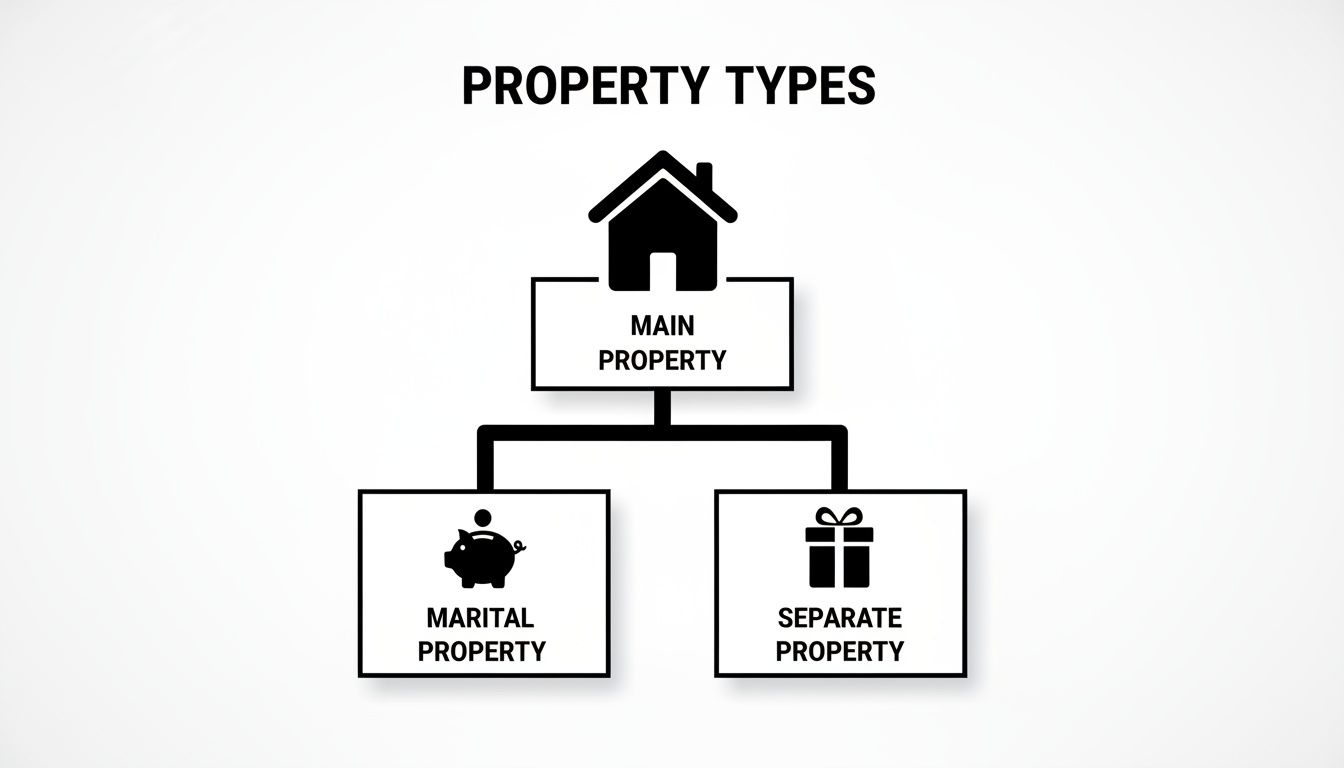
This first step is very important. A judge can only use the equitable distribution factors on the property and debts that are in the “marital property” box.
The Judge’s Checklist for a Fair Division
Arkansas law gives judges a list of factors they must think about. While a 50/50 split is often the starting point, this checklist lets a judge change that number when fairness says so. Each factor helps tell a piece of the family’s story.
Here’s a look at some of the most important factors a judge will consider.
Key Factors in an Arkansas Property Division
An Arkansas judge looks at several parts of a marriage to decide on a fair property division. The table below lists the most common factors and explains why they are so important in the court’s final decision.
| Factor | Why It Matters to the Judge |
|---|---|
| Length of the Marriage | A short, three-year marriage is seen very differently from a 25-year marriage where one spouse was a homemaker. Longer marriages often end up with a more equal split. |
| Age and Health | The court checks if one spouse’s health problems could make it hard for them to earn a living. A younger, healthier spouse is often in a better spot to get back on their feet financially. |
| Occupation and Lifestyle | This looks at the lifestyle the couple was used to and each person’s job. It helps the judge understand what each spouse’s life might be like after the divorce. |
| Income and Vocational Skills | The judge looks at current pay and what each person could earn in the future. A spouse with a high-paying job has a very different money future than one who hasn’t worked for many years. |
| Employability | This is all about the future. Does one spouse have skills that are in demand? Does the other need to go back to school? This helps the court make a division that is fair for the long run. |
| Homemaker Contributions | Arkansas law clearly says that the work of a homemaker—running the house and raising children—is just as valuable as the money contributions of the spouse who works outside the home. |
These factors are not just a simple checklist; they are used together to create a full picture of the marriage and what a truly fair result looks like for both people moving forward.
How These Factors Play Out in the Real World
Let’s use a real-world example. Imagine a couple, Tom and Jane, who are divorcing after 20 years of marriage. Tom is a surgeon, and Jane left her nursing job early on to raise their three children and manage the home.
A judge looking at this case would see:
- A long marriage.
- A big difference in current income and future earning ability.
- Jane’s large non-money contributions as a homemaker.
In this case, a simple 50/50 split might not be truly “equitable.” Jane gave up her own career growth for the family’s good, and the court will see that. It is common in cases like this for a judge to give the spouse who earns less or doesn’t work a larger share—sometimes 60% or even 70% of the property—to make sure they are financially stable. While every legal system is different, you can find more information about how global divorce trends compare to see how different places value these kinds of contributions.
Additional Considerations for the Court
Besides that main checklist, a few other things can affect a judge’s decision.
- Each Person’s Own Property: This means looking at any separate property each person owns. If one spouse has a large inheritance that isn’t part of the marital pot, the judge might give a larger part of the marital property to the other spouse to make the total result fairer.
- Tax Consequences: The court also has to think about taxes. Splitting a retirement account or selling the family home can create big tax bills, and a good judge will try to divide things in a way that lowers the tax hit for everyone.
In the end, the judge’s job is to look at every important piece of information. They combine all these factors to create a final property division that is just and fair based on the unique story of your marriage.
How Common Assets and Debts Are Divided in Practice

It’s one thing to talk about legal rules, but it’s another to see how they apply to your actual stuff—the house, retirement accounts, and credit card bills. Let’s look at how the rules of equitable distribution are used for the real-world decisions families face every day.
From the family home where you made memories to the 401(k) you’ve been building, every item and debt has a place in the divorce puzzle. Here’s a practical look at how Arkansas courts usually handle the division.
The Family Home
For most couples, the house is their biggest financial asset and the heart of their lives. Deciding what happens to it is often one of the hardest parts of a divorce. A judge has a few common ways to make sure the split is fair.
- One Spouse Buys Out the Other: If one person wants to stay in the home—often the parent who will have the kids most of the time—they can buy out their spouse’s share of the home’s value. This almost always means getting a new mortgage in their name only.
- Sell the House and Split the Profits: This is the most common and simple solution. The house is sold, the mortgage and any selling costs are paid off, and the money left over is divided fairly between the spouses.
- Continue to Co-Own the House: This is rare and usually not a good idea, but some couples agree to keep owning the house together for a certain amount of time, like until the youngest child finishes high school. This requires a very strong legal agreement.
In the end, the choice depends on what is financially possible for both people as they get ready to move on separately.
Retirement Accounts Like 401(k)s and Pensions
Retirement accounts are very important for your future, but they’re tricky to divide. You can’t just take out half the money without paying huge tax penalties. That’s why a special tool is used to do the job right.
Meet Sarah and Tom: Sarah and Tom are divorcing after 15 years. Tom has a 401(k) worth $200,000, all of which was earned during the marriage. To divide it without penalties, their lawyers write up a Qualified Domestic Relations Order, or QDRO.
A QDRO is a court order that tells the company managing a retirement plan how to split an account. It lets Sarah move her share of Tom’s 401(k) directly into her own retirement account, saving the money for her future. It’s the only correct legal way to handle these important assets.
Small Business Ownership
When a business is part of the marriage, things get complicated. A business isn’t just property; for many, it’s how they make a living and what they are passionate about. The first step is always getting a business valuation to figure out exactly what it’s worth.
From there, a few things can happen:
- One spouse buys out the other’s share in the company.
- The business is sold to someone else, and the money is divided.
- The spouses try to keep owning the business together, which is rarely a good idea because it can lead to fights.
Each option has serious financial and legal results. If you own a business and are facing divorce, it’s very important to understand the special challenges. You can get more details in our guide on what business owners need to know about divorce in Arkansas.
Handling Debts Like Credit Cards and Loans
It’s not just about splitting up the good stuff; debts have to be divided, too. In Arkansas, any debt gotten during the marriage for a family reason is considered a marital debt. This includes the mortgage, car payments, and even credit card debt from family vacations or groceries.
A judge will divide these debts using the same equitable distribution rules. They’ll think about things like who is in a better financial spot to pay the debt, and may give more of it to the spouse who earns more. The main point is that both people share responsibility for the debts created during their marriage, and the court’s job is to split that responsibility fairly.
Why You Need an Experienced Divorce Attorney
Knowing the rules of equitable distribution is one thing. Actually getting a fair result in court is another. You can read every article online, but that knowledge won’t replace having a good lawyer on your side. Without one, you risk walking away with less than you deserve, and that can hurt your financial future for years.
A good divorce lawyer does more than just fill out papers. They become your planner, your negotiator, and your voice. They work to make sure every contribution you made to the marriage—from earning money to raising children—is valued correctly and shown to the judge.
When Legal Help Is Critical
Some divorces are just too complex and have too much at stake to handle on your own. Going it alone in these situations can lead to terrible and permanent financial mistakes.
You definitely need a lawyer if:
- You own complex property: Things like a family business, rental properties, stock options, or special retirement accounts need an expert to divide them correctly.
- There is a big income difference: When one spouse earned most of the money, a lawyer is very important for protecting the spouse who earns less and making sure the final split is truly fair.
- You can’t talk to each other: If you and your spouse can’t even have a calm conversation, you need a professional to negotiate for you and keep emotions from causing bad financial choices.
- You think property is hidden: Do you think your spouse is hiding money? A lawyer can use legal tools like subpoenas to find hidden money.
A lawyer’s real job is to protect you and fight for a result that is truly fair—not just what seems fair on the surface. They turn legal rules into your new financial life.
For those looking for support, it’s also helpful to understand how different legal professionals can help, including how to use effective paralegal services for divorce.
The decisions made during your divorce will shape your life long after it is over. Don’t go through this by yourself. At DeWitt & Daniels, we’re here to offer the clear, expert help you need to protect your future. Contact us today to talk about your case.
Common Questions About Equitable Distribution in Arkansas
Even after you learn the basics, it’s normal to have more questions about how this works in a real divorce. The process can feel like a lot, but clear answers can help. Here are some of the most common questions we hear, with simple answers.
Our goal here is to explain things without legal jargon and give you a solid understanding as you move forward.
Can Equitable Ever Mean a 50/50 Split in Arkansas?
Yes, absolutely. While the law starts with the idea of a fair division, not always an equal one, a judge can easily decide that a 50/50 split is the most fair result. In fact, this is a very common outcome, especially in longer marriages where both partners helped in similar ways, whether by earning money or managing the home.
The important thing to understand is that a 50/50 split isn’t the automatic starting point; it’s often the end result. The judge’s job is to find the most fair solution, and many times, that leads to an even split.
What Happens If My Spouse Tries to Hide Assets?
Hiding money or property during a divorce isn’t just wrong—it’s against the law, and Arkansas courts take it very seriously. If you think your spouse is not being honest about their money, you need to tell your lawyer right away.
Your legal team has powerful tools to find things, like subpoenas and depositions, which can uncover hidden bank accounts, secret investments, or property your spouse “forgot” to mention. When a spouse is caught hiding property, the judge can punish them, often by giving a much larger share of the marital property to the honest spouse.
Am I Responsible for My Spouse’s Debt from Before We Married?
Usually, no. In Arkansas, any debt a person had before the marriage is their own “separate debt.” That means they are the only one responsible for paying it back after the divorce. Think student loans or credit card debt from before you were married—those usually stay with the person who created them.
But, things can get tricky. For example, if you used joint marriage money to make payments on that old student loan, the court might have to sort things out. This is where a good lawyer is very helpful, fighting to make sure the final debt division is truly fair and follows the state law.