
When your marriage is ending, a family law divorce attorney is the expert you need. We are here to explain Arkansas law in a way that makes sense, fight for what is fair for you, and be your voice to help protect your future.
What a Divorce Attorney Actually Does for You
Think of it like this: getting a divorce can feel like you have to climb a big, scary mountain in a storm—without a map. It's confusing and can feel risky. A family law attorney is your expert guide for that climb.
Our job is more than just filling out papers. We act as your translator, taking the confusing legal words used in Arkansas courts and explaining what they mean for you, your kids, and your money. This helps you make smart choices instead of ones based on fear.
We are also your strategist. A good lawyer doesn't just react; they help you see the whole picture and plan your next steps. We work with you to create a good plan for the most important parts of your divorce, like dividing property and making a schedule for the kids.
Key Roles an Attorney Plays
During your divorce, your attorney will do several jobs for you. Each one is meant to support you and get a fair result. Think of us as your team captain, helping you understand the rules of a game you’ve never played before.
Here’s what we do for you:
- Giving You Clear Legal Advice: We explain your rights and what you have to do under Arkansas law when it comes to your house, your money, and your children.
- Handling All the Paperwork: We take care of every legal form, from the first "Complaint for Divorce" to the final papers, making sure everything is done correctly and on time.
- Negotiating for You: We talk to your spouse’s attorney for you. The goal is to agree on issues without having to go to court, which can be stressful.
- Representing You in Court: If you and your spouse cannot agree, we become your supporter in front of the judge. We show evidence and argue for what is best for you.
A good attorney brings calm and order when your world feels messy. Our main job is to turn a confusing legal problem into clear, simple steps that protect your future.
This kind of help is very important when feelings are strong. For example, deciding who stays in the family home or how you’ll split holidays with your kids can feel impossible. An attorney helps separate emotions from the facts, focusing on what’s fair and will work according to the law.
Ultimately, a family law divorce attorney in Northwest Arkansas is your guide and your shield. We stand between you and the legal system so you can focus on healing and starting your new life.
Understanding the Arkansas Divorce Process Step by Step
Going through a divorce can feel like a lot to handle, like someone gave you a hard puzzle with no instructions. It's normal to feel confused and stressed. The good news is that the divorce process in Arkansas follows a set of steps.
Once you understand the basic path, the journey seems less scary. Think of a family law attorney as your personal guide—someone who knows the way, sees challenges coming, and helps you through every part to get you where you need to go.
This is what we do for our clients every day: explain confusing laws, act as a smart partner, and fight for them from start to finish.
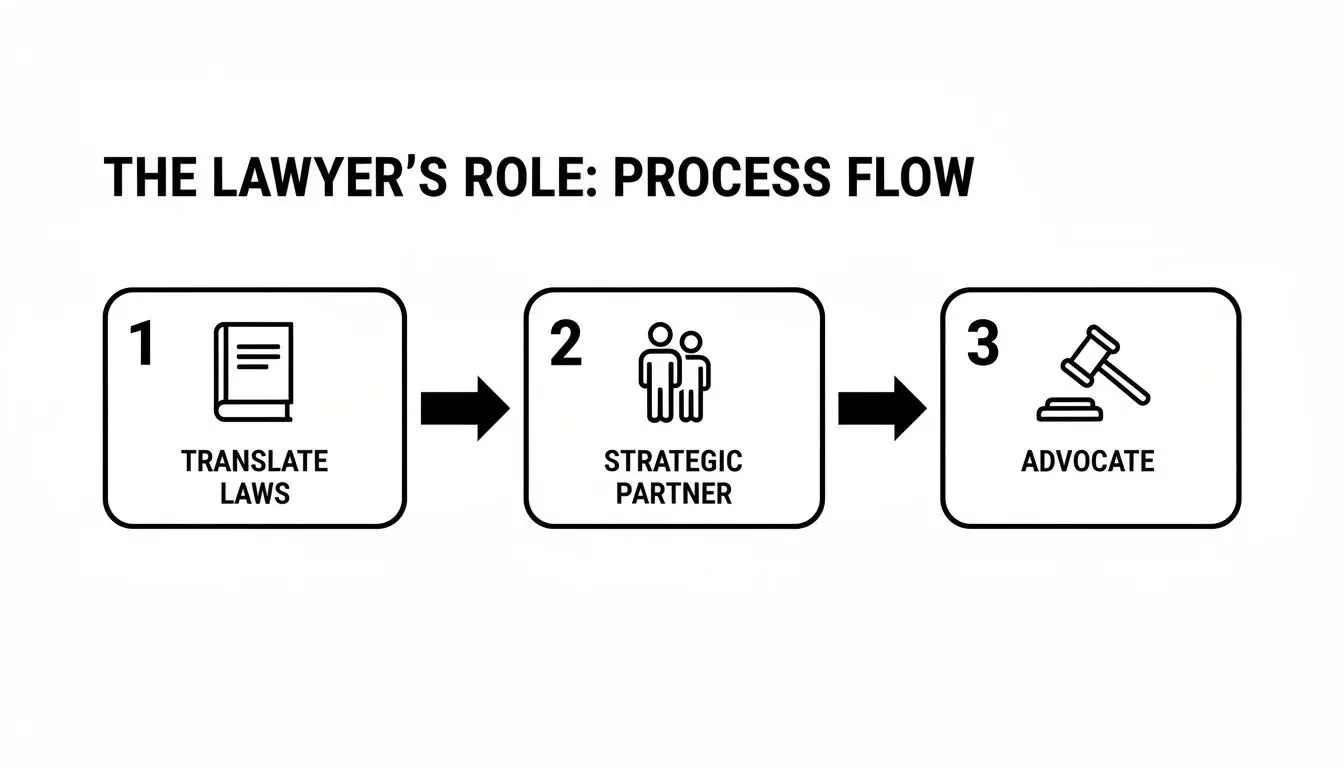
An attorney’s job is about more than just papers; it’s about being a steady helper with a clear plan during a hard time.
The First Step: Filing a Complaint
The divorce process officially starts when one spouse, called the Plaintiff, files a Complaint for Divorce at the local courthouse. This paper tells the court you want a divorce and gives the legal reason, or grounds, for it. In Arkansas, common reasons include living apart for 18 months or "general indignities," which basically means your spouse’s behavior has made it impossible to live together.
After the Complaint is filed, it must be officially delivered to the other spouse, the Defendant. This formal delivery is called service of process. It's a very important step to make sure they know a case has started. Once they receive it, a required waiting time begins.
In Arkansas, there is a 30-day waiting period after the complaint is filed before a judge can grant the divorce. This is a "cooling-off" period required by state law for all divorces.
This waiting period cannot be skipped and is part of every divorce, whether you and your spouse agree on things or not. It's just a pause that the system requires.
Uncontested vs. Contested Divorce
After the first papers are filed, the divorce will go one of two ways, depending on how much you and your spouse agree.
-
Uncontested Divorce: This is the simplest and cheapest way. It happens when both spouses agree on everything—child custody, how to split property, alimony, and child support. You work together, usually with lawyers, to write a formal Settlement Agreement. After the 30-day waiting period, a judge can approve the agreement and finalize your divorce.
-
Contested Divorce: This happens when you and your spouse can't agree on one or more big issues. A contested case has more legal steps, like talking with lawyers, mediation, and, if you still can't agree, a trial where a judge will make the final decisions for you.
Even if your divorce starts as contested, it doesn't have to end that way. Many cases get settled along the way. A good attorney is very important here, helping you talk and find things to agree on. This can move the case from contested to uncontested, which saves everyone time, money, and stress.
The truth is that many people need this kind of expert legal help. While the world average divorce rate is around 1.8 divorces for every 1,000 people, the rate in the United States is much higher, at about 2.5 to 2.7 per 1,000 people. Some studies show that over 44% of American marriages may end in divorce, which is why family law is such an important job. You can explore more about these global divorce trends and their analysis to understand more.
Here in Northwest Arkansas, firms like ours are in the courts of Fayetteville, Bentonville, and other local towns every day, using what we know about local rules to protect our clients' futures.
Key Stages in a Contested Divorce
If you and your spouse disagree on big issues, your case will go through a few different stages. Here’s what to expect:
-
Discovery: This is the formal information-gathering stage. Both sides have to share all important financial information, like bank statements, tax papers, pay stubs, and papers for any property. It’s like putting all your financial cards on the table to make sure decisions are based on the whole truth.
-
Temporary Hearings: Life doesn't stop just because a divorce is happening. If you need quick decisions on things like temporary child custody, who will live in the house, or who will pay certain bills, you can ask for a temporary hearing. A judge will make temporary orders that last until the divorce is final.
-
Mediation: In Arkansas, most courts require couples in a contested divorce to try mediation before going to a trial. You, your spouse, and your lawyers will meet with a neutral person called a mediator. The mediator’s job is not to take sides, but to help you talk and find a compromise that you both can agree to.
-
Final Hearing or Trial: If you have tried everything and still can't agree, your case will be set for a trial. At the trial, both sides will show evidence to a judge, who will then make the final, legal decisions on all the issues you couldn't agree on.
The Three Big Questions Your Divorce Attorney Will Help You Answer
When you break it down, every divorce is about answering three main questions. Think of these as the main topics you and your spouse will need to figure out before you can move on.
An experienced family law attorney is your guide through this. Our job is to make sure each of these important areas is handled fairly and follows Arkansas law.

Before we get into the details, it helps to see the big picture. Here's a quick look at the three pillars of an Arkansas divorce and the standard a judge uses for each.
Three Pillars of Divorce in Arkansas
| Issue | What It Means | Arkansas Legal Standard |
|---|---|---|
| Property & Debt Division | Deciding who gets what, from the house and cars to credit card debt and retirement money. | Equitable Distribution (what is fair, which may not be a 50/50 split). |
| Child Custody | Figuring out who makes big decisions for the kids and where they will live most of the time. | Best Interest of the Child (what plan is best for the child's happiness and safety). |
| Financial Support | Setting up child support and, if it applies, spousal support (alimony). | State Guidelines & Legal Factors (a formula for child support; specific rules for alimony). |
Now that you have the basic idea, let's look at how your attorney helps with each one.
Pillar 1: Dividing Marital Property
Imagine everything you and your spouse got during your marriage—the house, cars, bank accounts, retirement money, and even credit card debt. In Arkansas, the court doesn't just split everything in half.
Instead, the law requires equitable distribution.
The key word here is equitable, which means fair, not always equal. The goal is a split that is fair based on your marriage. A 50/50 split isn't always fair.
For example, if one spouse will be taking care of the children most of the time, a judge might give them the family home to keep things stable. Or, if one spouse earns much less money, the property might be split differently to help them.
Your attorney's job is to look for and find the value of every asset and debt from the marriage. We then build a strong case for a division that is truly fair for you. This often means looking at financial papers and sometimes reading materials like deposition transcripts to get the whole story.
Pillar 2: Deciding Child Custody
For parents, nothing is more important than their children. The Arkansas courts feel the same way. Every custody decision is made based on one rule: the best interest of the child.
The court’s only goal is to create a safe, healthy, and supportive home for your kids. It's helpful to know that there are two types of custody:
- Legal Custody: This is about who has the power to make big decisions. It covers things like your child's school, healthcare, and religion. Arkansas courts usually prefer joint legal custody, where both parents have a say.
- Physical Custody: This is about where the child lives day-to-day. One parent might be the main caregiver while the other has visitation, or parents might share physical custody more equally.
As your family law divorce attorney, we help you show the court why your proposed plan for the kids is what's best for them. We will work with you to create a clear parenting plan that covers schedules, holidays, and how you will talk to each other. This gives you a good guide for raising your kids after the divorce.
Interestingly, family law has become even more important as life has changed. Around the world, marriage rates in wealthy countries have been going down, from 5.1 per 1,000 people in 2000 to a predicted 3.8 by 2026. This has led to more couples dealing with breakups and custody issues without being married, showing why good legal help is needed. You can read the full research about marriage and divorce rate shifts for more on these trends.
Pillar 3: Arranging Financial Support
The final pillar makes sure that children—and sometimes, a spouse—have the money they need after the divorce. This is broken into two different types.
Child Support
In Arkansas, child support is very structured. The amount is figured out using a specific formula in the Arkansas Family Support Chart. The formula mainly looks at the income of the parent who the children don't live with most of the time to set a monthly payment.
The whole point is to make sure the children have a similar level of financial support as they would have if the family had stayed together.
Spousal Support (Alimony)
Unlike child support, spousal support (or alimony) is not automatic. It is money one spouse pays to the other, usually for a set amount of time. A judge will only order it after looking at several things, such as:
- How long the marriage lasted
- Each spouse’s health and age
- The lifestyle the couple had during the marriage
- Each person’s education and ability to earn money
Alimony is usually for cases where one spouse clearly needs financial help and the other is able to pay. Your attorney can give you a real idea of whether alimony is likely in your case and fight for a fair result, whether you expect to pay or receive it.
When Should You Hire a Divorce Attorney?
Figuring out the right time to call a divorce attorney can be hard. Many people wait because they worry it will make things feel more like a fight. But that’s a common mistake.
Think of it this way: hiring a lawyer is like putting on a safety harness before you climb something difficult. It’s not about starting a fight; it’s a smart step to protect yourself and make sure you get through the process safely. It's about protecting your future and getting peace of mind, so you don't have to face the Arkansas legal system by yourself.
Honestly, the right time to call is usually much sooner than you think.
Clear Signs You Need Legal Help
Some situations are clear warning signs. Trying to handle these on your own can put your money and your relationship with your kids at risk.
Here are some signs that it’s time to call a professional:
- Your Spouse Hired a Lawyer: If your spouse has a lawyer, you are already at a disadvantage. Their lawyer’s only job is to protect their client, not to be fair to you.
- You Have Children: Child custody, visitation schedules, and support are often the hardest and most emotional parts of a divorce. An attorney will make sure your children’s best interests come first and your rights as a parent are protected.
- You Own a Lot of Property: When you share things like a home, retirement accounts, investments, or a business, a lawyer is a must. They are needed to make sure property is divided fairly as the law in Arkansas requires.
- There Is a Power Difference: If your spouse has always controlled the money, or if there is a history of being scared or mistreated, an attorney is your defender. They make the situation more even and protect you from being pushed into a bad agreement.
Hiring a lawyer isn’t about picking a fight. It’s about making sure the process is fair and that your rights are protected from start to finish. It is the most important step you can take to protect your future.
Divorce is more common than we might think. While some countries see very high rates, like the Maldives (5.52 per 1,000 people) and Russia (3.9), the U.S. rate of 2.7 still means millions of families face these same problems. In fact, about one in six adults in the world has been divorced. You can discover more insights about these worldwide divorce patterns to see the bigger picture. Our job is to turn those numbers into success stories by creating plans that protect your family and your future.
When to Think About an Attorney Even in "Simple" Cases
Even if your divorce feels easy and friendly, getting a legal opinion is always a smart idea. An uncontested divorce still needs a formal, legal settlement agreement that a judge must approve.
An attorney can write that agreement for you or just look over one you’ve already made. They are trained to see hidden problems or unclear words that could cause big issues for you later. It’s a lot like having an inspector check a house before you buy it—even if it looks perfect, an expert can find problems you would never see.
A quick legal review is a small investment that can save you from huge problems later. Knowing when to get help is the first step, and learning how to choose the right family law attorney for your situation is just as important.
How to Prepare for Your First Attorney Meeting
Walking into a lawyer's office for the first time can feel scary, but being a little prepared makes a big difference. This first meeting, called an initial consultation, is not a test. It's really a planning meeting—a chance for you and a potential lawyer to get a clear idea of your situation.
When you come prepared, you get much more out of that first hour. It turns a nervous meeting into a useful, confident talk. You’ll leave with a better idea of your choices and a feeling about whether a particular family law divorce attorney is the right person to help you.

What Documents Should You Gather?
Don’t worry, you don’t need to bring a huge box of papers. The idea is to give the attorney a quick look at your family’s financial life. Bringing a few key documents lets us give you advice that’s specific to you.
Here’s a good list to start with:
- Recent Tax Returns: Your last two years of tax papers are great for getting a big-picture view of your family's income.
- Pay Stubs: If you can, bring recent pay stubs for you and your spouse. This is important for understanding current income, which affects support payments.
- Bank and Retirement Statements: Get the most recent statements for any shared and personal bank accounts, plus retirement funds like a 401(k) or IRA.
- A Simple List of Assets and Debts: You don't need a perfect list. Just write down a basic list of what you own (house, cars) and what you owe (mortgage, loans, credit card debt).
You'll be sharing very personal information, so it’s normal to worry about privacy. It’s always a good idea to ask about a firm’s promise to law firm data security to make sure your personal information is kept safe.
Questions to Ask the Attorney
Remember, this meeting is for you to interview the attorney just as much as it is for them to learn about your case. You're hiring someone for a very important job, so ask the hard questions. A good lawyer will expect and welcome them.
An initial consultation is a two-way street. You're not just getting legal advice; you're deciding if this is the person you can trust to guide you through one of life's hardest times.
Think about what is really important to you. Is it how they talk to you? Their experience with local courts? Their general approach? Use the list below to make sure you cover the important things and find the right fit for your case here in Northwest Arkansas.
Your Consultation Checklist Questions for a Divorce Attorney
To get the most from your first meeting, it helps to have a list of questions ready. These are meant to help you understand an attorney's experience, process, and whether they're the right person for you.
| Category | Questions to Ask |
|---|---|
| Experience & Strategy | How long have you practiced family law in Arkansas? How would you describe your usual approach to cases like mine (e.g., negotiation vs. going to trial)? What problems do you see in my case? |
| Communication & Process | How will you keep me updated on my case? Who is the main person I will talk to at the firm? How do you prefer to communicate (email, phone calls)? |
| Costs & Fees | What is your retainer fee and how does it work? What is your hourly rate? Can you give me an estimate of the total cost for a case like mine? |
| Local Knowledge | How well do you know the judges in Washington or Benton County? What is your experience with other family law attorneys in this area? |
Taking the time to get these documents and questions ready will completely change your first meeting. It turns worry into confidence, shows you’re serious about your future, and helps you hire the right family law divorce attorney to protect it.
Common Questions About Divorce in Arkansas
Going through a divorce brings up a lot of questions. It’s normal to feel like there’s too much to handle and to worry about the future. We understand. That’s why we’ve put together simple answers to the questions we hear most often from our clients here in Northwest Arkansas.
Think of this as your starting point. Our goal is to explain things without the legal-speak and give you a clear, useful understanding of the basics. Let’s go through these common worries together.
How Much Does a Divorce Cost in Northwest Arkansas?
This is often the first question people ask, and the honest answer is: it depends. The simplest and cheapest way is an uncontested divorce. This is where you and your spouse have already agreed on everything, so the legal work is easy to predict and can often be done for a set price.
Things get more complicated with a contested divorce, where you haven’t agreed on how to split property, handle custody, or manage support. Because these cases need more time for talking, mediation, and maybe court dates, the costs are higher. We believe in being open about money and will always give you a real idea of the cost during our first meeting.
Do I Have to Go to Court to Get Divorced?
Not always. In fact, you might be surprised to learn that most divorces in Arkansas are settled without anyone ever going to a trial. This is almost always the best result for everyone—it saves time, money, and a lot of emotional stress.
The great majority of divorce cases are settled through talking with lawyers or mediation. A court trial is only needed if you and your spouse really cannot agree on your own.
When you reach an agreement, your family law divorce attorney writes up all the necessary papers, which a judge then reviews and signs. This makes the divorce final. Our main goal is to find the most peaceful and quickest way forward for you, and that usually means settling things outside of court.
What Are the Grounds for Divorce in Arkansas?
Here in Arkansas, the law gives you a few options. They are either “no-fault” or “fault-based.”
- No-Fault Grounds: The most common no-fault reason is living separate and apart for 18 months in a row. You can also file based on “general indignities,” which is a legal term that means your spouse’s behavior has made it impossible to stay married.
- Fault-Based Grounds: These are connected to specific bad behavior, such as cheating (adultery), being convicted of a serious crime, or being drunk all the time for at least one year.
The reason you choose can affect the plan for your case. A good attorney can explain the good and bad of each one and help you pick the best approach for your situation.
How Long Does a Divorce Take?
The timeline really depends on how much you and your spouse agree on. Arkansas has a required 30-day waiting period that starts the day after the first divorce paper is filed with the court.
An uncontested divorce, where everything is agreed on, can often be finished soon after that 30-day period is over. However, a contested divorce can take several months, or in very difficult cases, more than a year to finish. The biggest things that affect the timeline are how much you and your spouse disagree and how busy the local court is.
Your Next Steps for a Secure Future
We’ve talked about a lot, and it’s normal to feel a bit swamped. Divorce is complicated, but knowing the process is the first step toward feeling in control again. You don’t have to figure out the rest by yourself.
If you’re facing a divorce in Northwest Arkansas—or even just thinking about it—the best thing you can do right now is get information that is just for you. This isn’t about looking for a fight; it’s about understanding your rights so you can plan your next move with a clear head.
Schedule Your Confidential Consultation
The next smart step is to sit down for a private meeting. This is just a private, no-pressure conversation where you can explain your situation and get honest answers from an experienced attorney. Think of it as a planning meeting all about your family and your future.
Taking this first step gives you clarity right away. It’s how you go from feeling stuck and worried to making smart decisions that will protect you and the people you care about most.
During our meeting, we will:
- Listen to your story and the specific details of your situation.
- Explain how Arkansas law applies to your case in plain, simple English.
- Start to outline a real-world plan to help you get a fair outcome.
The path through a divorce has challenges, but you shouldn’t have to walk it alone. Our firm is proud to help clients throughout Fayetteville, Bentonville, Rogers, Springdale, and Lowell. We’re here to give you the steady guidance and strong support you deserve.
Contact us today to take the first step. We’re ready to listen and help you build a solid foundation for whatever comes next.