
If you’ve searched for a “collaborative divorce attorney near me,” you’re probably looking for a better way to handle your separation. You want a path that is respectful and private, away from a public courtroom. This method is a team-based way for you and your spouse to work together with trained helpers to find answers that fit your family’s needs.
Understanding Collaborative Divorce in Arkansas
Think of a normal divorce like a fight in a boxing ring. Each person hires a fighter (their lawyer) to battle it out in court. It can be messy, cost a lot of money, and leave everyone feeling hurt.
Collaborative divorce is completely different. Instead of getting ready for a fight, you and your spouse agree to sit down at a table with a team of experts. The goal isn’t to “win,” but to work together to solve the problems that come with separating two lives. In Arkansas, this is an official process allowed by the law. It puts you—not a judge—in charge. You control what happens, and your family’s private business stays private.
The Power of the Participation Agreement
The most important part of this whole process is a contract called the Participation Agreement. This isn’t just a piece of paper. It’s a big promise that you, your spouse, and both of your lawyers sign.
So, what does it do?
- A “No Court” Promise: Everyone agrees to solve all problems without going to court. That’s it. You can’t even threaten to go to court.
- Complete Honesty: You and your spouse both promise to share all money information openly. No hiding money or secret papers.
- The Big Rule: This is the most serious part. If the process doesn’t work and one person decides to go to court, the collaborative lawyers for both sides have to quit. You would each have to find brand new lawyers and start over.
This “no court” promise changes everything. It makes everyone try their best to find solutions and keeps the focus on solving problems, not winning arguments.
“Discourage litigation. Persuade your neighbors to compromise whenever you can. Point out to them how the nominal winner is often a real loser — in fees, expenses, and waste of time.” – Abraham Lincoln
Building Your Collaborative Team
A regular divorce is usually just you and your lawyer against your spouse and their lawyer. But the collaborative process brings in a neutral team of experts to help. This team is chosen just for your family to help you through the hard parts of separating.
Your team will usually have:
- Two Collaborative Attorneys: You each have your own lawyer who is specially trained in working together. Their job is not to fight, but to give you advice, help with talks, and make sure your needs are heard in a good way.
- One Financial Neutral: This is a money expert, like a financial planner or an accountant, who works for both of you. They help collect all the money information, explain it in simple terms, and show you different ways to split things up so you can plan for your new, separate lives.
- One Family Specialist or Coach: This person is often a therapist who helps with the feelings that come with divorce. They help you talk to each other better, make a good co-parenting plan, and keep talks focused on the future, especially when you have kids.
This team approach is about more than just the law. It makes sure you have the right expert for every part of the puzzle—the legal part, the money part, and the emotional part. It also works very well. Studies show that a very high number of collaborative cases, often around 85%, end with a full agreement without anyone going to court.
Comparing Collaborative Divorce and a Regular Divorce
To see the difference clearly, it helps to look at the two options side by side. One is about working together, and the other is about fighting.
| Feature | Collaborative Divorce | Regular Divorce |
|---|---|---|
| How it Works | You work together as a team to solve problems outside of court. | You fight against each other using court papers and hearings. |
| Privacy | All talks and money details are kept completely private. | Court papers and hearings are open for the public to see. |
| Control | You and your spouse make all the final decisions together. | A judge, who is a stranger to your family, makes the final decisions. |
| Timing | You set the schedule based on when your family is ready. | The schedule is set by the court’s calendar and legal deadlines. |
| Focus | The goal is to find solutions that are good for everyone in the future. | The goal is to win legal arguments about things that happened in the past. |
In the end, you have to choose what you want the process to be like. Do you want to build a future, or do you want to fight over the past?
The Collaborative Divorce Journey Step by Step
Thinking about the collaborative divorce process is like looking at a map before a long trip. It shows you the path, the important stops, and helps you feel sure about where you are going. Instead of the messy, scary fight that many people think of with divorce, this is a clear path with calm, careful steps meant to help your family move forward.
It’s a planned process, but not a hard one. Each step builds on the one before it, making a safe place where you and your spouse can make the best decisions for your future—without a court battle hanging over your heads.
Step 1: Hire Your Collaboratively Trained Attorney
The journey starts when both you and your spouse hire your own lawyers. But there’s a very important rule: they can’t be just any lawyer. They must be specially trained in the collaborative divorce method.
Think of these lawyers less like fighters and more like expert guides. Their job is to give you good legal advice, speak up for what you need, and help you talk to each other in meetings. Finding the right collaborative divorce attorney near me is the most important first step because it sets up how everything else will go.
Step 2: Sign the “No-Court” Agreement
Once you both have your lawyers, the whole group—you, your spouse, and both lawyers—sits down to sign the Participation Agreement. This paper officially starts your collaborative journey.
This is the official promise we talked about earlier to stay out of court. When you sign it, everyone agrees to be honest, respectful, and work together in a good way. It’s a big moment because it gets everyone working toward the same goal: finding a solution at a table, not in front of a judge.
This simple chart shows how the process moves from that first promise to a final, team-based agreement.
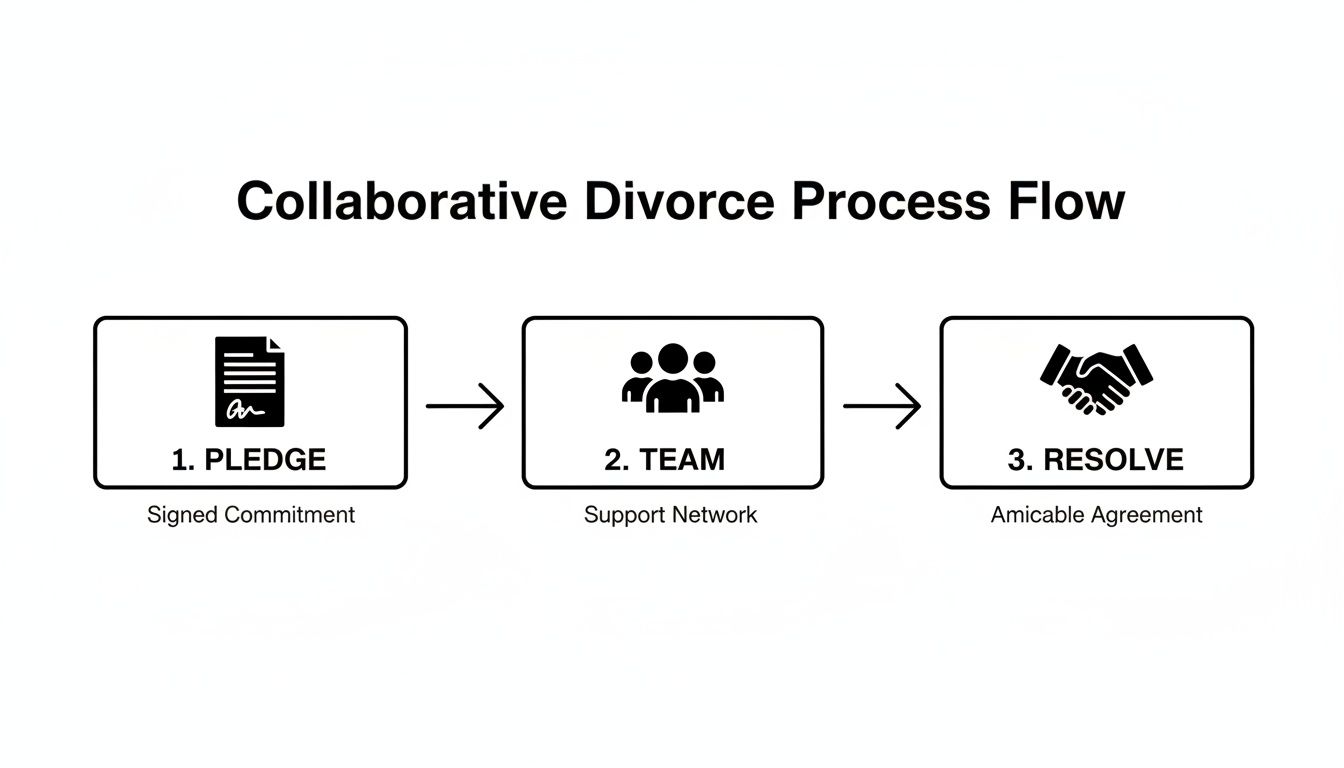
As you can see, it’s a clear path: you make a promise, you build a team, and you agree on a solution together.
Step 3: Put Together Your Expert Team
With the no-court agreement signed, it’s time to add more people to the team. You’ll bring in neutral experts who work for both of you. They give fair advice right where you need it most. This team approach makes sure you have the right person for every part of the divorce puzzle.
The two most common experts are:
- A Financial Neutral: This is usually an accountant or financial planner. This person gathers and explains all of your money information. They help make budgets, look at what you own and what you owe, and show you different ways to settle things so you can make smart decisions.
- A Family Specialist: This is a mental health expert who acts as a communication coach. They help you and your spouse handle feelings, have hard talks, and create a good co-parenting plan that always puts your kids first.
Step 4: Gather and Share Information
This part is all about being completely honest. With help from the financial neutral, you and your spouse will freely share all the money papers needed—bank statements, tax papers, information on retirement accounts, house deeds, and more.
There are no mean legal tools used here, like demanding answers under oath (depositions). The whole process works because you both promised to be honest when you signed the Participation Agreement. It’s a team effort that saves a lot of time, money, and stress compared to the often long and difficult “discovery” part of a regular divorce.
Step 5: Brainstorm Solutions in Team Meetings
This is where the real work—and the real progress—is made. The whole team meets several times. These meetings are planned, with a clear list of topics, and they focus on one thing at a time, like dividing property or making a parenting schedule.
Imagine a meeting room, not a courtroom. The goal is to be creative and solve problems. Everyone is asked to share ideas and think in new ways to find solutions that are made just for your family.
The point isn’t for one person to “win.” It’s for the family to find a good, respectful way to move forward. The focus is on meeting the needs of everyone, especially the children.
Step 6: Write and Finalize Your Agreement
Once you’ve worked through every issue and agreed on everything, your lawyers will write a formal Marital Settlement Agreement. This legal paper puts all the decisions you’ve made about your property, debts, spousal support, and parenting plan into writing.
You and your spouse will read it carefully with your lawyers to make sure it says exactly what you agreed to. After you both sign it, your lawyers file the needed papers with the court in Arkansas, and your divorce is made official. This last step is just paperwork—most of the time, you never have to go to a courthouse.
What Are the Real-World Benefits of a Collaborative Approach?

When a family in Arkansas chooses collaborative divorce, they’re picking a path that protects their privacy, their money, and their future. It isn’t just about trying to stay out of a courtroom; it’s about trying to build a better future for everyone.
The biggest benefits are privacy, control, speed, and putting the kids first. Understanding these benefits makes it clear why so many people are looking for a better way to get through one of life’s hardest times. It’s a method that values respect and real solutions over public fights, using many of the same ideas found in effective conflict resolution strategies to find agreement.
You Keep Your Family Matters Private
In a regular divorce, almost every paper filed with the court can be seen by the public. This includes everything from how much money you make to very personal complaints. Anyone—a neighbor, a coworker, a future boss—could possibly see the most private details of your life.
The collaborative process, on the other hand, happens completely in private. All your money details, parenting talks, and settlement meetings are kept secret, safe within your team’s meetings.
Real-World Example:
Imagine a local business owner is getting a divorce. In court, how much their company is worth, their personal salary, and their business debts could all be made public. In a collaborative divorce, this private information is shared only with the neutral money expert and the team, which protects the business and the owner’s privacy.
You Stay in Control of the Outcome
The moment you go to court, you give the final decision to a judge. This is a person who doesn’t know you or your family, but they will make decisions about your property, your parenting time, and your money that you have to follow.
Collaborative divorce keeps you and your spouse in charge. You work together, with help from experts, to create an agreement that you both truly believe is fair. You control the timing, the topics you discuss, and most importantly, the final decisions that will shape your new life.
The goal is to create solutions made just for your family, not to accept a one-size-fits-all decision from a judge who only knows you from a file. This feeling of being in charge is a big reason families choose the collaborative path.
You Move Forward More Quickly
Courts are often very busy. It’s common for a regular divorce to take a year or even longer. This long timeline not only adds stress, but it also makes legal costs go up as lawyers get ready for hearings and maybe a trial.
The collaborative process is made to be quick. Since everyone agrees to find solutions and share information openly, you skip the long waits and fights that happen in court. It’s not just a feeling—data shows that most collaborative cases are finished in three to twelve months, while regular divorces often take 12 to 24 months or more. A faster timeline means less emotional pain and lower costs, helping your family heal and move on sooner.
Your Children’s Well-Being Comes First
Children are always important in any divorce, but the fighting nature of court battles can easily put them in the middle of the conflict. The collaborative process is different on purpose. It puts their well-being at the center of every conversation.
Having a neutral family specialist on the team is a key part of this. This expert helps you and your spouse talk in a helpful way and create a co-parenting plan that is truly best for your children. The focus is always on creating a stable, healthy future for them.
Real-World Example:
Imagine a couple can’t agree on a holiday schedule for the kids. Instead of fighting in court, their family specialist helps them talk about their children’s feelings and favorite family traditions. They end up creating a special schedule that keeps important family customs and gives the kids good time with both parents—a creative solution a judge would probably not have ordered.
Is a Collaborative Divorce Right for You?
The idea of a respectful divorce without court sounds great, but let’s be honest: the collaborative process isn’t right for every couple. It’s a great tool, but it only works if the people involved are willing to make it work. Before you start, it’s a good idea to take an honest look at your situation and what you and your spouse can really do right now.
This whole process is built on trust and respect. If you and your spouse can truly promise to talk openly—even when it’s hard—you’re on the right path. It’s less about winning and more about finding a way forward that works for everyone in the family.
A Quick Check
Thinking this through is the most important first step. It requires you to think about yourself and have a real talk with your spouse. Go through these questions together to see if you both feel the same way:
- Can we agree to share all our money information honestly? This is a big one. You can’t hide money or lie about numbers; everything has to be shared freely.
- Is having a healthy co-parenting relationship our main goal? If you have kids, the most important thing is to build a stable, respectful future for them.
- Are we both willing to really listen to what the other person needs? This process is all about finding solutions where everyone gets something they need, not about one person winning.
- Can we focus on the future instead of getting stuck on past fights? Collaborative divorce looks forward. It needs a real effort to work on solutions instead of arguing about old problems.
If you both answered “yes” to these questions, collaborative divorce could be a great choice for your family. The next step would be to find a collaborative divorce attorney near me to guide you.
When to Think About Another Way
It’s just as important to know when this process won’t work. The whole system needs both people to take part honestly and without fear. Some situations just don’t have the trust and safety needed for it to work.
A collaborative divorce cannot work if there is fear, dishonesty, or bullying. For it to be fair, both people need to feel safe enough to speak up for themselves without being pressured.
There are some big warning signs where the structure of a regular court process is needed to protect someone or to get a fair result. These problems just don’t fit with the open, cooperative style of collaboration.
It’s very important to look at other options if your situation includes any of these:
- A history of family violence or one person controlling the other. The collaborative process does not have the legal protections needed in abusive situations.
- A feeling that one person is hiding money. If you can’t trust your spouse to be honest about money, the open sharing at the heart of collaboration won’t work.
- A big difference in power. If one person feels too scared to speak up or ask for what they need, a fair agreement isn’t possible.
- Serious drug or alcohol problems or mental health issues that make it impossible for one person to take part in a clear and honest way.
In these hard cases, the formal rules and power of the court system are often the only way to make sure everyone is safe and the outcome is fair.
How to Find the Right Collaborative Attorney in Arkansas

Searching for “collaborative divorce attorney near me” is the first big step toward a better separation. But it’s not just about finding any family lawyer. The success of your collaborative divorce depends a lot on the skill, attitude, and experience of the experts in the room.
Think of it this way: a lawyer who is very aggressive in the courtroom might not be the right person for collaborative talks. This process needs a different kind of strength—the ability to listen, solve problems in new ways, and guide everyone toward an agreement, not a fight. The right lawyer is your legal advisor, but they are also your helper for peace.
Special Training Is a Must
Here in Arkansas, you can’t just decide to be a collaborative attorney. It’s a special area of law that needs official training in how to mediate, negotiate, and follow the special rules of the collaborative process. A lawyer must be certified to truly guide you through this non-fighting process.
This training gives them the skills to keep things calm and focused on solutions. It’s a totally different way of thinking from a court battle, which is why checking their training is so important. When you’re looking at lawyers, don’t be afraid—ask them directly about their collaborative law training.
More and more families are looking for these other options. In 2022 alone, there were 673,989 divorces in the United States. With numbers like that, it’s easy to see why the collaborative method is growing, especially for people who want privacy and want to avoid a long court fight.
Questions to Ask During Your First Meeting
So, you’ve found a few lawyers with the right training. Now what? Your first meeting is your chance to see if they’re the right person for you. Think of it like a job interview, because that’s what it is. You’re picking a guide for one of the most important times in your life.
Go to that meeting with questions that go beyond just their court record. You need to understand their beliefs and how they work. This will help you feel sure you’re making the right choice.
Here are a few great questions to get you started:
- How much of your work is focused on collaborative divorce? This tells you how much they believe in this method compared to regular court fights.
- What do you do when people disagree in team meetings? Their answer will show you their real skills for solving problems.
- How do you help your clients get ready for the meetings? A great collaborative lawyer does more than just talk about the law; they prepare you to be a helpful person in the room.
- Can you tell me about a time you helped a couple work through a really hard problem? This gives you a look into how they actually solve problems.
Your goal is to find someone who not only knows Arkansas law very well but also has the right personality to help create a peaceful agreement. The right lawyer makes you feel heard, respected, and in control.
In the end, your decision is about both their skills and how comfortable you feel with them. You have to trust your lawyer’s advice and feel sure they can stand up for your needs while still respecting the process.
For more general advice on making this big decision, check out our guide on how do i find a divorce lawyer that is right for you.
Frequently Asked Questions About Collaborative Divorce
Going through a separation brings up a lot of questions and a lot of worries. As you start looking for a “collaborative divorce attorney near me,” you need simple answers to help you feel more sure about the path ahead.
Let’s answer some of the most common questions we hear from families here in Arkansas. The goal is to give you a clear idea of how this all works in real life.
What Happens If We Can’t Reach an Agreement?
This is one of the first things people ask, and it’s a good question. The whole collaborative process is based on a key paper called the Participation Agreement. When you sign it, you’re making a serious promise to solve your problems outside of court.
Here’s the most important part: if you and your spouse can’t agree, the agreement says that the collaborative process ends, and both lawyers must leave the case. You would then need to hire new lawyers to take your case to court. This might sound scary, but it gives everyone—including the lawyers—a strong reason to stay focused and work hard to find a solution, even when talks get tough.
How Do Costs Compare to a Regular Divorce?
It’s easy to look at the team of experts and think collaborative divorce costs more, but it’s usually the other way around. A regular, court-based divorce can cost a huge amount of money. Costs add up quickly with many court dates, fights over information, and getting ready for a trial that can go on for months, or even years.
Collaborative divorce, on the other hand, is made to be efficient. Because everyone is working together to share information and find creative solutions, you skip the expensive, time-wasting fights that make costs go up in court. Most families find they reach a final agreement much faster, which greatly lowers the total legal bills and, just as importantly, the emotional stress.
The real savings in a collaborative divorce come from avoiding the high and unpredictable costs of a long court fight. You are investing in a planned, private process made to find a solution quickly.
Do We Ever Have to Go to Court?
One of the biggest reliefs for many families is that in a collaborative divorce, you do not have to appear in court for hearings or a trial. Your talks happen in a private office, not a public courtroom. You and your spouse, not a judge, are the ones making the final decisions about your family’s future.
Once you’ve reached a full agreement and signed all the papers, your lawyers file the paperwork with the Arkansas court to make it all legal. It’s just paperwork that almost never needs you to show up in person. You can finalize your divorce without ever going inside a courthouse.