
Quick Guide to Finding an Attorney for Divorce Near Me
Finding a divorce attorney in Arkansas means looking at many choices and then picking what you need. Start by checking local law offices and reading client reviews to learn how each lawyer helps people.

Once you have a list of names, follow these 4 clear steps:
- Research local law firms and read online reviews to see each attorney’s reputation.
- Pick lawyers who know Arkansas family law and have handled divorce cases.
- Schedule short meetings to ask about fees, time frames, and how they will talk with you.
- Choose the attorney whose way of working, personality, and fees fit your needs.
Summary Of Steps to Find a Divorce Attorney
| Step | Action |
|---|---|
| 1 | Research local firms and reviews |
| 2 | Narrow down to Arkansas family law specialists |
| 3 | Hold consultations to assess fit |
| 4 | Select the attorney who matches your needs |
After each meeting, write down your thoughts and trust your feelings. This checklist helps you find the right legal partner.
Understanding Divorce Law In Arkansas
Divorce has rules, like packing boxes in a moving truck. Arkansas law lists steps you must follow, from living-in-the-state rules to waiting times so you do it right.
Choosing between a contested or uncontested divorce is like picking a busy highway or a quiet side street. One can be slow and tricky (when couples disagree), and the other can be quick (when both agree).
Key Divorce Types
- Contested Divorce: Spouses disagree on things like child custody or splitting property, so the court holds hearings.
- Uncontested Divorce: Spouses agree on property, custody, support, and go through filing without fights.
Filing Requirements
To start, you file a petition at the county circuit clerk’s office that follows Arkansas rules. You must have lived in Arkansas for at least 60 days. In the petition, you list assets, debts, and other important facts. Being accurate helps avoid delays.
Asset Division Factors
Arkansas uses “equitable division” to split property. It means a fair share, not always equal. Judges look at:
- How much each person earns now and might earn later
- How long the marriage lasted and what each person contributed
- What things are only yours and what things you earned together
Child custody is decided by what is best for the children. Judges think about stability, health, and time with both parents.
Divorce Rates Comparison Data
Here is a quick look at divorce rates in different places. This helps you see how Arkansas compares.
| Region | Rate (per 1,000) |
|---|---|
| United States | 2.4 |
| Global Average | 1.6 |
| Russia | 3.9 |
| Ukraine | 2.9 |
In the United States, there were about 2.4 divorces for every 1,000 people in 2022. Over 673,000 divorces or annulments happened in 45 states. In 2025, the rate for married women was 16.9 per 1,000. Discover more insights about global divorce rates
70% to 73% of third marriages end in divorce, showing why good legal help is important.
About 41% of first marriages end in divorce. Second marriages end more often—60% to 67%. Some countries like Russia (3.9) or Ukraine (2.9) have higher rates than the global average (1.6).
Local Arkansas Rules
- 60-Day Residency: Live in Arkansas for at least sixty days before filing.
- 30-Day Waiting Period: After you file, wait one month before the divorce can be finished.
- Parenting Classes: If you have minor children, both parents must attend classes to help them adjust.
A lawyer who knows Arkansas law can catch paperwork errors, deadlines, and fee waivers you might miss. This shows why finding an “attorney for divorce near me” in Arkansas saves time, money, and stress.
Planning Your Arkansas Divorce Steps
You can plan your divorce like a road trip, with clear stops along the way. Here are the main phases:
- Initial Meeting: Gather pay stubs, tax returns, and property deeds. Decide if you want a contested or uncontested divorce.
- Petition Filing: Submit papers to the circuit clerk and give a copy to your spouse. This starts the case.
- Disclosures: Exchange financial statements and lists of property—no surprises later.
- Negotiation or Mediation: Talk through child support, custody, and dividing property. If you still disagree, your attorney helps in court.
- Waiting Period: Observe the 30-day wait before the judge can sign the final decree.
Staying organized is key. See contract management best practices to keep your paperwork and deadlines on track.
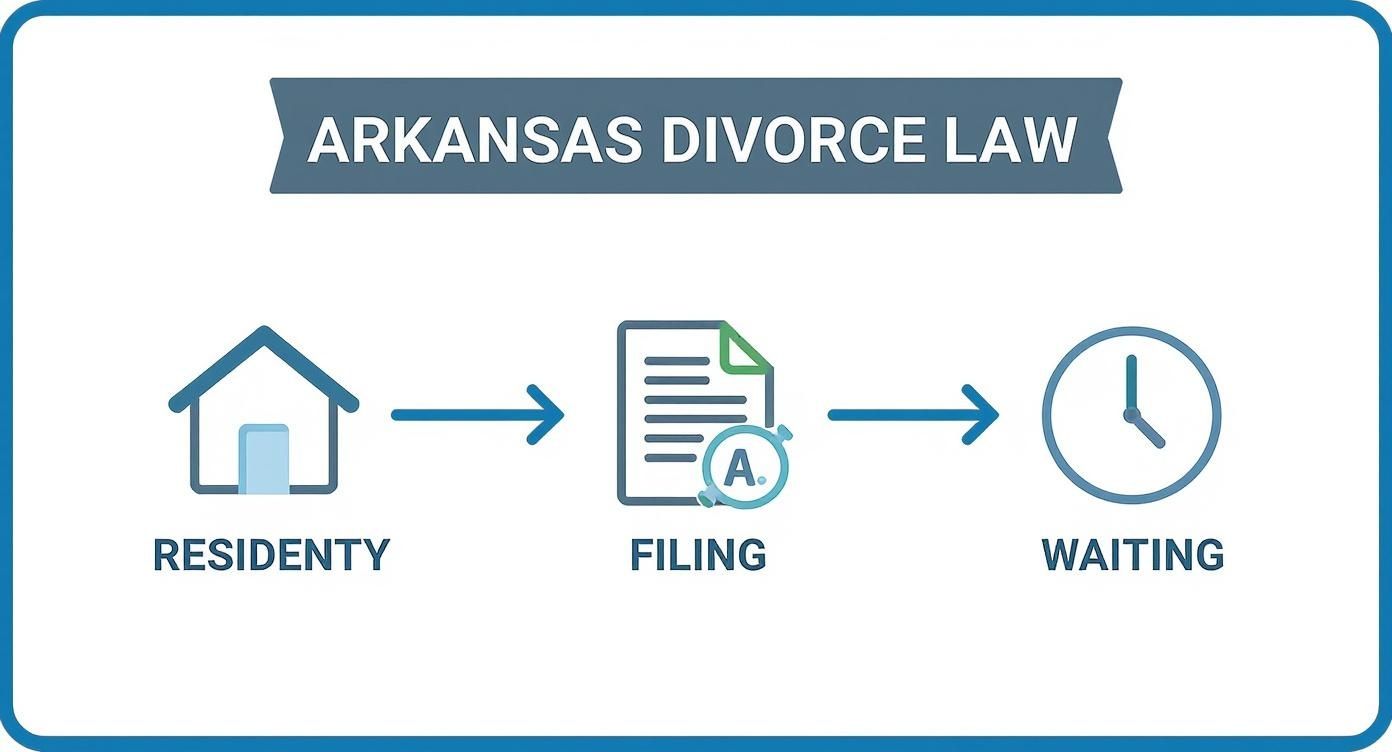
| Step | Key Milestone |
|---|---|
| Residency | Satisfy 60-day residency requirement |
| Petition Filing | File papers and start the case |
| Disclosures | Exchange financial docs and asset lists |
| Negotiation/Mediation | Agree on terms or go to court |
| Waiting Period | Observe 30-day waiting period |
Roadmap Highlights
- Initial Meeting: Gather records and pick contested or uncontested.
- Petition Filing: File with clerk and serve papers.
- Disclosures: Share financial details.
- Negotiation/Mediation: Discuss custody, support, and property.
- Waiting Period: Use this pause to confirm final details.
Key Insight: Arkansas law requires a 60-day residency and a 30-day waiting period before the court can issue a final decree.
This plan shows when to ask questions and how to organize your papers.
How To Find Local Divorce Attorneys Near Me
To find a divorce attorney in your town, add your city or county after “attorney for divorce near me.” For example, “Pulaski County” or “Little Rock.” This shows you local lawyers first.
The Arkansas State Bar directory lets you filter attorneys by specialty and location. It’s a quick way to find family law attorneys near you.

That directory shows certified family law attorneys by county and gives contact details. It is your first map when searching.
Narrow Your Search With Local Directories
Once you have some names, search by city like Fayetteville or Bentonville. Then check review sites to see what past clients say.
- Firm size and focus: smaller firms often mean more personal attention.
- Years of experience: attorneys with 10+ years know local judges.
- Client reviews: look for comments about being responsive and caring.
Interview Candidates With Key Questions
Treat your first meeting like a friendly chat. Ask:
- How many divorces have you handled in this county?
- How will you keep me updated—email, phone, or in person?
- What is the retainer and hourly rate?
- How long does an uncontested divorce usually take?
Write answers side by side to compare who fits best.
In 2023 over 1.8 million Americans divorced, and a third of those ever married have experienced divorce. This trend shows a growing need for legal guidance and tailored support Learn more about global divorce rates on WorldPopulationReview.
Compare Search Sources
You don’t have to rely on one tool—cross-reference to find the best.
| Source | Benefit |
|---|---|
| Arkansas State Bar | Official listings and certification |
| Review Platforms | Real client experiences and ratings |
Picking the right attorney is like choosing a mountain guide—you want someone steady under pressure who speaks your language. Trust your checklist and stay organized with notes and follow-ups.
Criteria To Evaluate A Divorce Attorney Near Me
Choosing a divorce attorney is like picking a sports coach—you want someone who knows the rules, adjusts plans, and understands you.
First, look at experience. Seek lawyers with 5+ years in Arkansas family law. They know local judges, court steps, and mediation tactics.
Client stories act like highlights. Scan testimonials for clear communication and real care during tough moments.
Evaluate Legal Experience
When you compare candidates, check:
- Arkansas Court Wins: Number of divorce trials won
- Mediation Success: Count of fair settlement agreements
- Specializations: Child custody, property division, or spousal support
| Criteria | Attorney A | Attorney B |
|---|---|---|
| Years in Family Law | 8 | 3 |
| Trial Victories | 6 | 2 |
| Mediation Outcomes | 12 | 5 |
Assess Communication And Fit
A good coach explains rules in simple words. Notice if they:
- Explain legal terms in plain English
- Promise to reply within 24 hours
- Use your preferred way to talk (email, phone, video)
“My attorney guided me step by step and answered every question without confusing me.”
— Former Client Review
Your gut feeling matters. You should feel heard and less anxious after each meeting.
Score Each Candidate Objectively
Use a checklist and rate each lawyer on:
- Years of Arkansas family law experience
- Trial and mediation track record
- Communication style and response time
- Personality fit and empathy
- Fee transparency and predictability
Balance Budget And Value
Cost matters, but low fees alone are not enough. Compare hourly rates to expertise. An attorney charging $200/hour with trial wins may give more value than a cheaper generalist.
Ask for an itemized fee schedule so you see all costs up front. This stops surprises later.
Comparing Fee Structures For Divorce Attorneys
Legal fees can seem like a secret code. You usually see four billing setups: retainers, hourly rates, flat fees, and sometimes contingency agreements.
- Retainers are deposits you draw from as work goes on.
- Hourly rates are like taxi meters—every minute counts.
- Flat fees are single payments for set services.
- Contingency fees (rare in divorce) are a percentage of money you recover.
“Clarifying fees upfront gives you control over surprises.”
Compare these factors before you sign:
- Deposit or Upfront Cost
- Billing Method and Invoice Frequency
- Scope of Covered Services
- Refund and Overage Policies
Attorney Fee Structure Comparison
| Fee Type | Description | Typical Cost Range |
|---|---|---|
| Retainer | Upfront deposit drawn down hourly | $2,000–$5,000 |
| Hourly Rate | Pay-per-hour for legal work | $150–$350 per hour |
| Flat Fee | One-time price for standard divorce service | $1,500–$5,000 |
| Contingency | Percentage of support or settlement recovered | 20%–30% of recovery |
These costs change by county, attorney experience, and case complexity. Smaller splits often cost less, while custody battles or big assets cost more.
Negotiation Tactics To Lower Fees
Negotiating your legal bill is like haggling at a flea market. If you ask clear questions, you’ll often find room to adjust.
Ask:
- Which services does the retainer cover?
- Will I get detailed, monthly invoices?
- Are court or mediation fees extra?
- Can we cap hours for discovery or trial prep?
Some lawyers let paralegals handle tasks or offer payment plans. Always ask.
Key Takeaway: A written fee agreement is your best defense against hidden costs.
Choosing The Right Local Attorney
When you search for “attorney for divorce near me,” look for transparency. Find lawyers who share fee ranges on their sites and read reviews. Ask about flat-fee packages that fit your budget.
You might be interested in our article on How Much Does a Divorce Cost in Arkansas Get the Facts for more details.
Frequently Asked Questions
Meeting a divorce lawyer for the first time can feel like exploring unknown waters. Being ready helps a lot.
What Should I Bring To My First Meeting?
- A list of your assets (home, cars) and debts (loans, credit cards).
- Copies of recent pay stubs, tax returns, and bank statements.
- Any court papers or separation agreements you have.
“Clarity on your finances helps your attorney build a strong strategy.”
— Arkansas Family Law Expert
Which Financial Records Matter Most?
These papers are the blueprint of your case:
- Pay stubs
- Mortgage or rental statements
- Retirement account balances
- Credit card statements
Understanding Fee Agreements
Lawyers charge in different ways: some need a retainer, others bill hourly or flat. Always ask for an itemized fee schedule before you agree.
How Long Will My Case Take?
- Uncontested divorces often finish in 60 to 90 days.
- Contested cases can take 6 months or longer.
What Is The Cost Range?
- Retainers usually are $2,000 to $5,000.
- Hourly rates are around $150–$350 per hour.
With this info, you can talk to several attorneys, compare their fees, and ask how to lower costs. Comparing quotes side by side can save you hundreds of dollars.