To get a divorce in Arkansas, you need a good reason that the law accepts. This reason is called the grounds for divorce. Think of it as the official “why” you tell the judge your marriage is over.
Choosing this reason is one of the first and most important things you’ll do. It helps decide how your divorce will go, like how long it will take and how much you might have to argue.
What Are the Grounds for Divorce in Arkansas?
In Arkansas, the law gives you two main ways to end a marriage: a no-fault divorce or a fault-based divorce. Each one has different rules.

Here’s a quick look at what that means for you:
No-Fault Divorce: This is the simple choice, but it has a big catch. You don’t have to blame your spouse for doing anything wrong. But, you must live in different houses for 18 months in a row before you can ask the court for a divorce.
Fault-Based Divorce: This way lets you ask for a divorce right away. You have to prove that your spouse did something wrong that caused the marriage to end. This avoids the long wait but means you have to show proof to the court.
A Quick Look at Fault vs. No-Fault Divorce in Arkansas
This chart shows the main differences between the two kinds of divorce grounds in Arkansas. This helps you quickly see what you need for each one.
| Category | What It Means | Main Thing You Need |
|---|---|---|
| No-Fault | The marriage is over, and no one is legally blamed. | Living in separate homes for 18 months straight. |
| Fault-Based | You’re saying your spouse’s actions legally ended the marriage. | Proving one of the 7 fault reasons the law accepts (like cheating or being cruel). |
Deciding between fault and no-fault is a big first step. It really changes how your divorce will happen. If you’re not sure which way is best for you, our Northwest Arkansas law firm can help you figure it out.
Understanding the No-Fault Divorce Option
In Arkansas, a divorce doesn’t always have to be a big fight. The state has a no-fault choice for couples who agree their marriage is over. They don’t want to fight in court about who is to blame. It’s often a simpler and calmer way to move on.
But there’s one big rule you have to follow. It’s not as easy as just agreeing to split up.
To get a no-fault divorce in Arkansas, you and your spouse must live completely apart for 18 months in a row.
“Living apart” means you must be in different homes. You can’t just be in separate bedrooms in the same house. For many people, waiting a year and a half is just too long.
If you want to learn more about this, you can read our full guide on no-fault divorce in Arkansas.
Explaining the Fault-Based Divorce Grounds
What if you can’t wait 18 months for a no-fault divorce? This is when you can ask for a fault-based divorce. This means you are telling the court that your spouse did specific things that broke the marriage. Arkansas law lists seven specific fault reasons, or grounds, for divorce.
The most common reason people use is called general indignities. This isn’t about one fight or a single bad day. It’s about a pattern of bad behavior that made your life with them impossible to handle. This could be things like your spouse always being rude, mean, or not caring about you over a long time.
Unlike a no-fault divorce where no one gets blamed, with a fault-based divorce, you have to prove to the judge that your spouse really did what you say they did.
Other reasons are more specific, like cheating (adultery), being drunk all the time for one year or more, or being so cruel and mean that it puts your life in danger. Choosing a fault reason lets you ask for a divorce right away. But, it means you will have to find proof and show it to the judge in court.
How Your Chosen Grounds Can Affect the Divorce Outcome
So, does it really matter if you choose a fault or no-fault divorce? People ask us this all the time, and the answer is yes. The Arkansas divorce grounds you pick can change what a judge decides about things like splitting property, who pays money to whom (spousal support), and even who the kids live with.
Let’s talk about property. In Arkansas, the law says you must split your things fairly. “Fair” doesn’t always mean a perfect 50/50 split. If you can prove your spouse was at fault—for example, if you show they were cruel or cheated—a judge might give you a bigger share of the property or order your spouse to pay you support money.
A Note from Experience: Proving fault isn’t just about winning an argument. It can have real effects on support payments and time with your kids. We have seen judges limit a parent’s time with their children or require someone to watch them during visits because of proven bad behavior.
This chart shows the two main paths to divorce in Arkansas.
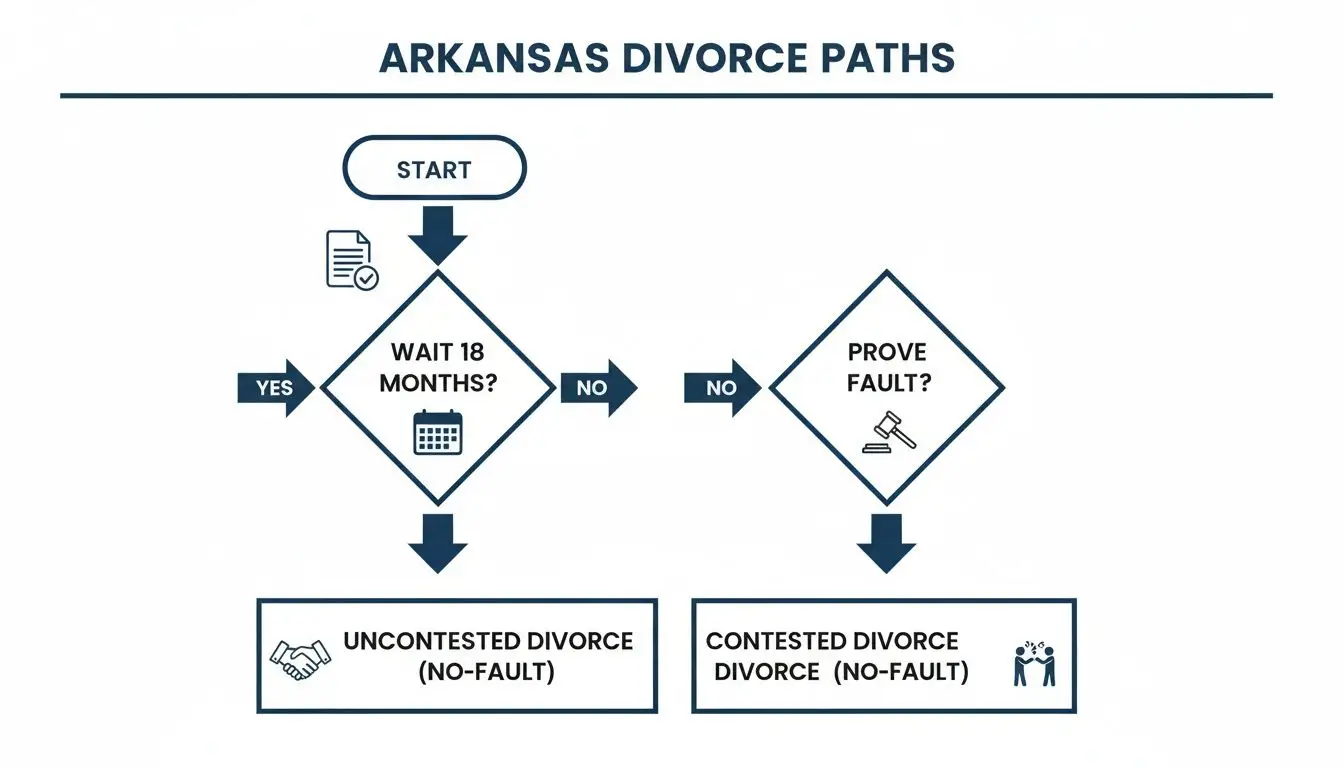
As you can see, your first big choice is if you want to live apart for 18 months for a no-fault divorce or start right away by proving a fault-based reason.
But here’s the catch: a fault divorce is almost always more complicated. It usually means you have to find more proof, have people speak in court for you, and maybe even have a full trial. This can cost more money and be very stressful. Once the judge makes a final decision, it becomes official in your divorce decree in Arkansas.
Meeting the Residency Rules Before You File
Before a court in Arkansas can even look at your divorce case, it needs the legal power to handle it. You can’t just file for divorce anywhere.
So, how do you give the court that power? The rule is simple. At least one of you must have lived in Arkansas for at least 60 days right before you file the divorce papers. You must have physically lived in the state for that time.
Also, you have to file your case in the right county. The divorce papers need to be filed in the county where you or your spouse lives. Getting these simple details right is a very important first step to make sure your divorce starts correctly.
Answering Your Questions About Divorce Grounds
Going through a divorce can feel confusing, like you’re lost. To help you understand, here are simple answers to some of the questions we hear most about the grounds for divorce in Arkansas.
Is Arkansas a No-Fault State?
It’s a little of both. Arkansas offers both no-fault and fault-based divorce. But the no-fault choice has a big rule: you and your spouse must have lived in different homes for 18 months straight before you can file.
That long wait is a problem for most people. They don’t want to put their lives on pause for a year and a half. So, they often choose to file for a fault-based divorce to get things started sooner.
Does It Matter Which Divorce Ground I Choose?
Yes, it does. The path you pick at the start can change how everything else happens. A no-fault divorce is often easier and less argumentative. But, that 18-month waiting rule is a big problem for families who are ready to move on.
Filing for a fault-based divorce lets you start right away. But you’ll have to prove that your spouse’s bad actions were the reason the marriage ended. While this can be stressful, proving fault can give a judge a reason to decide on more spousal support or, in some cases, change decisions about the kids.
What Is the Easiest Ground to Prove in Arkansas?
In our experience, the most common and often easiest fault reason to prove is general indignities. This isn’t about one big thing, like cheating. Instead, it’s about showing the court that your spouse had a long-term pattern of behavior—like always being rude, mean, or disrespectful—that made living together impossible.
To prove general indignities, you usually need to show evidence like:
- You telling the judge in your own words about the bad behavior.
- Text messages, emails, or social media posts that show the fighting or meanness.
- Statements from friends, family, or counselors who saw how you were treated.
Can I File for Divorce Without a Lawyer?
You are allowed to file for divorce by yourself. But it’s usually not a good idea, especially if you have kids, own a house, or are using a fault-based reason. Divorce law is very complicated. A small mistake on a form could cause lasting problems for your money or your rights as a parent.
Hiring a lawyer is about more than just filling out papers; it’s about having a good plan. A good lawyer makes sure your rights are safe and helps you make the strongest case you can, which is important for understanding the broader context of family law services.
Understanding Arkansas divorce grounds takes clear thinking and a good plan. If you are trying to decide what to do next, the team at DeWitt & Daniels is here to help. We give you the straight advice and strong support you need to move forward. Find out how we can help you by visiting us at Dewitt and Daniels Law Firm.