
Imagine you’re in the playground and someone keeps taking your ball, even after you’ve asked them to stop. A cease and desist letter is like getting a teacher to write a very serious note to that person. The note says, “Stop taking the ball, and don’t do it again.”
In the grown-up world, this letter is a formal, written demand telling someone to stop a specific activity right away and not to start it again. It’s a serious “knock it off” before things get so bad you have to go to court.
This letter tells the other person that you believe their actions are hurting you or breaking the rules, and you want it to end—now.
What a Cease and Desist Letter Actually Means

Let’s use an example. Imagine another local business in Arkansas starts using a logo that looks almost exactly like yours, and your customers are getting confused. You’ve tried calling them, but they won’t listen.
Before you spend a lot of money taking them to court for copying your logo (which is called trademark infringement), your lawyer might send them a cease and desist letter. The message is very clear: “Stop using that logo, and don’t ever use it or anything like it again.”
That’s the main job of a cease and desist letter. It’s a strong tool for fixing problems without having to go to a courtroom, which saves everyone time and money.
It’s important to know that a cease and desist letter is not a court order. It doesn’t have the same power as a judge’s ruling. However, ignoring one is a big mistake. The letter can be used as proof in court that you were officially warned. If the sender later sues you, they can show the judge they gave you a chance to fix the problem, and you didn’t. That never looks good.
What’s Inside the Letter?
So, what are you looking at when you get one of these letters? Most have a similar structure so they are clear and legally correct.
This table shows the main parts you’ll find in a typical cease and desist letter.
| Part of the Letter | What It Means |
|---|---|
| Who is Involved | Clearly names who is sending the letter and who is receiving it. There’s no confusion. |
| What You Did Wrong | Explains exactly what the sender wants you to stop, with details like dates and specific examples. |
| Why It’s Wrong | Explains why your actions are against the law or harmful, often pointing to specific Arkansas laws or rules. |
| What You Must Do | This is the “cease and desist” part. It officially demands you stop the activity right away and for good. |
| What Happens if You Don’t | Clearly states what the sender will do if you don’t listen, which usually means filing a lawsuit to ask a court for help. |
| Deadline to Respond | Gives you a specific amount of time (like 10 or 15 days) to answer or confirm that you’ve stopped. |
Knowing these parts helps you understand how serious the letter is and what you need to talk about with your own lawyer.
The Purpose of the Letter
At its heart, a cease and desist letter is a smart move with a few clear goals.
- Make It Stop: The number one goal is simple: to make the harmful action stop as fast as possible without a long court fight.
- Protect Your Rights: It officially announces that the sender is serious about protecting their legal rights, whether it’s an idea they created, their privacy, or their safety.
- Create Proof: The letter, along with proof it was delivered, becomes official evidence. This paperwork is very important if the problem ever ends up in an Arkansas court.
A cease and desist letter is like drawing a line in the sand. It shows that just asking nicely didn’t work, and the next step will be a lawsuit if the person doesn’t do what the letter says.
Common Reasons for Sending a Cease and Desist Letter
People send cease and desist letters for all sorts of reasons, but they all share one simple goal: making someone stop doing something that is causing harm. It’s the first official step to protect your rights without having to immediately start an expensive and long lawsuit. Think of it as putting the problem down on paper.
It’s like when your neighbor’s tree branch starts growing over your roof. You might ask them nicely to trim it. If they don’t, a cease and desist letter is the next step—a firm, written request that shows you’re serious.
While they can be used for many things, these letters are most common when someone’s original work or ideas are being used without permission.
Protecting Your Creations (Intellectual Property)
One of the most common reasons for a cease and desist letter is when someone violates intellectual property. That’s a fancy term for a simple idea: someone is using something you created without your permission. It’s like someone copying your homework and putting their name on it.
This can happen in a few different ways:
- Copyright Infringement: Let’s say you’re a photographer in Fayetteville who takes amazing pictures of the Ozark Mountains. A local company finds your photos online, downloads them, and starts using them to advertise their business. They never asked you. They never paid you. This is a clear violation of your copyright.
- Trademark Infringement: A new coffee shop opens in Rogers with a logo and name that are almost the same as a popular cafe in Bentonville. This could easily trick customers and hurt the original shop’s good name. The first cafe would send a letter telling the new business to change its brand.
These letters are a normal way to handle these situations. Because they are an official warning, many people who get them will do what they ask to avoid a costly lawsuit.
Stopping Harassment and Threats
A cease and desist letter can also be a powerful tool for stopping harassment. Harassment isn’t just a one-time argument. It’s when someone repeatedly does things that are unwanted and make you feel unsafe—like a former friend who won’t stop sending mean messages, or a neighbor who is always yelling at you.
Sending a letter in these situations creates an official record. It proves the harassment happened and officially tells the person to stop all contact. This can be very important evidence if you later need to ask a court for a protective order.
A cease and desist letter for harassment sends a powerful message: “What you are doing is not okay and is causing me harm. Stop right now, or I will ask the court to help protect me.”
Fighting Against Lies (Defamation)
Finally, these letters are used to fight defamation—when someone tells lies that hurt another person’s reputation. There are two types:
- Slander: When the lies are spoken out loud.
- Libel: When the lies are written down, like in a blog post, on social media, or in an online review.
Imagine a former employee is angry and starts posting fake online reviews, claiming your Little Rock bakery is dirty. Those lies could ruin your business. A cease and desist letter would demand they take down the false statements immediately or get ready for a lawsuit for the damage they caused to your reputation.
How to Read a Cease and Desist Letter
Getting an official-looking letter from a lawyer can be scary. The serious words are meant to get your attention, and they usually do. But once you know how these letters are put together, they are much less frightening. Think of it like a map—each part has a special purpose.
Let’s look at the typical parts of a cease and desist letter. Knowing what to look for helps you understand what the sender is asking for.
Figuring Out Who’s Who
Right at the top, the letter will say who is involved. It will clearly name the sender (the person or company who has a problem) and the recipient (that’s you).
This section makes everything official. It proves you have been formally told about the problem, so there’s no question about who is part of the disagreement.
Understanding the Problem and the Rules
Next, the letter gets to the main issue—the specific things the sender says you did wrong. This isn’t a fuzzy complaint; it’s a detailed list. For example, it might list the exact dates you used their copyrighted photo without asking or show a direct quote of a false thing you posted online.
After explaining what you did, the letter will explain the legal reason for the complaint. This is where they connect your actions to a specific law they believe you have broken.
- Using a photo without permission: The letter will likely say “copyright infringement.”
- Copying a business name: It could point to “trademark infringement.”
- Posting fake, harmful reviews: The legal reason would probably be “defamation.”
This part of the letter is very important because it explains why the sender believes your actions are illegal under Arkansas law. It connects what you did to the rule you supposedly broke.
This infographic shows how common problems lead to sending a formal letter.
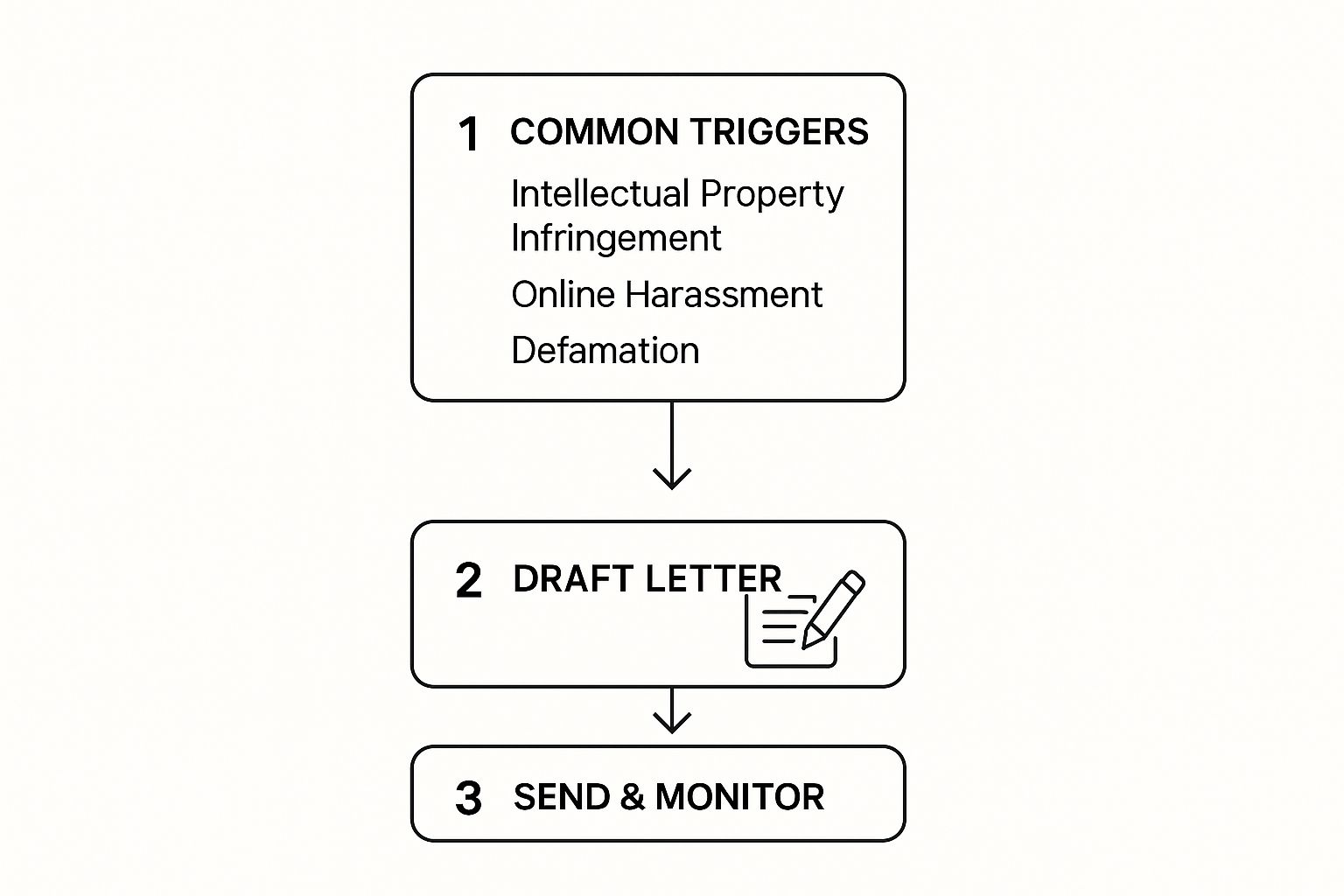
As you can see, things like copying someone’s work or harassing them are often the direct reason someone sends a letter as a first step to fix the problem.
The Demands and the Consequences
The last part is the most direct. It lists the specific demands—what, exactly, the sender wants you to do. This is the “cease and desist” command.
The demand section is the call to action. It will clearly state that you must immediately stop the activity and not do it again. It might also ask you to take down a website, remove a social media post, or say you’re sorry in public.
Finally, the letter will explain the consequences if you don’t do what they ask. This is the “or else” part, and it’s not a joke. The letter will almost always threaten to file a lawsuit to get money for damages or a court order to make you stop. This makes it very clear that the sender is serious and ready to go to court if their demands are ignored.
Real-World Cease and Desist Examples

Sometimes the best way to understand a legal idea is to see how it works in real life. A cease and desist letter can seem confusing until you see it used in situations that happen every day, right here in Arkansas and around the world. These letters solve real problems by offering a clear, official way to stop harmful actions.
Let’s look at a few common examples.
Imagine a local blogger in Little Rock writes a nice post about nature in Arkansas. They find a beautiful photograph online, taken by a professional photographer, and use it on their website without asking for permission or even saying who took it.
This is a perfect example of copyright infringement. The photographer could have a lawyer send a cease and desist letter, which would demand the blogger take the photo down immediately. The letter would clearly say that the photographer owns the rights to the picture and that using it without permission is against the law.
Trademark Troubles in Northwest Arkansas
Now, let’s imagine a new business opens in Rogers. They’ve created a name and logo that are almost the same as a well-known brand in Fayetteville that’s been around for years. This is called trademark confusion—customers might easily mistake one business for the other.
In this situation, the established Fayetteville company would almost definitely send a letter. The message would be simple: stop using the similar name and logo. This isn’t just about protecting their brand; it’s also about making sure customers aren’t tricked.
These examples show that a cease and desist letter is not just for big companies. It is a useful tool for small business owners, artists, and regular people across Arkansas to protect their hard work and ideas.
Stopping Online Harassment
Cease and desist letters are also very good tools for fighting online harassment and cyberbullying. If someone is repeatedly sending you mean messages, spreading lies about you, or creating fake social media accounts to upset you, a letter can be the first official step to make it stop.
It officially records the harassment and warns the other person. The message is clear: “I have proof of what you’re doing, and if you don’t stop, I am ready to ask a court for help, like getting a restraining order.”
A Global Tool for Protecting Rights
The power of a cease and desist letter isn’t just for Arkansas or the United States. In Germany, for example, these letters are often used to stop people from illegally sharing movies and music online. In other parts of Europe, they are used to protect people’s private information online.
You can discover more insights about the use of these letters in Germany and the EU. This just shows that the basic idea—an official demand to stop a harmful action—is a legal tool used everywhere to protect people’s rights.
Your First Steps After Receiving a Letter
Finding a cease and desist letter in your mail can be scary. It’s normal to feel worried, confused, or even angry. But the first thing you need to do is take a deep breath.
Reacting with strong emotions is the worst thing you can do. A quick, angry response can make things worse. The key is to stay calm and be careful.
And no matter what, do not ignore it. Throwing the letter away is like hearing a fire alarm and just going back to sleep. The problem won’t go away, and ignoring it can be used against you later in court to prove you knew about the problem and did nothing.
Your Immediate Action Plan
Before you even think about writing back, it’s time to get organized. Think of yourself as a detective gathering clues. The goal right now is to collect information, not to start a fight.
Here’s a simple, three-step plan to follow as soon as you get the letter:
- Read the Letter Carefully: Read it once to get the main idea, then read it again, slowly. What, exactly, are they saying you did? What specific things do they want you to do? The details are very important. Are they saying you used a copyrighted picture, copied a business name, or sent messages you shouldn’t have? Figure out the main problem.
- Gather All Related Papers: Now, collect every piece of paper or computer file related to their claim. This means finding emails, contracts, text messages, receipts, or social media posts—anything that helps explain the situation. Put it all in one place.
- Do Not Respond or Fight Back: This is very important. Don’t call the sender, email their lawyer, or complain about it online. Anything you say or write can be used as evidence. An angry reply will almost certainly cause you more trouble later.
The biggest mistake people make is trying to talk their way out of it. You might accidentally admit you did something wrong or say something that hurts your case. Right now, being quiet is your best strategy.
Why Your Next Call Should Be to a Lawyer
Once you have the letter and your proof organized, it’s time to call a lawyer in Arkansas. This is not an overreaction; it’s the smartest and safest step you can take. A lawyer can look at the situation without getting emotional.
They’ll help you answer a few key questions:
- Is their claim real? Does the other person have a good legal reason for their demands under Arkansas law, or are they just trying to scare you?
- What are your risks? What is the worst thing that could happen if this turns into a lawsuit?
- How should you answer? A lawyer can help you write an official response that protects your rights without making the problem bigger or admitting you did anything wrong.
Hiring a lawyer isn’t about starting a fight. It’s about getting an expert to guide you through a tricky legal problem. It turns a scary moment into a calm, smart plan.
What Happens After the Letter Is Sent
Sending a cease and desist letter is a big step, but it’s really just the beginning. Once that letter is sent, it’s up to the other person to make the next move. How they react—or if they react at all—decides what happens next.
In a perfect world, the person does what you ask. They get the letter, understand it’s serious, and immediately stop what they were doing. This is the goal, of course. It solves the problem without any more trouble or legal bills.
But not everyone is so cooperative. It’s also possible the person will just ignore the letter completely, hoping you’ll give up and go away. This is when you have to decide if you’re ready to follow through with a lawsuit.
The Three Most Likely Outcomes
Once your letter has been delivered, the situation usually goes one of three ways. Knowing what to expect helps you stay prepared.
- They Comply: This is the best result. The person stops the behavior you complained about in your letter, and the problem is over.
- They Do Nothing: You hear nothing back. The person is hoping you won’t actually sue them.
- Their Lawyer Replies: You get a response, but it’s from their lawyer. This usually means they are taking it seriously and might be willing to talk and find a solution.
The response you get—even if it’s just silence—tells you a lot. It shows whether the other person wants to solve this peacefully or if you need to get ready for a legal fight.
When a Lawsuit Becomes Necessary
If the person ignores your letter and keeps doing the harmful thing, your next step is probably a lawsuit. This isn’t a decision to take lightly, and it’s a conversation you must have with your lawyer. If your demands are ignored, the issue can turn into a formal court case, also called commercial litigation.
This is the point where having a good legal team on your side is a must. To better understand what a lawsuit is like, you can learn more about the civil litigation process and what it takes to protect your rights in court.
Frequently Asked Questions
Have a few more questions about cease and desist letters? You’re not the only one. Let’s answer some of the most common questions people ask.
Is a Cease and Desist Letter the Same as a Lawsuit?
No, not at all. Think of a cease and desist letter as a formal warning shot, not the start of a court battle. It’s a private letter sent from one person (or their lawyer) to another, completely outside of the court system.
However, it is a clear sign that the sender is serious and is ready to file a lawsuit if the behavior doesn’t stop. It’s the last step before things go to court, so you should always take it seriously.
Do I Legally Have to Respond to the Letter?
There isn’t a law in Arkansas that says you must respond. But ignoring a cease and desist letter is a very big risk. If you end up in court, the other side will use your silence to argue that you were warned about the problem and chose to do nothing about it.
The smartest thing you can do is talk to a lawyer right away. They can help you figure out the best way to respond—or if you should respond at all—without making things worse or accidentally admitting you did something wrong.
Choosing not to reply can make you look bad. A careful response, written with a lawyer’s help, is almost always the safest choice.
Can I Write and Send a Letter Myself?
Technically, yes, you can. But it’s usually not a good idea. A letter that comes from a lawyer, printed on their official paper, gets more respect and shows you are serious. It is much more likely to get the other person’s attention.
Plus, a good Arkansas lawyer knows exactly what to say—and what not to say. They will make sure your legal reasons are strong and won’t use any words that could be used against you later. That professional touch can be the difference between solving the problem quickly and ending up in a long, expensive legal fight.