
What is “dissolution of a partnership?”
It is when a business partnership needs to end, it can feel confusing. But with the right steps, you can get through it. In Arkansas, the first legal step is called dissolution. This is the official choice to stop doing business together.
Think of it like this: dissolution is the starting signal for shutting down the business the right way. Doing this is very important to protect yourself from money and legal problems later on.
What Does Dissolution Mean?
So, what is “dissolution”? It is more than just closing the doors. It is the official start of a legal process that begins when you and your partners agree to end the business.
This can happen for many reasons. Sometimes everyone agrees it’s time to stop. Other times, problems force the business to close.
Common reasons include:
- Different Goals: You and your partner might have had the same plan at the start, but now you want to go in different directions.
- Money Troubles: Sometimes a business just doesn’t make enough money to stay open.
- Life Changes: A partner might want to retire or move away. This changes how the business works.
Here is some advice: just stopping work does not legally end your duties. You must go through a formal, written dissolution. This is the only way to begin separating yourself from the business and its debts.
To help you understand this journey, here are the main parts. This table shows the key stages for ending a partnership in Arkansas.
Key Stages of a Partnership Dissolution
| Stage | What It Means | Why It’s Important |
|---|---|---|
| Dissolution | The official decision to stop doing business. It happens when a partner leaves or everyone agrees. | This is the official start. Without it, the partnership still legally exists, and so do its responsibilities. |
| Winding Up | The process of selling business property, paying off debts, and giving any leftover money to the partners. | This step is key for settling all money matters and stopping people from asking for money later. |
| Termination | The last step where the partnership is legally and officially over. | This is the finish line. It formally ends the partners’ liability and closes the book on the business. |
Getting these stages right is very important. For a bigger picture, this complete guide on the steps to close down a business explains the general ideas that apply here.
If you don’t make a good plan for dissolution, you could be responsible for business debts long after you stop working. This risk is like the problems that happen from not having a plan for your personal things.
Your First Steps Before Dissolving the Partnership

Before you start the legal process of dissolving a partnership, you need to prepare. Doing this part right can make everything else go much more smoothly. The most important paper you will need is your partnership agreement.
Think of this agreement as the rulebook you and your partners made when you started the business. It should explain the exact steps for ending the business, like how to vote on the decision and how to split up property and debts. Always look at this document first.
Getting All Partners to Agree
The first thing to do is get a formal, written agreement from every partner to dissolve the business. You can’t just agree to this over a chat; it needs to be official.
If your partnership agreement explains how to vote, you must follow those rules exactly. If you don’t have an agreement, don’t worry. Arkansas law has rules for this situation. Usually, it requires a unanimous vote, meaning every single partner must agree. Whatever you decide, get it in writing. A simple, signed paper is your best tool. It stops arguments later about who said what.
Ending a business can feel very personal. It’s interesting that many partnerships end, both in business and in life. For a long time, Arkansas had the highest divorce rate in the United States. This shows why it is so important to follow the correct legal steps. You can learn more about these marriage statistics on the BTL Family Law blog.
It is a smart idea to talk to a lawyer early. A lawyer can help you understand your legal duties from the start. This can save you from big, expensive problems later.
What Does “Winding Up” a Partnership Mean?
Once you and your partners decide to dissolve the business, you are not finished. You now enter a very important time called the “winding up” phase. This is the official, legal process of shutting everything down step-by-step.
Think of it as the last part of the story. Your main jobs now are to finish any work, collect any money owed to the business, and pay all of the company’s debts. The goal is to close the business’s books in a clean and honest way.
This legal journey has several key steps you cannot miss.
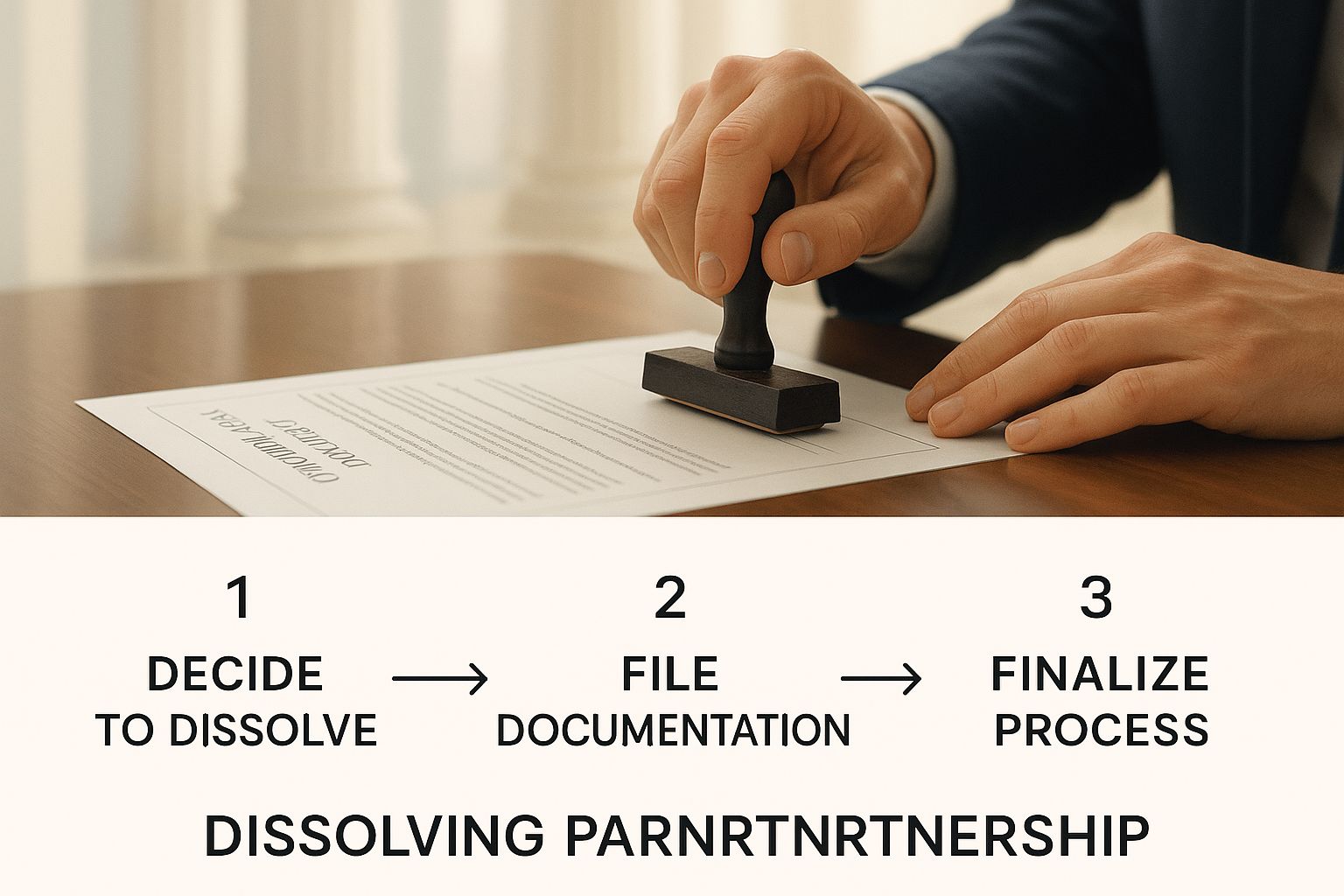
As you can see, closing a partnership is not a simple handshake deal. It requires official papers and actions that have real legal results.
Your Duties to Each Other Continue
Even though the partnership is ending, your legal duties to each other do not stop. In Arkansas, partners have a fiduciary duty to do what is best for the partnership. This duty continues through the entire winding-up process.
What does this mean in real life? It means one partner cannot take the company’s customer list or expensive tools to start a new, competing business. That would be a serious violation of their duty.
Every choice you make during this time must be for the good of the whole partnership, not just for one partner’s gain. The whole point is to settle all the business’s debts fairly before any partner gets their final payment.
This is often where problems start. Figuring out how to fairly split the company’s property and debts can seem like a huge job, but it follows a clear, logical process.
First, you will probably need to liquidate the business assets. This just means turning things like computers and desks into cash. You will sell everything from company cars to leftover products. You will use this cash to start paying the company’s bills.
Once you have the cash, you must pay debts in a specific order. Arkansas law is very clear about the order of payments to make sure everyone is treated fairly.
The Order for Paying Debts
Think of it as a waiting line. You have to follow this order by law.
- Outside Creditors First: The very first priority is paying people outside the partnership. This includes suppliers, landlords, and banks—anyone the business owes money to who is not a partner.
- Next, Partner Loans: If a partner loaned money to the business from their own pocket, they get paid back now. This only happens after all outside creditors are paid completely.
- Return of Partner Capital: After all debts are paid, the next step is to give back each partner’s first investment in the business.
- Finally, the Profits: Any money left over at the very end is profit. This is split between the partners based on the rules in your partnership agreement.
What happens if the business owes more money than it has? This is where a general partnership can be a big personal risk. People the business owes money to can legally go after your personal property—like your house, car, or savings—to pay the business’s debts.
When you dissolve a partnership, you must also think about taxes. Partners can be held responsible for unpaid business taxes, especially taxes for employees. It is important to Understand the Trust Fund Recovery Penalty and personal liability for business payroll taxes to protect yourself.
Making It Official: The Final Legal Steps
You have paid the debts and divided the property. Now it is time to take the last, most important steps to legally close your partnership. This is not just paperwork. It is your protection against any future problems related to the business.
Your most important job is to file a Statement of Dissolution with the Arkansas Secretary of State. Think of this as a public announcement that your business has stopped running. This is what prevents a former partner from doing things like getting a new loan or signing a contract in the old business’s name—and making you responsible for it.
Telling Everyone Who Needs to Know
Filing with the state is the most important step, but you are not done yet. You need to contact a few other important groups to truly cut your ties to the business’s responsibilities.
Making these final phone calls or sending these final letters is a must. It creates a clean break and protects you from future problems. On a similar topic, ending a business often makes people think about what they will leave behind. For any business owner, having a plan for your personal property is important. You can learn more about what happens if you die without a will in Arkansas right on our blog.
When you write the formal dissolution agreement and other legal papers, using tools for efficient contract generation can save you a lot of time and help make sure you don’t miss anything.
It’s amazing how personal things can affect a business relationship. A study found that people with genes linked to higher education had a 10% lower chance of their partnership ending each year. This shows that a strong partnership is about more than just money. You can discover more about these findings on partnership stability.
Answering Common Questions About a Partnership Breakup
When it is time to end a business partnership, you may have a lot of questions. It’s a hard situation, and getting clear, simple answers is the first step to a clean ending. Let’s answer some of the most common questions we hear from partners here in Arkansas.
What if We Never Signed a Partnership Agreement?
This happens a lot. If you started the business with just a verbal agreement and never wrote anything down, do not worry. Arkansas state law has a set of default rules to guide you. These rules are based on the Revised Uniform Partnership Act.
Under these default rules, profits—and more importantly, losses—are usually split equally among all partners. This can cause a big disagreement if one person put in much more time or money. This is a big reason why having a written agreement is so important from the very beginning.
Can One Partner Just Decide to End the Business?
In many cases, the answer is yes. If your partnership was not set up for a specific amount of time or to finish a specific project, it is called an “at-will” partnership. In this case, any partner can choose to start the dissolution process at any time.
But there is an exception. If your agreement said the partnership would last for a certain time or until a project was done, leaving early could be a violation of that agreement. This could mean the partner who leaves has to pay for any harm they caused the other partners.
It’s very important to know that dissolving the business does not make its debts disappear. You and your partners are still personally responsible for any debts the business had before it was dissolved. Filing an official Statement of Dissolution is what protects you from being responsible for new debts another partner might create after you have officially closed the business.